Model 3 [Official] Tesla Model 3


The Tesla Model 3 is a battery electric powered mid-size sedan with a fastback body style built by Tesla, Inc., introduced in 2017. The vehicle is marketed as being more affordable to more people than previous models made by Tesla. The Model 3 was the world's top-selling plug-in electric car for three years, from 2018 to 2020, before the Tesla Model Y, a crossover SUV based on the Model 3 chassis, took the top spot. In June 2021, the Model 3 became the first electric car to pass global sales of 1 million.
The problem is that urban transport needs to be weatherproof. I suppose very few people would use an E-bike in a cold winter day. In order to ban ICEs in the cities (which IMHO is a must) a reliable alternative should be provided.

Most solutions have pro's and con's, I just think that e-bikes tick so many boxes. I agree that public transport needs to be more accessible, comprehensive and reliable to be a viable option against cars, but I have no faith in the government or the corporations to deliver it.
 
It's a fair point, though I'm not sure it's as simple as that. We're still going to be refining oil to get other products we want. Until we reduce dependency on plastics and come up with alternatives to all other refined crude products, we're still going to be producing hydrocarbon fuels even if it's just as a byproduct. If you want a tonne of polyes...


Exactly! Oil refineries are here to stay! Refining oil to get other byproducts used for plastics, cosmetics, medicines etc etc.

Also: not all countries have their own refineries! But will need to produce more electricity to power BEVs.

E-mobility solutions ... some of them like e-scooters, e-bikes, e-skateborads etc are additional net electricity consumers since they are substitutes for walking & cycling (or public transport run on electricity - like citytrains & metros) and not for fossil fuel motoring.

Not to mention even hotter Summers ... adding more demand for AC, spiking electricity demand & consumption. People are more hooked on other e-devices ... from toothbrushes, smart watches, induction stoves etc to tumble dryers. Electricity consumption is not dropping but rising. With or without transport. Prices will increase correspondingly. Especially since upgrades to grids will be needed, smart grid management implemented (incl. megabattery storages) to level uneven electricity supply by sustainable sources, new products developed (eg. subscriptions).

Not to mention governments will apply duties & taxes to electricity as they now do to petrol, gas & diesel - getting quite substantial budget incomes form this particular source.

Sure e-motoring will be better for the environment. But I very much doubt it will be cheaper for consumer (in the long run). It seems so by current price point perspective. But be sure electricity prices will go up, not down in the future. And even going self-sustained would require huge investments with poor ROI.
 
Not to mention even hotter Summers ... adding more demand for AC, spiking electricity demand & consumption. People are more hooked on other e-devices ... from toothbrushes, smart watches, induction stoves etc to tumble dryers. Electricity consumption is not dropping but rising. With or without transport. Prices will increase correspondingly. Especially since upgrades to grids will be needed, smart grid management implemented (incl. megabattery storages) to level uneven electricity supply by sustainable sources, new products developed (eg. subscriptions).

Here, the energy companies are expecting electricity consumption to double by 2050. That said, we've just hit another renewable energy target (something along the lines of renewables being the main source (~40%) for the last quarter), so clearly that factors in the fact we'll have to shift away from gas fired appliances in the home, and hydrocarbon powered cars in order to meet emissions goals, and it does appear we're making strides into doing that with clean energy.
 
It's a fair point, though I'm not sure it's as simple as that. We're still going to be refining oil to get other products we want. Until we reduce dependency on plastics and come up with alternatives to all other refined crude products, we're still going to be producing hydrocarbon fuels even if it's just as a byproduct. If you want a tonne of polyes...

Yes, we are still going to be refining oil for other uses, but are we going to be refining anywhere near the same quantity if we were not just burning it off in ICE vehicles? I seriously doubt that. Even a cursory google search shows plastic industry only consumes 4-6% of the fossil fuel production.

I am all for getting off plastics but let us not use that as red herring to keep burning fossil fuel for transportation.

ps. Also there is the question of how much is one addiction supporting/feeding the other? Without the economy of scale from fossil fuel based transportation supporting the plastic industry, would we be also forced to move to alternatives? if so, double win.

pps. A general trend I see in most of these discussions, and maybe they are well intentioned (and in some cases just duplicitous), is making perfect the enemy of good - "look, the alternative is not perfect, we still will be polluting, so let us just continue as is till we get a perfect solution". Goes without saying that is not practical.
 
Yes, we are still going to be refining oil for other uses, but are we going to be refining anywhere near the same quantity if we were not just burning it off in ICE vehicles? I seriously doubt that. Even a cursory google search shows plastic industry only consumes 4-6% of the fossil fuel production.

I am all for getting off plastics but let us not use that as red herring to keep burning fossil fuel for transportation.

Again I'll happily be corrected, since it's only that at the consumption end that I have any practical knowledge, but it doesn't work like that. Crude oil refinement yields a certain percentage of useful compounds for plastics for any given volume of oil that you start with. So that percentage isn't of how many barrels is used, it's how much OF a barrel they can use. If your plastic requirement stays the same, you will have to refine the same quantity of oil and as a result you'll have the same kind of quantity of other by-products, such as fuel oils. Generally speaking, we need to cut down on all crude derived materials at the same rate.
 
If your plastic requirement stays the same, you will have to refine the same quantity of oil and as a result you'll have the same kind of quantity of other by-products, such as fuel oils

But you are assuming here that plastic is long pole. That the hydrocarbons that we need for plastic is what is driving how much crude oil we are refining. And that even if we don't need any fossil fuel for transportation we will still have to continue to refine the same amount of crude oil cause we need all of it for plastics. I have seen zero evidence for that being the case.

In other words, say we start with x gallons of crude oil and end with y gallons on transportation fuel (gas or diesel) and z gallons of other products.

a. You are assuming that all that z gallons is useful in other products and not being wasted/disposed cause there is no market/use for it.
b. You are assuming that is it viable to keep refining x gallons of crude for the other z gallons even if we don't need the y gallons of fuel.

I doubt either is the case. I highly suspect and I have seen enough data (though I am no expert it is just cursory internet searches) to believe transportation is the long pole and the largest contributor to making drilling and refining fossil fuel a viable enterprise at the current scale.
 
But you are assuming here that plastic is long pole. That the hydrocarbons that we need for plastic is what is driving how much crude oil we are refining.

No, I'm not. I'm using plastic as an example of something that is currently very useful thats availability and cost is intrinsically linked to other things derived during the same processes. And I'm suggesting that the variety of useful compounds that are derived from oil are derived in a reasonably typical ratio based on chemical composition rather than demand (though I accept that with significantly increased levels of refinement (and cost, and energy) it is probably possible to change that ratio). The level of demand and cost to refine certain compounds then dictates the price.

a. You are assuming that all that z gallons is useful in other products and not being wasted/disposed cause there is no market/use for it.

Not exactly but generally speaking I believe the amount of material generated from refinement that is systemically wasted or commercially useless is probably reeeeeeeeallllly small.

b. You are assuming that is it viable to keep refining x gallons of crude for the other z gallons even if we don't need the y gallons of fuel.

No I'm not assuming this, which is part of the reason I've repeatedly said we need to reduce dependency on plastics at a similar rate to other oil based products. I have to buy tonnes of Polyester and Polyethylene (mainly) for our sub-contractors to process and I see first hand the commercial changes in the supply as demand for crude fluctuates.

transportation is the long pole and the largest contributor to making drilling and refining fossil fuel a viable enterprise at the current scale.

I've not disputed that.

pps. A general trend I see in most of these discussions, and maybe they are well intentioned (and in some cases just duplicitous), is making perfect the enemy of good...

If that's how you see it, that would explain a lot.
 
^ I am honestly lost what you/we are arguing anymore, so I will just restate my point and in as simple terms and will leave it at that -

I believe (and seen cursory evidence of the same) that the amount of crude oil we extract and refine today is dictated by the demand for fossil fuel for transportation. Take that away and we will be extracting and refining far less crude oil than we are today.
 
Without the fuel all the other byproducts would become fynancially not viable. The demand of fuel is so huge that they hardly find realization of all the other products. Some of them are almost given for free. So a big decrease in the demand of fuel would induce a big change in some other areas due to the lack of cheap materials. Like bitumen for example and road construction. If people refine oil to achieve bitumen it would be unacceptably expensive. Even more, in the past they decided to use it in road construction due to the enormous amount of it creating a huge ecological problem where to dispose it. So instead of dumping it they found a useful way of utilizing it.
Believe it or not but a Nuclear Power Plant is a huge generator of plastic and they even pay in order to get rid of it.
 
Not bad
To view this content we will need your consent to set third party cookies.
For more detailed information, see our cookies page.
 
This car is gaining in popularity. UK deliveries only started a few months ago, yet I am beginning to spot the Model 3 as often as I do the G20 3-Series.
 
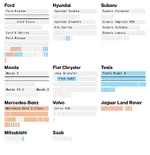
Always wondered who Model 3 is stealing sales from - Bloomberg did a study, and it across the board, but among luxury manufacturer's BMW is the most hit -

upload_2019-11-13_21-51-59.webp
upload_2019-11-13_21-55-49.webp
upload_2019-11-13_21-57-20.webp


Full article here - www. bloomberg.com/graphics/2019-tesla-model-3-survey/market-evolution.html#intro
 

Attachments

Always wondered who Model 3 is stealing sales from - Bloomberg did a study, and it across the board, but among luxury manufacturer's BMW is the most hit -
Next year the same will be true in the UK amongst both private and fleet customers.

It's no surprise as the Model 3 is engaging enough and has so many strengths that flaws in interior fit and finish is happily overlooked by consumers.
 
Next year the same will be true in the UK amongst both private and fleet customers.

It's no surprise as the Model 3 is engaging enough and has so many strengths that flaws in interior fit and finish is happily overlooked by consumers.
Yeah unless they are used to driving benzes lol :)
 
Next year the same will be true in the UK amongst both private and fleet customers.

It's no surprise as the Model 3 is engaging enough and has so many strengths that flaws in interior fit and finish is happily overlooked by consumers.

So other thing I have always wondered without getting a credible data point is the whole quality issue with Teslas (and no, the youtube video x63 loves to post does not constitute quality data). Bloomberg addressed that too -

upload_2019-11-13_23-53-49.webp


So yea it was bad to begin with (understandably given it is first time they are producing cars in this scale) but definitely getting better now. Compared to Industry standards (which is for 90 days vs 30 days Bloomberg tracked, but even if you multiply by 3, you would get around 93 defects/100 vehicles - smack dab where the "industry avg" is.

2019088a.webp


Yeah unless they are used to driving benzes lol :)
Isn't that ironical? Cause I honestly believe if BMW was true to itself and focused on the enthusiast driver like they used to be in the 90s and early 00s they would have probably been less affected.
 
So other thing I have always wondered without getting a credible data point is the whole quality issue with Teslas (and no, the youtube video x63 loves to post does not constitute quality data). Bloomberg addressed that too -
Agreed
 
Compared to Industry standards (which is for 90 days vs 30 days Bloomberg tracked, but even if you multiply by 3, you would get around 93 defects/100 vehicles - smack dab where the "industry avg" is.

Given that part of the perceived benefit of having an EV powertrain as opposed to an ICE is that it's "simple", and given Tesla have kept the numbers of components, fixtures and fastenings on the interior to a bare minimum, I'd expect them to be targeting a pretty hefty reduction in faults.

edit:

More info highlights where the issues are.

upload_2019-10-29_17-51-27-png.webp


upload_2019-10-29_17-51-36-png.webp

upload_2019-10-29_17-51-48-png.webp

upload_2019-10-29_17-51-58-png.webp

upload_2019-10-29_17-52-7-png.webp
 
So other thing I have always wondered without getting a credible data point is the whole quality issue with Teslas (and no, the youtube video x63 loves to post does not constitute quality data). Bloomberg addressed that too -
Indeed. Faults and defects will decrease overtime.

When I was younger I worked at a Volvo assembly plant in my home town Gothenburg. It was no rare to see tweaks or alterations to fittings or mounts in order to address a problem.

Hence why dealers always ask for chassis numbers when ordering parts, to ensure that the right part is ordered for a given car.
 
True story.

Both neighbours to my immediate right have bought a Model 3 in the past two months. Last week one of the couples were standing outside their house speaking to their guests. I had to nip to the shops in my M140i.

As I passed them I felt self-conscious about the throaty and noisy cold start of my car. :censored::sick:

I never hear their cars leave or arrive.
 
iven that part of the perceived benefit of having an EV powertrain as opposed to an ICE is that it's "simple", and given Tesla have kept the numbers of components, fixtures and fastenings on the interior to a bare minimum, I'd expect them to be targeting a pretty hefty reduction in faults.

As the study shows, most of the issues are with paint and panel gaps, which I guess is not much different compared to a conventional car.
Given, they are a young company starting to make cars at this scale for just over a year now, not very surprising...

If it is still not better than industry avg in 70 years like some, I think you have a point...


ps. Also that figure of ~90 is using my rudimentary method of multiplying defects in first 30 days by 3 to find an upper bound of defects in 90 days. In reality, I doubt that is how it works - most initial quality defects should be discovered early on, especially paint stuff. So in reality, I would expect the figure to be much lower than the current industry numbers are already.
 

Tesla

Tesla, Inc. is an American multinational automotive and clean energy company headquartered in Austin, Texas. It designs, manufactures, and sells electric vehicles, stationary battery energy storage devices from home to grid-scale, solar panels and solar shingles, and related products and services. Incorporated in July 2003 by Martin Eberhard and Marc Tarpenning as Tesla Motors, the company's name is a tribute to inventor and electrical engineer Nikola Tesla. In February 2004 Elon Musk joined as the company's largest shareholder and in 2008 he was named CEO.
Official website: Tesla

Trending content


Back
Top