Model S [Official] Tesla Model S


The Tesla Model S is a battery-electric, four-door full-size car produced by the American automaker Tesla since 2012. The automaker's second vehicle and longest-produced model, the Model S has both received mixed reviews from critics and also been described as one of the most influential electric cars in the industry.
The Tesla S is definitely one of the best looking saloons in the world, its so sleek and elegant.
 
To view this content we will need your consent to set third party cookies.
For more detailed information, see our cookies page.
 
  • Like
Reactions: Yaz
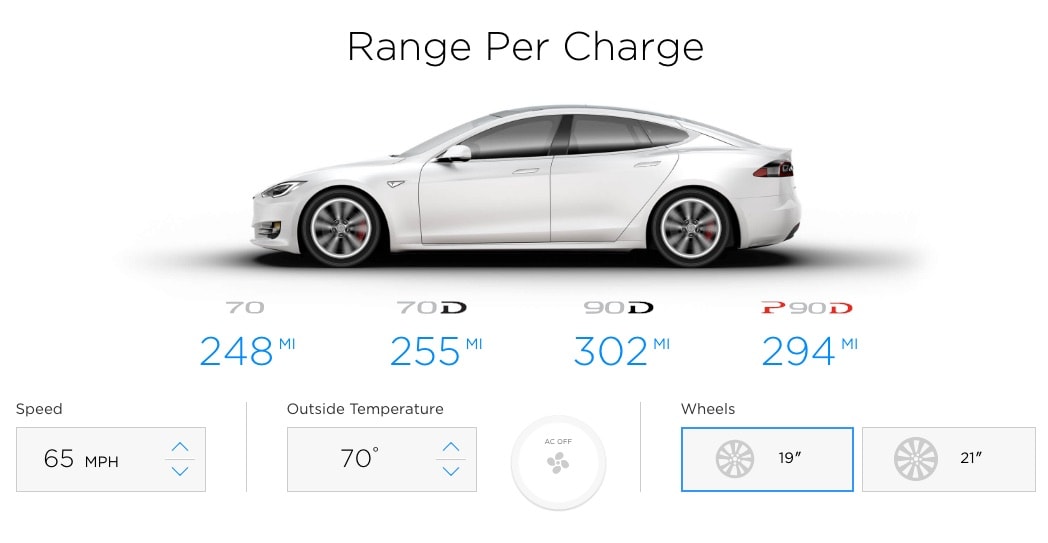
Tesla Model S 100 kWh battery option teased, Model S 90D boosted to 294 miles
ac8440ba3f2406e2dec08eefb72fe22d.webp

The Environmental Protection Agency has put the all-electric sedan in 90D form through its paces yet again. Ladies and gents, it is with great pleasure that I announce to you that the 2016 Tesla Model S 90D can travel up to 294 miles (473 km) on a full charge.

On the EPA website, we’re told that range in the city stands at 285.7 miles (460 kilometers). Outside the urban jungle, the 2016 Tesla Model S 90D runs out of juice after 303.2 miles (488 kilometers). Indeed, this variant of the Model S is the first mass-produced electric vehicle to cross the 300-mile barrier. Are you curious how Tesla managed to squeeze 6 percent more range from the 90 kWh battery pack?

The answer to that curiosity comes from the eco-conscious peeps over at InsideEVs.com, as follows: “The new 90D was listed by Tesla at 294 miles of range, versus the old 270-mile EPA rating (which was actually based on the 85 kWh car – the 90 kWh version was not originally re-tested/certified for greater range via increased battery capacity) and Tesla’s previous 288-mile estimate.”

The good news doesn't end here because the Tesla Model S 100D and P100D are go. Tesla Motors has posted a photograph on its Facebook account of a Model S parked next to a wall on which “100” is written. No prizes will be awarded to those who understand that is the teaser for the long-awaited 100 kWh battery.

If we’re lucky, the Palo Alto-based EV manufacturer will make the 100 kWh battery available for the Model X as well. There's a small possibility for that not to happen, but then again, it would be ludicrous if the Model X didn't get the same 100 kWh battery option as the Model S. No other official information is available at the present moment, but do look forward to 350 miles (563 kilometers) at the very least.

Read more: http://www.autoevolution.com/news/t...oosted-to-294-miles-106908.html#ixzz46xH8xs22
 
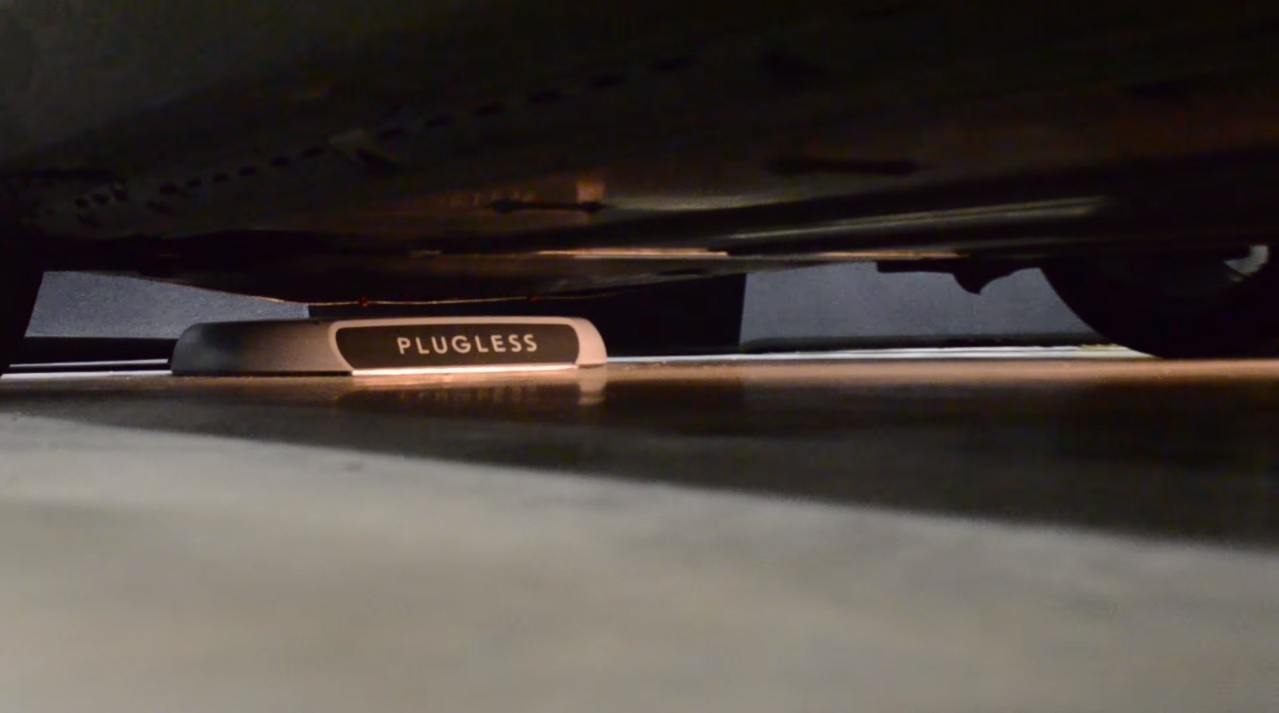
Tesla Model S Wireless Charger Costs $3,290
fd5cf5bc86ea4c840d44f6d3f41c8bee.webp

Remember the Evatran Group? Yes, that company we first talked about back in 2009. Better known for its Plugless Power arm, Evatran is known for its wireless charging system for popular eco cars such as the Nissan Leaf, Chevrolet Volt, and Cadillac ELR.

OK, the Volt in a fancy suit isn't that popular, I admit. Now, though, the hands-free charging system is available for the Tesla Model S. Including the shipping and the cost of installing the vehicle adapter, Plugless for the Tesla Model S costs $3,290.

Bear in mind that shipments of the wireless charger for rear-wheel-drive Tesla Model S vehicles will begin in late May 2016. Customers who want Plugless Power for the all-wheel-drive Tesla Model S will get it in the latter half of 2016. The 7.2 kW charger offers about 20 miles of range for every hour of charging.

Overnight charging will provide 200 miles of range, which isn’t bad provided that you don’t travel more than 200 miles per day. Most Model S owners don’t. According to the company, Plugless requires a 208/240 volt, 50 amp, 2-pole, dedicated circuit rated for continuous duty. In other words, nothing fancy.

Plugless can also be installed using a NEMA 14-50 outlet or it can be directly hardwired. The vehicle adapter that’s installed using existing mounting locations at the front of the rear-wheel-drive Tesla Model S weighs approximately 35 pounds (15.87 kilograms), accounting for less than 1 percent of a Model S 60's weight.

Plugless for the Tesla Model S comes with a 3-year warranty and a 45-day Any Reason Return Period after installation. More information on the wireless charging solution from Plugless Power can be found here.

Plugless isn’t yet available for other Tesla vehicles, as in for the Model X, Model 3 or Roadster. “Our engineers are hard at work to bring Plugless to all Tesla models," the Richmond, Virginia-based company has commented. You can have your say regarding which model should go Plugless next by accessing this link.

To view this content we will need your consent to set third party cookies.
For more detailed information, see our cookies page.

Read more: http://www.autoevolution.com/news/t...-charger-costs-3290-107050.html#ixzz47Q4qQEsp
 
Whatever happened to swapping out the battery packs they demonstrated years ago?
 
Apparently, there weren't many takers when they trialed it, so sort of dead - http://fortune.com/2015/06/10/teslas-battery-swap-is-dead/

batteries do have a lifespan, i wonder what they will do when it runs out, if teslas become a use and throw appliance (like a mobile phone) then they really haven't improved the car industry enviromentally (just being too short sighted to see it), lets hope elon has planned for it beforehand
 
Tesla Model S will receive 75 kWh battery for entry-level version

465f0064654ca4a91ae801fca6bb0a94.webp

Tesla has confirmed the introduction of a 75 kWh battery on the Model S offer, but has not specified a timeline for the launch of the new version.

Reportedly named 75D, the new variant of the Tesla Model S might lead to the elimination of the 70D, the current entry-level of the electric sedan.

The introduction of the 75 kWh battery in the Model S range was disclosed by the California Air Resources Board, which published a list of eligible vehicles for the single-occupant carpool lane stickers.

For those of you who do not know what these stickers are, here’s a quick introduction. The carpool lane stickers allow drivers of eco-friendly vehicles which have been certified by CARB to drive in the carpool lane as mentioned earlier path even if the car only has one passenger. To be allowed to do this without getting a fine, a person must request a sticker for their vehicle.

The guys at Electrek noticed the introduction of the new version, and have requested comment from a Tesla representative.

Fortunately, they replied, and now we have official confirmation that the Model S will be available with a 75 kWh battery. Sadly, the unnamed Tesla representative who responded the query of Electrek did not provide a timeline for the introduction of the new model. Considering the new version received CARB certification this year as an MY2016 vehicle, we expect it to be available soon.

The other CARB-certified versions of the Tesla Model S have 70, 85, and 90 kWh battery capacity. The rumoured 100 kWh Model S has yet to be certified by the California Air Resources Board. This version was expected to be launched with the facelift of the Model S, but the rumours did not materialise.

The range of the Model S is expected to be increased from the 234 miles (376 km) of the rear-wheel drive 70 kWh version to around 250 miles (402 km) for the improved variant. This is an estimation based on the 7% enhancement of the battery’s capacity.

Read more: http://www.autoevolution.com/news/t...entry-level-version-107144.html#ixzz47hxbStQd
 
Any members actually using this car? I've seen some pretty bad figures on reliability.
 
batteries do have a lifespan, i wonder what they will do when it runs out, if teslas become a use and throw appliance (like a mobile phone) then they really haven't improved the car industry enviromentally (just being too short sighted to see it), lets hope elon has planned for it beforehand

Tesla already has a closed loop battery recycling program where it has recycling partners to assist.

Tesla Closed Loop Recycling Program

As more electric vehicles hit the road, the demand for battery recycling will increase. The automotive industry faced the same situation twenty years ago, for recycling lead-acid 12-volt starter batteries used in gasoline-powered vehicles. With supportive regulations and convenient collection, today the recycling process is profitable. Once reclaimed, the lead acid batteries are crushed into coin-sized pieces and separated into component parts. Plastics are sent to re-processors to be made into new products, and purified lead is sent back to battery manufacturers to be reused – a closed loop system.

It's also worth noting that he Giga Factory that is being built in Nevada will actually have a battery recycle facility as well, so Tesla will then have an in house, end-to-end manufacturing and recycling program for batteries.
 
Anecdotal, but we have had a Model S in our family since January 2013 and it has been very reliable so far. We haven't encountered any problems with the door handles or anything that would interrupt driving or leave you stranded. I do seem to recall an audible warning chime that went off randomly during a drive for no apparent reason (like a seatbelt warning chime or door open chime) early on into ownership, but that resolved itself at the next start-up.
 
Guys, if anything, electrical engines are much more reliable than internal combustion, reciprocal engines. And so is, the fact of not having a transmission and clutch/torque converter. And on top of that, there's much less service/wearable parts to be taken care of.
 
2015 Tesla Model S P85D
Not quite weatherproof.
  • MAY 2016
Long-Term Road Test Update


WHAT WE LIKE: Riding in Car and Driver’s long-term Tesla Model S P85D may result in feeling butterflies in your stomach, or your stomach in your throat, or the sensation that partially digested butterflies might suddenly stream out of your throat. These are just a few of the reactions reported by passengers after thrill rides in Tesla’s electric rocket. Of all of the fast and slinky cars that pass through our parking lot, the Tesla Model S is the only one that consistently astounds automotive enthusiasts and agnostics in equal measure. We’re big fans of the P85D’s effortless 3.3-second zero-to-60-mph blast—sudden but never violent—but we’re even happier that Tesla seems to be getting average Americans excited about cars again.

Our drivers continue to be impressed with the car’s clever details, like the parking sensors that report the actual distance, in inches, to objects like fences, walls, and light posts rather than just blaring an alert and showing the driver an ambiguous red zone on a graphic display. Parents and kids alike enjoy the rear-facing third-row seats—kids for the novelty of the experience, and parents for the silence that comes after sequestering youngsters back there.

8bb8039af9c74e8dd46de80203611241.webp


In January, a software update introduced Summon, a new feature that allows the driver to move the Model S into or out of a tight parking spot or garage while standing outside the car, either with no input whatsoever—touch a door handle to abort the self-parking mission—or by issuing commands via smartphone. While providing this foretaste of an autonomous-driving mode that would allow the owner to “summon” the car from a parking lot to, say, the curb in front of a restaurant, Tesla currently asks owners to restrict its use to private property. Here in the Midwest, where our parking lots are often even bigger than our cornfields, that restriction makes Summon more of a party trick than a useful function, but we’re still intrigued by an automaker that doesn’t stop improving a car after it’s been sold. However, Tesla’s tendency to leave these software functions in a seemingly perpetual Beta state also makes us wary that they’ll never be finalized.

WHAT WE DON’T LIKE: The limits of today’s battery technology immediately become clear whenever the temperature drops below 40 degrees. Winter posed a challenge for our Model S even though Michigan saw relatively mild temperatures and minimal snowfall. During one 20-degree weekend in late November, features editor Jeff Sabatini left the office on Friday with an indicated 225 miles of range, the maximum charge on the battery in its standard mode. He drove just 54 miles over the weekend and plugged in once to add 22 miles of indicated range, yet the car’s dashboard readout said he had just 59 miles remaining by Monday morning. That’s 134 miles of range lost to heating the cabin, conditioning the battery pack, and the efficiency reduction all EVs experience in the cold. This is a more extreme example, to be sure, and no doubt affected by the car spending most of the weekend outside and unplugged.

Still, it wasn’t uncommon to see 190 miles of range evaporate in a 130-mile round-trip drive to Detroit during the winter. This is, in large measure, why our observed fuel economy and range don’t approach the Tesla’s EPA ratings. Granted, our car is driven by various staff members, not all of whom have a garage, so it likely is exposed to cold weather a lot more than are most Snow Belt luxury cars. We’ve run plenty of conventional cars under the same conditions, though, without it routinely impeding their ability to perform the primary mission of getting from point A to point B. And the Model S’s cold-blooded sluggishness goes deeper. When the powertrain is cold, the deceleration capabilities and capture of energy from regenerative braking are either reduced or completely unavailable. (The Tesla also has a hydraulic braking system, so it still can, you know, stop.) The touchscreen becomes even less responsive than normal and it doesn’t work for drivers wearing gloves. And the frameless side windows rarely drop fast enough, so they often catch the weather stripping when the door is opened.

WHAT WENT WRONG: Just days before this update was written, a spring rainstorm resulted in water leaking into the cabin through the sunroof. While rain poured from the sky, it only dribbled into the cabin—just a few drops total—during hard left turns. At least the problem appeared at a convenient time. Our car was already scheduled to make the 182-mile trip to our nearest retailer in Lyndhurst, Ohio (near Cleveland), for its 25,000-mile service.

2afbdb3d00e8f2e76a64c67d606e8780.webp


We’ve also asked the technicians to look at the 17-inch touchscreen, which responds reluctantly to our pokes and swipes, like a five-year-old iPhone that has undergone three operating-system updates. It’s especially annoying when using the satellite radio, as changing stations is met with lag that can be counted in whole seconds. Occasionally the radio also displays channel information for a station other than the one we’re listening to, and it often defaults to SiriusXM Hits 1 when we get into the car, subjecting our drivers to a kind of pop-music game of Russian roulette, with the chambers filled with the likes of Justin Bieber, One Direction, and Selena Gomez.

We should also point out that our P85D spec panels now show 463 horsepower for the combined output rather than the 691 horsepower that Tesla claimed when it initially released the car. While the P85D’s two electric motors are capable of producing 221 and 470 horsepower individually (for a total of 691), they can’t both make maximum power at the same time due to limitations of the power electronics and the battery pack. Tesla subsequently revised its claims but nothing changes on the car. Our long-term car is, and always has been, capable of mustering 463 horsepower (it was built before the $7500 option to get 532 horsepower in Ludicrous mode was available).

WHERE WE WENT: It took 11 months for our Model S to cross the halfway mark in this 40,000-mile test. That’s far longer than it typically takes to accumulate miles during our long-term tests, almost certainly because few of our drivers are willing to subject themselves—and their families—to the extra time required for a Tesla road trip. Since our 1600-mile road trip last May, its longest excursion has been to Louisville, Kentucky, a 350-mile journey that took seven clock hours in the Model S, instead of the usual five and a half burning gasoline.

Months in Fleet: 13 months Current Mileage: 23,958 miles
Average Fuel Economy: 67 MPGe Battery Capacity: 85 kWh C/D Observed Range: 180 miles
Service: $0 Normal Wear: $0 Repair: $0
Damage and Destruction: $1497

http://www.caranddriver.com/reviews/2015-tesla-model-s-p85d-long-term-test-update-review
 
To view this content we will need your consent to set third party cookies.
For more detailed information, see our cookies page.

To view this content we will need your consent to set third party cookies.
For more detailed information, see our cookies page.

To view this content we will need your consent to set third party cookies.
For more detailed information, see our cookies page.
 

Tesla

Tesla, Inc. is an American multinational automotive and clean energy company headquartered in Austin, Texas. It designs, manufactures, and sells electric vehicles, stationary battery energy storage devices from home to grid-scale, solar panels and solar shingles, and related products and services. Incorporated in July 2003 by Martin Eberhard and Marc Tarpenning as Tesla Motors, the company's name is a tribute to inventor and electrical engineer Nikola Tesla. In February 2004 Elon Musk joined as the company's largest shareholder and in 2008 he was named CEO.
Official website: Tesla

Trending content


Back
Top