Photography Your Best Photography

Automotive photography, techniques, gear, editing, and photo-focused discussions.
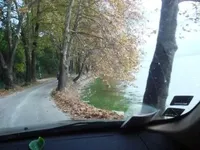
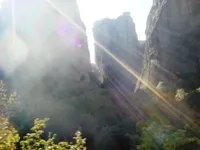
From my recent trip to western part of Macedonia,Greece
 

Attachments

  • DSC011!!.webp
  • DSC012!!.webp
  • DSC013!.webp
  • DSC01225!.webp
  • DSC01358!.webp
  • DSC01530!.webp
  • DSC01511!.webp
  • DSC01509!.webp
  • DSC01390!.webp
  • DSC01365!.webp
  • DSC01387!.webp
  • DSC01538!.webp
Great shot Chris. Interesting to see your experimenting with new subjects! :)

Just a quick question..what did you do to get that black backdrop to the image, and how did you go about this shot in terms of lighting? Was it just shot with flash on, or did you bring a few table lamps together to provide even light, or some other technique ? :)
 
Great shot Chris. Interesting to see your experimenting with new subjects! :)

Just a quick question..what did you do to get that black backdrop to the image, and how did you go about this shot in terms of lighting? Was it just shot with flash on, or did you bring a few table lamps together to provide even light, or some other technique ? :)

Thanks. :t-cheers:

This photo was actually done for my photography class at the academy. I was supposed to photograph pralines and make them look appetizing. How I did it is very simple. I have a small circular dark marmor table and that material is great for reflections, I noticed. Because of this, I choose it as my background setting.

I began the photoshoot shortly after lunch but the sunlight that was entering my apartment was too intense - even with the curtains drawn. So I came up with the idea of shooting them at night and using artificial light as my illumination source. My first few test shots with distant tablelamps providing the light in the background weren't satisfactory (generally too overexposed despite different shutter speed and aperture settings) plus not all chocolates were getting equal illumination.

So then I decided to do something really radical. Photographing the pralines in complete darkness with only a small weak flashlight illuminating the chocolates. And that's exactly what I did. I had to fine tune the camera and with a series of test shots but my best results were with a shutter speed time of 10 seconds and an aperture setting of f14. I was actually somewhat restricted in my settings in that the teacher only allowed us a maximum aperture setting of 16 and an lowest of 11. I got my best results with 14 though so I stuck with that value throughout most of the shots. There were no restrictions on shutter speed, but the maximum ISO we could use was 800. I used a value of 200 since I was photographing with a tripod and used long shutter speeds.

Now in order to have all chocolates equally illuminated, I stood behind the camera and flashed the weak flashlight all over the chocolates - and as I expected, all of them were virtually bathed in balanced light. Once again, this shot was done in complete darkness with only a small and weak flashlight and a camera mounted on a tripod. I also used my new 18-200mm lens for the shoot. I can adjust the flash settings of my camera but even a "weak setting" tends to give the subject too much light and annoying reflections so I refrained from doing that. We were also encouraged not to use flash if possible. Plus I wanted the natural texture and colors of the pralines to be seen in the photo and thus a weak flashlight was ideal for the job.

That's how I did it. :t-cheers:
 
WOW!.. thanks for the detailed description! That really opened up my eyes on how to do such photos. I could see myself doing similar photos with my model cars. I've always wondered how the dark background was achieved, and how the even light was achieved. Thank you again for the quick tutorial Chris! :)

If I have time, I might give this a go tonight with one of my model cars. I've slowly realising that better photos are achieved by having a longer shutter speed than having a higher ISO or lower aperture (refering to fairly close up photography that is). I'll have to wait a few more weeks till I can get my hands on my new 18-200mm, but my 18-70mm kit lens should be fine for a few test shots.

Fascinating!! :)
 
Re: My Brietling again...

There has been a lot of flack about IQ from the 50D which I think is not quite accurate.

Nice shot there Jack... I think the issue is pixel density (huge MP jump over 40d, same sized sensor) which has led to degradation of quality occurring at anything above f/7.6 (for comparison's sake, 40d has same issue above f/9.3, and on my trusty 20d, diffraction doesn't start affecting quality until f/10.3). So for the past umpteen years, if we've wanted optimum optical performance we would shoot at f/8... with the 50d if you shoot at f/8 or greater (particularly with lower quality lenses) quality suffers noticably.

But obviously you are fine at f/2.8 :)

I think the guy at Canon Digital SLR Camera and Lens Reviews at The-Digital-Picture.com gives a great, reasoned review of the 50d. He concludes that although pixel density has produced the above issue, the extra detail gained from the increased MP count balances this out. Here is the review, very detailed: Canon EOS 50D Digital SLR Camera Review
 
I was actually somewhat restricted in my settings in that the teacher only allowed us a maximum aperture setting of 16 and an lowest of 11. I got my best results with 14 though so I stuck with that value throughout most of the shots.

Odd parameters... what exactly was he suggesting was to be gained by shooting at such aperture values? Or was it encourage the use of long exposures?
 
Re: My Brietling again...

Nice shot there Jack... I think the issue is pixel density (huge MP jump over 40d, same sized sensor) which has led to degradation of quality occurring at anything above f/7.6 (for comparison's sake, 40d has same issue above f/9.3, and on my trusty 20d, diffraction doesn't start affecting quality until f/10.3). So for the past umpteen years, if we've wanted optimum optical performance we would shoot at f/8... with the 50d if you shoot at f/8 or greater (particularly with lower quality lenses) quality suffers noticably.

But obviously you are fine at f/2.8 :)

I think the guy at Canon Digital SLR Camera and Lens Reviews at The-Digital-Picture.com gives a great, reasoned review of the 50d. He concludes that although pixel density has produced the above issue, the extra detail gained from the increased MP count balances this out. Here is the review, very detailed: Canon EOS 50D Digital SLR Camera Review
What I have found with the 50D and the increased MP is that I can crop above 50% (or more) and still retain detail for display at anywhere up to 1500 pixels. I do not print much except for 4x6 to send to friends.

I normally use Aperture Priority and generally set it to f/7.1 or f/8, so I have not really encountered any diffraction. BTW, this seems to be the new fad word... anyone who has had formal training in photography is knowledgeable with diffraction. When I see people posting images and they want help because they are not "sharp," they will state they stopped down to f/22 so shouldn't everything be sharp.
 
WOW!.. thanks for the detailed description! That really opened up my eyes on how to do such photos. I could see myself doing similar photos with my model cars. I've always wondered how the dark background was achieved, and how the even light was achieved. Thank you again for the quick tutorial Chris! :)

If I have time, I might give this a go tonight with one of my model cars. I've slowly realising that better photos are achieved by having a longer shutter speed than having a higher ISO or lower aperture (refering to fairly close up photography that is). I'll have to wait a few more weeks till I can get my hands on my new 18-200mm, but my 18-70mm kit lens should be fine for a few test shots.

Fascinating!! :)

Anytime. :t-cheers:

A small tip. Model cars might be a very reflective subject, so I would recommend using a weak flashlight (like a small pen flashlight) and standing behind the camera and quickly illuminate the car by moving the light across the subject from left to right (or vice versa) and trying to expose all areas of the car to the light source for an equal amount of time. That's pretty much what I did with the chocolates.

Yep, the higher the aperture setting the more clearer detail you achieve in the photographs. Of course this is only possible with a tripod. And for such photos, you can easily use a lower ISO since the camera will be stationary and using a long exposure / slow shutter speed time. You only really need to adjust ISO times when there is a lack of light in your environment or when you're compensating for higher shutter speed values. Or, you can also use extremely high ISO speeds for artistic effects such as very noisy black and white photos for example, which I feel have this "cool look" to them. :eusa_thin

On my list of lenses is a fisheye lens and possibly a smaller 12-24mm lens for extreme wide angle shots. Why do they have to cost so much though! :t-banghea
 
Odd parameters... what exactly was he suggesting was to be gained by shooting at such aperture values? Or was it encourage the use of long exposures?

I believe we were assigned these values because not everyone in my class has a DSLR camera. Some semi-professional cameras only go up to an aperture setting of f16, so I guess it was in the interest of "equality and fairness" that those people with DSLRs didn't have an "unfair advantage".

And I am glad I used f14 because the teacher checked all our photos with an exif viewer program to make sure nobody cheated! :D


My teacher is a she by the way.

Go here: Akademie U5 - Ausbildung zum Grafik-Designer, Studium Kommunikationsdesign, ArtDirector..

And look for Barbara Deller-Leppert (Fachdozentin für Fotografie)

Her website: home
 
You guys have to check this out..
not my pix..but this dude is Gifted...


fabioaro.com | fotografia automotiva

Wow.. this guy is incredibly gifted! Thanks for the link Artist!! :t-cheers:

These photos really give me a lot to study from. The geometry and composition seem fairly easy to learn, but location, subject, having full control on lighting, and ofcourse having A-grade equipment make all the difference.

Nonetheless, ...time to study those photos and make some valuable mental notes. :)


Thanks again Artist! :usa7uh:
 
Enjoy it guys..
Its my job to report anything that catch my eye:D
 
Impressive work....

What about you Artist? Get a camera and show us some of your photo skills!

I know Just_me has a camera to.. I`d like to see some photo skills from our other regular members..

:t-cheers:
 
New Software

I purchased a new software this week. Made by Nik Software and called Viveza. It allows for processing specific areas of an image with contrast, brightness and saturation, as well as RGB individual adjustments. It uses what are called "U Points" to click on an area and perform the necessary adjustments. It is a plug-in to Photoshop or Aperture. The first image I did the normal PS way and the second I did with Viveza. Note the better coloring and snappy image.

View attachment 58c798f497cceb4a411edf399a3a4f0b.jpg

 
Re: New Software

I purchased a new software this week. Made by Nik Software and called Viveza. It allows for processing specific areas of an image with contrast, brightness and saturation, as well as RGB individual adjustments. It uses what are called "U Points" to click on an area and perform the necessary adjustments. It is a plug-in to Photoshop or Aperture. The first image I did the normal PS way and the second I did with Viveza. Note the better coloring and snappy image.

Looks good Jack!! Christian would love this program, I bet!! :usa7uh: Thanks for the photos!! High quality like always! :eusa_pray
 

Trending content


Back
Top