Daimler Truck [Official] New Mercedes-Benz Actros


Daimler Truck AG (holding company legal name Daimler Truck Holding AG) is the world's largest commercial vehicle manufacturer, with over 35 main locations worldwide and approximately 100,000 employees. Daimler Truck AG is headquartered in Leinfelden-Echterdingen, Germany. The Daimler Truck and Daimler Buses divisions include the eight vehicle brands BharatBenz, Freightliner, FUSO, Mercedes-Benz, RIZON, Setra, Thomas Built Buses and Western Star. Daimler Truck is the global market leader in the medium and heavy-duty truck segment with a gross vehicle weight of over 6 tons.

Human

You. The Road. Nothing else.
Messages
6,118
Name
Naas
Brimming with innovation and emotion. Easier on the environment than other trucks. Aiming for the very top in terms of comfort, driving dynamics and economy. Boasting outstanding material and build quality as well as the lowest overall costs. Not to mention irresistibly good looks. Yet for all these superlatives, the most important aspect is the fact that it has been tested like no other truck generation before. It is the first all-new truck to have been developed uncompromisingly under the "Trucks you can trust" premise. Among other things, this means that the new Actros has undergone 2600 hours of fine-tuning in the wind tunnel, 50 million kilometres of engine testing on test rigs and in real-life operation, and 20 million kilometres on the road.

The main rival to the new Actros is its predecessor, which has set a very high benchmark over the course of 15 years and several stages of development, with more than 700,000 units sold worldwide during this time. The new Actros is following in illustrious footsteps, but its new concept signals a different approach: all versions of the new premium truck are uncompromisingly designed for long-distance transport. It now covers all long-distance applications, whereas previously this domain was served by two truck series, namely the Actros and the Axor.

At the heart of the new Actros is a modular system conceived specifically for long-distance transport: seven spacious cabs, five of which have a flat floor; innovative interior ideas such as the separation of the working and living areas; a new cockpit that is both functional and attractive; a new, high-torque, clean and exceptionally economical six-cylinder in-line engine with additional torque reserves; a new frame and a dynamic chassis; further enhanced safety. The new Actros is a veritable showcase of innovations.
It is the first and, to date, only truck which has been developed rigorously to comply with the Euro VI emissions standard. The figures certainly stack up: fuel consumption in the optional Euro V variant is around six percent lower than for the predecessor model. In the case of the Euro VI version, the figure is around three percent lower, combined with a reduction in AdBlue consumption of around 40 percent. Maintenance and repair costs are even lower than before, as evidenced by low-cost service contracts.

To view this content we will need your consent to set third party cookies.
For more detailed information, see our cookies page.
 

Attachments

  • Mercedes-Benz-Actros-c890x594-ffffff-C-cc524296-512262.webp
  • Mercedes-Benz-Actros-c890x594-ffffff-C-4c3df9cc-512263.webp
  • Mercedes-Benz-Actros-c890x594-ffffff-C-9bd8157c-512265.webp
  • Mercedes-Benz-Actros-c890x594-ffffff-C-a7e50d2b-512267.webp
  • Mercedes-Benz-Actros-c890x594-ffffff-C-ff56e229-512268.webp
  • Mercedes-Benz-Actros-c890x594-ffffff-C-cb4ffd58-512269.webp
  • Mercedes-Benz-Actros-c890x594-ffffff-C-3014888e-512279.webp
  • Mercedes-Benz-Actros-c890x594-ffffff-C-8a965aba-512282.webp
  • Mercedes-Benz-Actros-c890x594-ffffff-C-e12ecf52-512285.webp
  • Mercedes-Benz-Actros-c890x594-ffffff-C-b7dac98-512259.webp
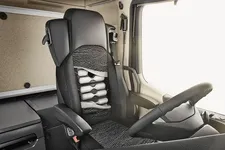
I must say that Cab is 5 Star accommodation and this big luxurious beast will be cheaper than a G55 AMG....and pay for itself on the long haul;)
 
This truck will make many fat drivers happy:D
 
Haha epic:)
That truck is so good looking..it makes me wish i owned one..but its kind of hard to justify it:D..haha
 
Haha, awesome :D

It packs like 650 hp right? Really quick without a trailer!
 
To view this content we will need your consent to set third party cookies.
For more detailed information, see our cookies page.
 
Yeah, the Germans are sh!t, we know

It's got nothing to do with the Germans being shit, nor is the post old, idiots the both of you.

I find it interesting that only Volvo and Scania out of all heavy truck manufacturers have engines with over 700hp, nobody else even comes close, even the Americans, don't go much over 600hp.
 
It's got nothing to do with the Germans being shit, nor is the post old, idiots the both of you.

I find it interesting that only Volvo and Scania out of all heavy truck manufacturers have engines with over 700hp, nobody else even comes close, even the Americans, don't go much over 600hp.

it's 2015 and they can only offer up to 625hp, where as Scania has 730hp and Volvo 750hp options.

Guys, you are right that only Volvo & Scania have engine output ranging 700+ hp, but when I spoke with some senior officials of Daimler Truck during at Germany, what they quote make sense as well. Mercedes-Benz Trucks or CV are having a very different emotion compared to cars, trucks are considered as a business tool were the operators/owners should make profit out of it and unlike Swedish rivals Daimler is involved mostly into to fleet or bulk sales, hence they configure the truck according to the operational requirement of the owners. Having said that, compared to Scandinavians Mercedes-Benz is having a better productivity with lesser engine capacity, for e.g., instaed of using a bigger or more powerful engine and burning more fuel, Mercedes trucks like Arocs and SLT variants uses Retarder Clutch which reduced the engine effort to pull more loads with lesser engine rev. Which is why just with 625hp, the SLT varaints of both Actros & Arocs can easily pull a load of 250tons with a speed of 80kmph. And if you want to pull heavier load, just reduce the speed of the turck. ;)
 
12087325_1112487388780009_3949999312163482613_o.jpg


Mercedes-Benz Actros: economical and environmentally compatible: The Mercedes-Benz Actros with the latest generation of the OM 471 engine is the perfect combination of economy and ecology – proven in precise tests
  • Benefit for companies: outstanding economy
  • Benefit for drivers: further enhanced dynamism
  • Benefit for society: maximum environmental compatibility
  • Up to three percent lower fuel consumption proven in precise tests
It impresses companies with its outstanding economy, drivers with its dynamism and starting power, society with its low emissions – the Mercedes-Benz Actros with the latest-generation OM 471 heavy-duty engine combines seeming opposites. The economical truck is also an ecological truck. A statement backed up by the long-distance truck's performance data and proven in tough tests.

Benefit for companies: outstanding economy

Never before has a long-distance truck been as systematically designed for maximum efficiency as the Mercedes-Benz Actros. It stands for the ultimate in economy in the tough transport business. With the introduction of the latest-generation OM 471 heavy-duty engine, the already low fuel consumption is further reduced by up to three percent.
This is thanks to sophisticated engine technology such as the second generation of the unique X-Pulse injection system, a patented solution for exhaust gas recirculation and simultaneous control of the exhaust gas turbocharger, a highly precise turbocharger developed and produced in house, plus a wealth of other measures including a longer axle ratio.

Economy also means maximum robustness: several components can be omitted because the engine is systematically pilot-actuated. The motto for this is as simple as it is logical: if it's not installed, it can't wear out. In this way the outstanding reliability of the OM 471 is further enhanced.

Benefit for drivers: further enhanced dynamism

For the driver of the Actros with the latest-generation OM 471, lower fuel consumption nevertheless means greater driving dynamics. A fast and steep increase in output ensures powerful starting and acceleration, even from the bottom of the rev range. Even from idle speed, the engines pull powerfully and almost reach their peak torque before the rev counter even hits 1000 rpm. Some 95 percent of the maximum torque is then available between around 1300 and 1400 rpm, and the rated speed is now 1600 rpm.

Despite nominally identical maximum output and torque data, the engines operate far more powerfully in the most frequently used engine speed range between 1000 and 1500 rpm. On the road this translates into outstanding drivability under all conceivable conditions across an extremely wide engine speed range of around 1000 rpm.

Benefit for society: maximum environmental compatibility

In the case of heavy-duty commercial vehicles, maximum efficiency is automatically linked to the best possible environmental compatibility. The low fuel consumption achieved by the Mercedes-Benz Actros is not only good for the company's bank balance, it also preserves resources: assuming a typical mileage of 130,000 km per year, predominantly demanding routes and full capacity utilisation, the Actros with the latest-generation OM 471 saves around 1100 litres of fuel per year compared to its predecessor. This is equivalent to a reduction in CO2 emissions of around three tonnes for every single truck.
Extremely long maintenance intervals for engine oil service and cleaning of the particulate filter likewise help to protect the environment. The emissions of the Actros with Euro VI emissions standard are already at the limit of detection.

Up to three percent lower fuel consumption proven in precise tests

The Mercedes-Benz test engineers have proven the outstanding economy of the Mercedes-Benz Actros with the latest-generation OM 471 in tough tests – rather than being theoretical, its lower fuel consumption is proven in practice.

Standard test routes include the motorway link from Stuttgart to Hamburg and back, which has been used by the testing department for around two decades. The 1520 km stretch is not only one of the most important main routes in Central Europe, it also offers a varied route profile: a mix of hilly stages, demanding mountain sections and flat stretches.

Daimler Trucks does not just compare its own trucks with each other, competitor models also take part in the tests. Thorough preparation is vital when it comes to making objective measurements. The trucks must be directly comparable in terms of engine power and torque, transmission, axle ratio, and control systems such as Predictive Powertrain Control (PPC). The cabs and the trailers, including the load and tyres, are likewise standardised. Further prerequisites for an in-house comparison test include painstaking checking of all components on an output dynamometer, wind-tunnel measurements for correctly installed and adjusted aerodynamic attachments plus calibration of the speedometer and fuel measuring system.

The vehicles are always driven under the same conditions as the reference vehicle, with as few driver interventions as possible. Additional test requirements include stable general conditions such as avoidance of heavy traffic and environmental influences such as strong winds or rain. Changing drivers and swapping trailers evens out any external influences.

Despite everything and even with the most painstaking of preparations, the fuel consumption differs by up to three percent per tour due to various influences such as the weather or traffic. These differences are evened out by performing several test drives in succession and conducting a detailed assessment.

Meticulous preparation for comparative tests

Certain values show how important maximum neutrality is in comparative tests. A truck's fuel consumption falls by about two percent during its running-in phase from around 80,000 km. Tyre type and brand can influence fuel consumption by around five percent. Different tread depths can have the same effect. The difference between summer and winter diesel likewise affects fuel consumption by around five percent. Last but not least, having one tonne less weight on a 40 t articulated truck used for long-distance transport reduces fuel consumption by around 1.5 percent.

As well as being checked by incorruptible measuring equipment, the fuel consumption is also determined by precise refuelling. Important factors here include an always constant position at the identical fuel pump, precise refuelling up to a specified mark and measurement of the fuel temperature. Even a difference in fuel temperature of around ten degrees makes a difference of about one percent due to the different expansion of the fuel. In a tank holding 500 litres, this means a difference of five litres.

The test engineers have taken all these parameters and many others into account. The result is clear: on the road, the Mercedes-Benz Actros with the new-generation OM 471 really does consume around three percent less fuel. And it has verifiably lower fuel consumption than its competitors. The Actros truly does represent maximum efficiency among the long-distance trucks in its class.

Daimler press release (1 of 3)
 
To view this content we will need your consent to set third party cookies.
For more detailed information, see our cookies page.
To view this content we will need your consent to set third party cookies.
For more detailed information, see our cookies page.
 
Some amazing safety systems on the new Mercedes Trucks, they are much safer than previous models.

To view this content we will need your consent to set third party cookies.
For more detailed information, see our cookies page.
 
Guys, you are right that only Volvo & Scania have engine output ranging 700+ hp, but when I spoke with some senior officials of Daimler Truck during at Germany, what they quote make sense as well. Mercedes-Benz Trucks or CV are having a very different emotion compared to cars, trucks are considered as a business tool were the operators/owners should make profit out of it and unlike Swedish rivals Daimler is involved mostly into to fleet or bulk sales, hence they configure the truck according to the operational requirement of the owners. Having said that, compared to Scandinavians Mercedes-Benz is having a better productivity with lesser engine capacity, for e.g., instaed of using a bigger or more powerful engine and burning more fuel, Mercedes trucks like Arocs and SLT variants uses Retarder Clutch which reduced the engine effort to pull more loads with lesser engine rev. Which is why just with 625hp, the SLT varaints of both Actros & Arocs can easily pull a load of 250tons with a speed of 80kmph. And if you want to pull heavier load, just reduce the speed of the turck. ;)
Interesting mechanics behind this Voith Retarder Clutch, here is a great video explaining how it works.

To view this content we will need your consent to set third party cookies.
For more detailed information, see our cookies page.
 

Mercedes-Benz

Mercedes-Benz Group AG is headquartered in Stuttgart, Germany. Established in 1926, Mercedes-Benz Group produces consumer luxury vehicles and light commercial vehicles badged as Mercedes-Benz, Mercedes-AMG, and Mercedes-Maybach. Its origin lies in Daimler-Motoren-Gesellschaft's 1901 Mercedes and Carl Benz's 1886 Benz Patent-Motorwagen, which is widely regarded as the first internal combustion engine in a self-propelled automobile. The slogan for the brand is "the best or nothing".
Official website: Mercedes-Benz (Global), Mercedes-Benz (USA)

Back
Top