My visit to the Royal Automobile Museum in Jordan


M.N.D

Oversteer Expert
Greetings everyone,

This is a journal of my visit to the Royal Automobile Museum on Wednesday, 1st of November 2017, located in the western side of Amman, capital of Jordan.

001.webp


I was intrigued by the amazing collection of pictures taken by various members on GCF on different occasions (Cars & Coffee, international auto shows, race tracks, road trips, etc...). I visited the museum several times, but this time I decided to take a number of pictures and share them with GCF community.

As this is not an auto show, there are little modern cars available. Instead, the majority of the cars shown are classics from a bygone era; some bear the name of brands that went out of business long ago, some are just old cars, while some are limited editions or one offs that did not go on public sale.

I will post pictures of the cars and motorcycles, and provide a brief description on them and how they ended up being there. The information is from a quick guide board available for each vehicle, but I thought it is easier and less cluttering if I summarize it instead of showing the board itself. I will give my own thoughts and remarks afterwards.

The Royal Automobile Museum opened its doors on 25th of May 2003, and it contains the car collection of the late Hussein bin Talal, the third king of Jordan. A number of cars belonged to king Hussein himself; other cars being given as a gift from several figures, while some were donated to the museum from the manufacturers themselves as a gift.

I should mention that I’m not a professional photographer by any means, nor do I have proper equipment. The images you’ll see are not that “creative”, so you’ll have to excuse the awkward angles and some blurry ones...
 
At the entrance square of the museum, there is a De Havilland DH.104 Dove. This bird once belonged to the Royal Jordanian Air Force as a transporter. Just an interesting fact: at some point during its service, the original engines, a pair of straight six cylinder engines made by De Havilland Gipsy Queen, were replaced by a pair of air cooled, horizontally opposed engines, probably the flat eight 8.4 liter Lycoming engine, if my conclusion from Wikipedia is correct.

002.webp
003.webp 004.webp

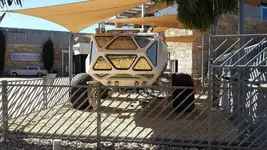
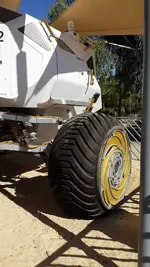
At the other side of the main square, you can see the space vehicle thingy that was used for filming “The Martian”. The vehicle was gifted to the museum by the producers. This vehicle seems to work, as it operates hydraulically, according to the quick guide.

006.webp
005.webp 008.webp 009.webp 010.webp

At the main entrance gate, you see this Daimler Majestic. Not much information provided about this car, so I asked one of the guides of the museum. He didn’t know much either, other than it was used for some official events by the Royal Guard.

012.webp
013.webp 014.webp 015.webp 016.webp

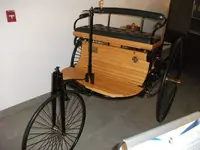
Now inside the building, you greeted by a replica of the Benz Model 1 of 1886. The car seems to me like a piece of a garden furniture set.

017.webp
018.webp

Next to the Benz is a 1952 green Land Rover Series 1, the ancestor of the Defender. This car belonged to the Army, and it was restored in England to its original specs.

020.webp
019.webp
 

Attachments

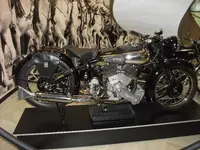
Passing the reception, the first hall has a pair of British motorcycles: A 1952 Vincent Black Shadow (RIGHT), which was at some point the fastest motorcycle in production, and a 1936 Brough Superior SS80 (LEFT ON STAND). The Vincent was gifted to the museum, while the Brough’s story is not mentioned.

024.webp
023.webp 025.webp 026.webp 022.webp

This is the oldest vehicle in the museum, a 1916 Cadillac Type 53, with a straight 8 engine, good for 77 HP to the rear wheels through a 3 speed manual. You can tell that car designers of the early 20th century designed cars to look like a carriage without a horse (Couch buttoned seats, wood rims).

027.webp
028.webp 029.webp 030.webp 031.webp 032.webp

On the right side of the Cadillac is a 1916 Harley Davidson Model J, a gift from the company.

033.webp


On the left side of is a 1920 Excelsior Series 20 Big Twin, from a Chicago based company that was closed in 1930.

034.webp


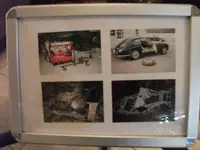
A replica (I think) of a 1889 Daimler V2 engine with a 0.5 HP...
035.webp
036.webp

Going through a corridor, you see a 1995 Harley Davidson Electra Glide 30th Anniversary edition.

039.webp


A 1940 Zundapp KS 650. It is a German company that was established in 1917. This model was used in WW2, and has 8 forward gears.

040.webp
041.webp

A very intimidating vehicle due to its size, a 1915 4.2 tons Rolls-Royce Armored Vehicle replica, was a Silver Shadow with the main body removed and replaced by armored plates and rotary cannon.

042.webp
043.webp 044.webp

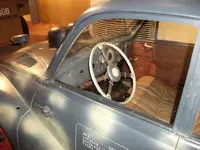
A marque well known among car fans, the Czech Tatra. This is a 1937 T97, a rear engine four door car. Seeing this car, one could argue about the origin of the first VW Beetle, who copied who?

045.webp
046.webp 047.webp 048.webp

A 1942 Harley Davidson WLA

049.webp
 
Exiting the corridor, a small stand on the right contains a 1946 Humber Super Snipe, a British car from a company that manufactured cars, bicycles, and airplanes, and was discontinued on 1976. This car was the private car of Abdullah I, the first king of Jordan. The car was restored and put in the museum.

050.webp
051.webp 052.webp

Entering the first main hall, you see the first sports car in the collection, a 1952 Aston Martin DB2. This car belonged to King Hussein, who in turn gifted the car to his cousin, Faisal II of Iraq, the third and the last king of Iraq. The car was then collected from Iraq when it was in a bad shape. After checking its history, it was sent to the UK for restoration and then to the museum.

053.webp
054.webp 055.webp 056.webp 057.webp 058.webp 059.webp

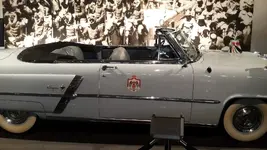
A 1952 Lincoln Capri convertible. It was considered as the flagship of the company. It was used as a state car.

060.webp
061.webp 062.webp 063.webp 064.webp

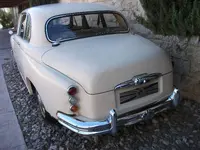
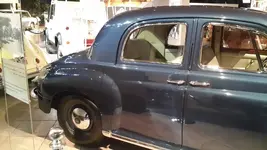
A 1952 Rover 75. This was the first personal car of King Hussein. It was used for a brief time before being replaced and stored. It was rediscovered in 2014, sent for restoration and then here. To me, it looks like this car was used as a model for old era toy cars.

065.webp
066.webp 067.webp 068.webp

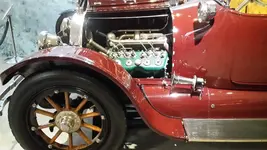
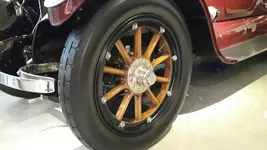
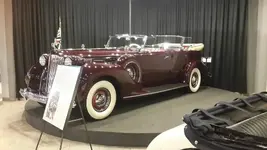
A 1949 Buick Roadmaster. The original color of this car used to be white, but it looks like during restoration the color was changed to maroon. It was used as a state car.

069.webp
070.webp 071.webp 072.webp 073.webp 074.webp

A 1952 Bristol 401 Coupe. This model is one of the earliest designs of the company that used to build fighter aircraft. The design is borrowed from the 1950s BMW cars; hence the kidney grilles are present on the car. A sister car was used as a private car, while this one seems to be a gift.

075.webp
076.webp
 
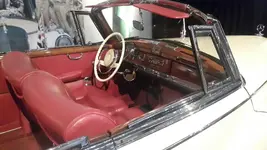
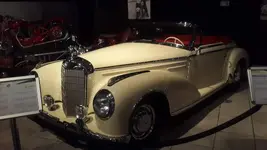
Reaching the first (of many) Mercedes car you’ll stumble upon is this, a 1960 300 D four door cabriolet. This model was the first post WW2 design from Mercedes, as well as the first one with an automatic transmission. This car was used as a state car, replacing the blue Lincoln. The car is huge, and has presence. You can see the dropped line on the side of the car, and the pontoon fender on the rear.

077.webp
078.webp 079.webp 080.webp 081.webp 082.webp 083.webp 084.webp 085.webp

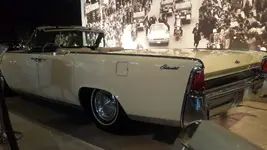
Another four door convertible is this 1961 Lincoln Continental. This model was used by a number of the US presidents, such as J. F. Kennedy. This car was used (and still being used) as a state car on special occasions.

086.webp
087.webp 088.webp 089.webp 090.webp

Another private car, a 1954 Buick Skylark 100 convertible powered by a V8. A limited edition with only 836 cars made.

091.webp
092.webp 093.webp

This is an armored 1956 Cadillac Type 75 Fleetwood Imperial. It was a gift from the US president Eisenhower. This model, with only 955 ever made, was the first American car to use powered seats and windows, auto AC, and what is called as the “Electronic Eye” which sounds like a very early concept of adaptive lighting. The car is very large and has unique presence.

094.webp
095.webp

The second Mercedes is the 1968 300 SEL 6.3, which was considered as a four door sports car at the time. This car was used as a personal car, and was restored at Germany by Mercedes. You can see the size difference between the Merc and the Caddy.

096.webp
097.webp

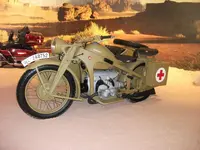
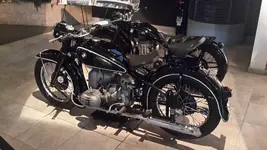
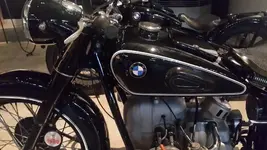
The first (of not so many) vehicle from BMW here is not a car, but a motorcycle. Here we see two motorcycles from different eras (even though it was a bit hard for me to see the difference in the design language), a 1951 R51/3 with the Boxer engine, and a 1940 R23 with a single cylinder.

100.webp
099.webp 098.webp 101.webp 102.webp

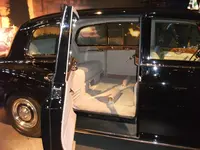
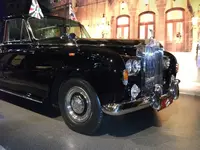
This is a 1961 Rolls-Royce Phantom V, which was a gift from the ruler of Kuwait. It was used for special occasions. I don’t know if this is correct or not, but it seems that this Phantom was produced at a time when Rolls-Royce started to use the conventional three box design, replacing the old “station wagon” one.

103.webp
104.webp 105.webp

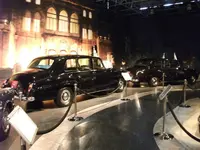
Another Phantom V, but this one is a 1986 model. It was built for Queen Zein Al Sharaf, mother of King Hussein.

106.webp
107.webp 108.webp 109.webp 110.webp 111.webp
 
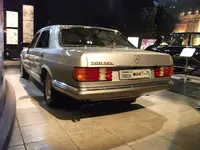
A fan favorite, and without a doubt a very successful car, a 1983 Mercedes 500SEL W126. This car is an armored version, and was used as a private car.

112.webp
113.webp 114.webp 115.webp 116.webp

This is another special one, a 1975 Mercedes 600 Pullman. This car was used as a state car during the 70s. You can see the detached side platform object for the guards to stand on. A total of 428 cars of this Pullman were made.

118.webp
117.webp 119.webp 120.webp 121.webp 122.webp

A military communications 1987 Mercedes G280.

123.webp
124.webp

A 1970 Mercedes-Benz 280SE 3.5 convertible.

125.webp
126.webp 127.webp

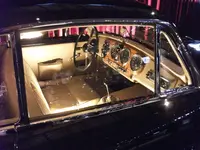
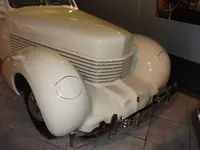
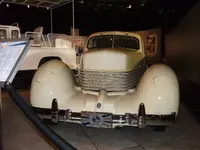
A very unique looking car, this is a 1936 Cord 810 Westchester. The company was owned by an American businessman of the same name, and this car is the first American-built front wheel drive car, and the first to use pop up headlights. This car was a gift to the king in 1955.

129.webp
130.webp 131.webp 132.webp

Entering the second hall, you see this car. It is from a company called Alvis, a British car maker that went out of business, and this model is a 1936 car. Unfortunately, I missed the quick guide board, so I cannot provide details.

133.webp
134.webp 135.webp 136.webp

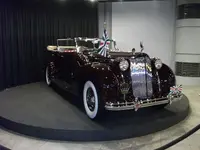
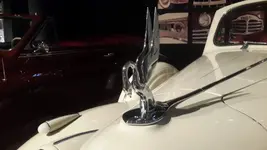
This is one of the most exclusive cars of the museum. This is a 1938 Packard Twelve Dual Cowl Phaeton. Packard was an American luxury car company that competed with Cadillac during the first half of the 20th century. According to the guide, Packard was one of the first to use a V12 in their cars, such as this one. This car was built for Packard by a coach builder named Rollston. It belonged to Faisal II of Iraq, as seen from the front of the car that holds the emblem of a crown.

138.webp
137.webp 139.webp 140.webp 141.webp
 
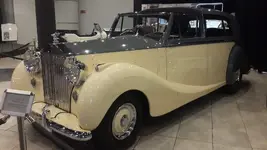
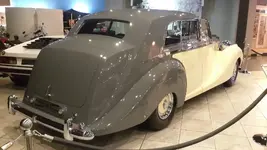
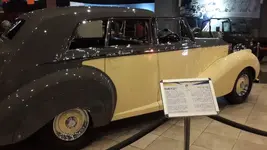
Another car that belonged to the Faisal II of Iraq, this is a special edition 1952 Rolls-Royce Silver Wraith, with the body designed by a French coach builder called Farnay. Its main feature is a separate open cockpit for the driver. It was dubbed “Sedanca de Ville”.

142.webp
143.webp 144.webp 145.webp

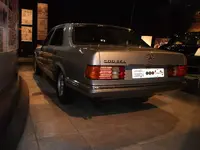
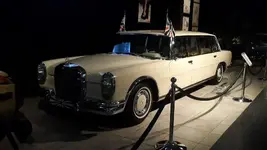
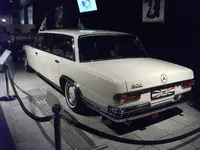
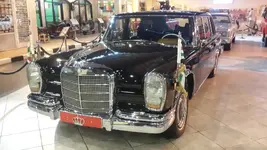
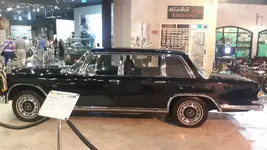
A well known Mercedes that commands respect, the famous “Grosser”. This one is a 1966 model, and was used as a private car.

148.webp
146.webp 147.webp 149.webp

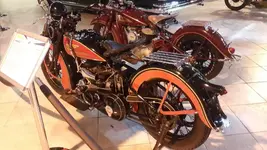
These motorcycles are Harley Davidson (right) and Indian (left). Unfortunately, I forgot to document the information…

150.webp 151.webp

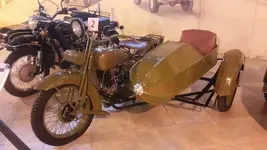
A group of motorcycles with side cars: No. 1 is a 1946 Indian Chief 74; No. 2 is a 1928 HD Model JD; No. 3 is a 2002 Ural U2

152.webp
154.webp 153.webp

An ancient Hotel switchboard (not related but anyway!)

155.webp


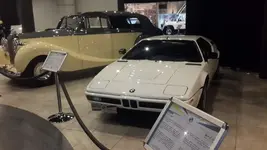
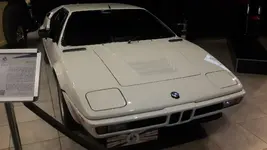
The only BMW car available on the show floor, the legendary M1, this one is a 1979 model. It was a gift from the ruler of UAE. The original color was blue, but I don’t know which one. Maybe anyone who is knowledgeable of BMW’s past color names can tell the exact name.

159.webp
158.webp 157.webp 156.webp
 
Entering the third and the last hall, this hall is mixed, with old cars from the 30s, the 40s, and the 50s, some modern 80s, and 90s ones, and some recent models.

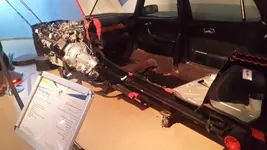
On the right of the entrance of the hall, you see another Mercedes; this one is a W116 model that is sliced in half.

161.webp
162.webp 163.webp

But there is another one that is not sliced in half… and it is the 450SEL 6.9, a 1979 year model.

166.webp


On the left, there is a group of motorcycles, too many bikes to categorize, so I only took some pictures

165.webp
164.webp

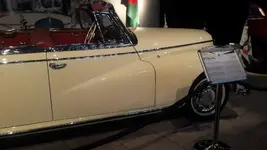
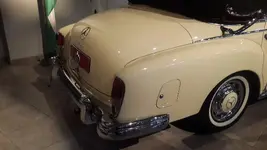
A Mercedes 300SC roadster from 1956. This private car is one of only 56 copies produced.

167.webp
168.webp

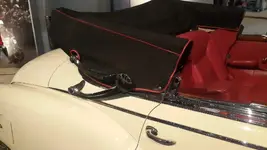
A 1957 Mercedes 300SL roadster. This car is the first one from Mercedes to use disc brakes. You can see the transition in the design language between this SL and the SC above.

169.webp


A 1956 Jaguar XK140 MC Roadster. This car is a gift from Jaguar to the museum. I apologize for not taking a front quarter picture from the right, as it would give a better view of the car.
170.webp
171.webp

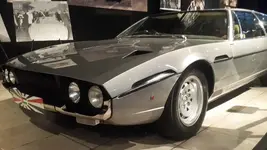
The only Lamborghini, a 1976 Espada 400 GTE Series III. This is a right hand drive, which was built for the UK market.

172.webp
173.webp 174.webp 175.webp 176.webp 177.webp

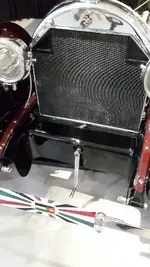
A Pair of Packard cars. The white one is a 1940 Super 8, while the burgundy one is a 1948 Custom 8. These cars could be donated to the museum, but I’m not sure. Car companies of the pre WW2 era fascinated hood ornaments.

191.webp
192.webp 193.webp 194.webp
196.webp
195.webp 197.webp

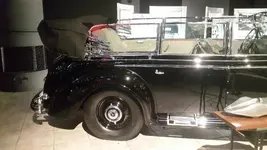
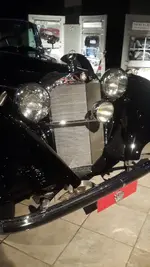
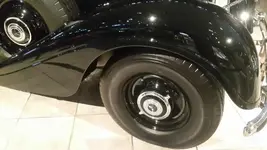
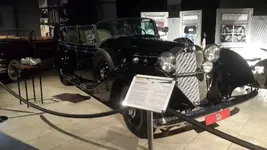
The most exclusive and unique Mercedes on show, a 1943 armored, 4 tons vehicle called “770K Open Tourer”. This car was built only for German officials during WW2. This car is considered to be one of the most powerful and most expensive cars of its time. It wasn’t for public sale, and only 46 copies were made. This particular one was a gift to the Syrian government in 1943, and then over 30 years later it was gifted to Jordan. It was sent to Germany in 2004 to be restored, and the job was finished in 2008.
199.webp
200.webp 201.webp 202.webp 203.webp

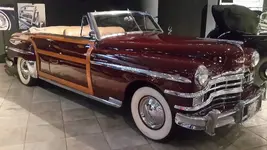
A 1949 Chrysler Town & Country. The car’s chassis is a combination of wood and metal, and it was used in special occasions.
205.webp
204.webp

A 1990 AC Cobra replica
206.webp


A 1980s Lotus Esprit Turbo. This car was used for hill climb racing in the Middle East.
207.webp


A 1988 Mercedes 190E 2.3 16V. Another car that was modified to participate in hill climb racing. The engine produced 300HP. You can see an early version of GoPro…
209.webp
208.webp 210.webp 211.webp
 

Attachments

At the center of the third hall, there are a number of cars as well that are separated into three stands. Supercars, to be more precise.

The first one you notice is this.
183.webp


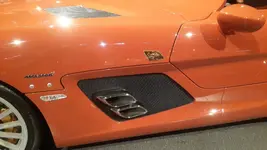
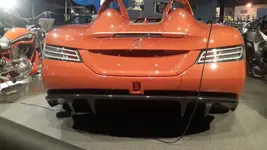
A 2009 Mercedes McLaren SLR Stirling Moss edition in a striking orange color. This car was donated to the museum in 2010 (probably it wasn’t sold!). It is long and low…
184.webp
185.webp 186.webp 187.webp 188.webp

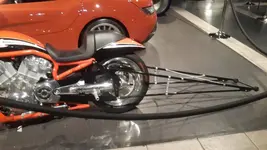
A Harley Davidson dragster
189.webp
190.webp

A one-off motorcycle that is inspired by the Lamborghini Reventon. It is called Bajzath from Hungary. It was made in 2013 and was donated to the museum. The engine is from Harley Davidson, but no more information is provided.

178.webp
179.webp 180.webp 181.webp

A replica of the Tron: Legacy motorcycle
182.webp


For the fans of Zuffenhausen, there are three cars from Porsche presented here on the other stand.

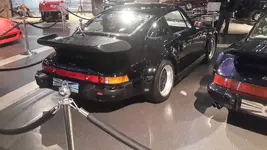
A 1987 Porsche 930 Turbo. Now, I have to say that I didn’t know about this before, but I’ve searched some references and I found that this design is named “Flachbau” or the “slantnose”. This model has the pop up headlights
233.webp
234.webp

A 1990 Porsche 911 Turbo 3.6. This is another slantnose model, but the iconic headlights are visible. If anyone knows the difference, please mention it and correct me if I mixed things up, as I forgot to document the quick guide of the car
236.webp
235.webp 237.webp

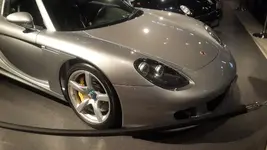
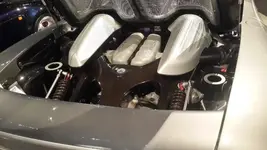
Last of the Porsches is the Carrera GT. It was one of the last copies to leave the factory, and was donated straight forward. Spectacular car. Period.
238.webp
239.webp 240.webp 241.webp 242.webp 243.webp 244.webp 245.webp

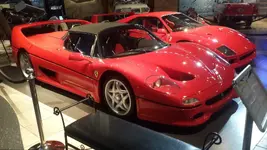
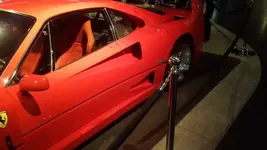
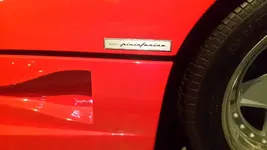
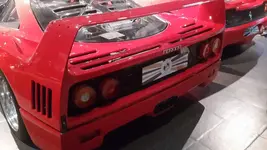
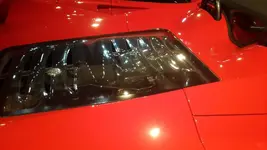
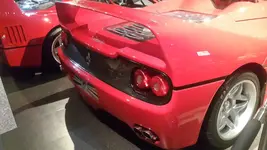
On the third stand, you see a couple of red cars that are familiar to anyone who loves cars.
215.webp
214.webp 216.webp 217.webp 218.webp 219.webp 220.webp 221.webp 222.webp 223.webp 224.webp 225.webp 226.webp 227.webp 228.webp 229.webp 230.webp 231.webp 232.webp

A racing Go Kart
250.webp


On the way to the exit, you see an uphill stand with two cars. The first one is a 1967 Renault R8 Gordini, which is another car that participated in hill climbing. Gordini was an engine specialist who worked with Renault in racing during the 60s.
212.webp
213.webp

The second one is A Mercedes 190E 2.5-16 Evolution (unknown model year)
248.webp
247.webp 246.webp 249.webp
 
Personal thought and remarks:

I’ve visited this place several times since 2005. A large number of the cars seen here remained from the beginning, especially the old ones. However, I’ve noticed that some of the cars have been removed, as several cars I remember seeing previously weren’t there during my visit. From what I can recall, the list contains:

  • Aston Martin Lagonda (the original one)
  • Porsche 959
  • Ferrari 599 GTB
  • Bugatti Veyron 16.4 (an early red and black version)
  • A one off strange car that looks like a giant Lotus Seven with a classic 30s / 40s look
  • Rolls-Royce Phantom IV (the car that I wanted to photograph the most, as it is one of only 13 cars ever made, making it the most expensive and exclusive Rolls-Royce)
  • A silver 1950s Mercedes 300 SL Gullwing

The layout of the museum makes it difficult to take good pictures, since the cars are placed behind a line that shouldn’t be crossed. The result is that you’re left only with seeing the car from a certain angle, and moreover, you cannot see the interior of the cars. That’s why it is a bit difficult to capture a good, visible picture of the cars.

Another problem of being a museum is that once you visited the place, you won’t have the same urge to go again, and the only thing that may get you excited if you spot a new car that wasn’t there the last time you came around. The floor area is not that large, as you can walk from the entrance door to the exit in less than 5 minutes, and this limits the possibility of expanding the number of cars shown.

As a BMW fan, I was left a bit disappointed by the lack of the cars shown. I know, the M1 is a great car and an important milestone in BMW’s history, but to be honest (I may get banned for this!) somehow the classic BMW presence is not quite there. It seems that design languages of the 70s which started to shift towards straight lines and sharp angles, resulting in a boxy appearance, and the M1 has a somehow square-ish profile, especially after the door, which is not my favorite for a supercar, and moreover, BMW does have great classic designs. Yes, BMW wasn’t that known in the Middle East until late 70s, but the museum receives classics every now and then, so why not having some gifts from Munich?

From looking at the cars through their different generations, I feel that the cars of the 30s and the 40s were designed to appeal to the aristocratic class of that time, from using hood ornaments that may be considered as a symbol of power and heritage, but when I see cars of the 50s and upwards, I see a move that the car is an opulent extension of the owner’s personality, regardless of being a high class or a middle class… I don’t know, maybe I’m talking nonsense.

Seeing and reading about brands that once were at the front of the scene, but then faded into oblivion, is always an interesting experience, for me at least. Trying to know how they did things right, or what went wrong that cost whoever to leave the field for good, in my opinion, helps you to think better for yourself in some way or another.

I apologize for the walls of text! If it’s TL;DR, you can enjoy the pictures…

Regards,
 
The original color was blue, but I don’t know which one

The M1 Brochure I have lists it simply as Blue, which I think tallies up to what you get when you do a VIN search. I think if that one was indeed blue it would be a 1979 model. Blue was a relatively rare colour on the M1, white was the most common.

In any case... thanks for sharing (y)(y)
 
The M1 Brochure I have lists it simply as Blue, which I think tallies up to what you get when you do a VIN search. I think if that one was indeed blue it would be a 1979 model. Blue was a relatively rare colour on the M1, white was the most common.

In any case... thanks for sharing (y)(y)

That is good to know, and a bit sad at the same time to change such a rare colour... usually white is the most favored colour in this region due to the hot climate.
Anyway, you're welcome :)
 
I loved that place when I visited Amman a few years ago. Sadly, I accidentally deleted all the photos I took.
Thanks for sharing.
 
I loved that place when I visited Amman a few years ago. Sadly, I accidentally deleted all the photos I took.
Thanks for sharing.

You're welcome :) they shuffle cars every now and then, maybe to keep the place more appealing to the public when revisiting.

I've searched the forum to see if there is any past visit to the museum before I decided to do the tour, in order not to be redundant, but I didn't find any...
 
The Gullwing was there when I visited, but the Sterling Moss wasn't. There was also an old SL you can sit in to take a photo.
Didn't know the Carrera GT was donated as King Abdullah was photographed divining it.

Also, the Facebook page of the museum has plenty of pictures:
The Royal Automobile Museum (متحف السيارات الملكي)

The Sterling Moss was brought in 2010 or 2011, and the Gullwing was there until 2009, if my memory serves me right.

The cars are still in service, as they are brought out for special occasions when needed. I've been told by one of the security members that the cars are driven in the park that the museum is located in every once in a while for show purposes before being put back on the show floor.
 
  • Like
Reactions: Yaz

Trending content


Back
Top