- Messages
- 15,932
- Name
- Rolf
I am sure most of you including myself have owned or wanted to own a performance car, but within a reasonable budget.
For the people that couldn't afford a serious performance car such as a Porsche, Ferrari or other exotic, then the cars that would be suitable from a cost and practical point of view is the Hot Hatch.
I have owned 2 Hot Hatches in my list of vehicles over the years and these have been the most fun and memorable cars that I owned, the giant killing Golf 2 GTi 1.8 8-Valve and also the nippy and agile Opel Corsa 1.6 GSI.
The Golf 2 GTi 8-Valve is too this day the most entertaining car that I ever owned, its most memorable features were its extremely willing, potent, great sounding 1781cm3, 8-valve engine that although produced only 82kW (112PS) but when it is coupled to the close ratio, quick shifting 5-speed manual gearbox, it had terrific throttle response and excellent low to midrange pull and flexibility as well as an ability to rev to a 6700rpm cut out with ease. This combined with a low weight of 900kg resulted in quick performance for the time, I hand timed the car at 8.1sec from 0-100km/h at the coast (and 8.9sec at Joburgs high altitude), from 0-50km/h it was even more impressive only recording 2.5sec. Overtaking performance was superb, less than 3sec from 80 to 100km/h in 3rd gear and less than 6sec from 100-120km/h in top gear. Then there is the sharp and precise steering which had great feel and virtually zero understeer, excellent body control and good ride comfort, the ability to cock a rear wheel up in hard cornering with slight lift off oversteer in tight corners. Then it also had a relatively spacious cabin, with good build quality and seat support.
I found this interesting article from Wikipedia on the history of the Hot Hatch:
Origination of the term
The term hot hatch gained widespread use during the 1980s in the UK, first as 'hot hatchback' by 1983 and then shortened to 'hot hatch' in the motoring press in 1984,[1] and first appeared in The Times in 1985,[2] and is now commonly and widely accepted as a mainstream, if still informal term. It is retrospectively applied to cars from the late 1970s but was not a phrase used at the time.[3]
Within the United States, hot hatches are classified along with saloons and small coupes as sport compacts and elsewhere the term sport sedan is often used. The term is not in wide use in Australia and Oceania despite the popularity of the hatchback in this region.
Some sports cars are hatchback in form, but as they are not upgraded small family cars, they are not classified as hot hatches. Cars such as the Porsche 928, Porsche Panamera, Reliant Scimitar GTE and Ferrari FF have not been classified in print as hot hatches.
Development of the hot hatch

Example of a hot hatch before 1980, the Golf GTI 1.6 8-Valve
The car that popularised the concept of the hot hatch is the 1976 Volkswagen Golf GTI, announced at the 1975 Frankfurt Motor Show.[4]However, the Golf GTI was not the first hot hatch with several cars from the early seventies starting the trend of sportier versions of mainstream hatchbacks such as the Autobianchi A112 Abarth in 1971 and the Simca 1100 Ti which was available on sale Europe-wide by 1974. Another early hot hatch was the Renault 5 Alpine which first went on sale in May 1976 and also pre-dated sales of the Volkswagen Golf GTi, by two months.
The Volkswagen Golf GTI, with the addition of a higher performance 1.6 litre fuel injected engine, sharper handling, and sports-focusedmarketing, helped create the birth of a huge market for small, practical cars that still had excellent performance. Its top speed was a claimed 183km/h (113.7mph) at a time when most cars of this size were not even capable of 100 mph (160.9 km/h). The Golf GTI enjoyed a short run of unparalleled sales success, but by the early 1980s, car manufacturers worldwide were racing to market with their own alternatives.
Until the early 1980s, the Volkswagen Golf Mk1 GTI and the Renault 5 Alpine/Gordini dominated the retrospectively named hot hatch market segment in many European markets. However, competition was not entirely limited to non-hatchbacks, the various sports versions of the Mini, Alfa Romeo Alfasud and race-inspired enthusiasts' vehicles such as the 135 bhp (101 kW) Vauxhall Chevette HS providing sporting performance in a non-coupe body. Other hatchbacks which conformed to the new hatchback format included the 1978 Chrysler/Talbot Sunbeam Ti with 99 bhp (74 kW; 100 PS) and brisker acceleration than the Golf and followed a year later by the 2.2 litre Talbot Lotus Sunbeam offered a then astonishing 150 bhp (112 kW) and a 0-60 mph time of 6.6 seconds.


Alfa Romeo Alfasud Ti
The Eighties and Nineties

Renault 5 Turbo
From the coining of the term hot hatch in 1984, the market for small and family hatchbacks with sportier performance grew, and nearly all manufacturers included a hot hatch variant to their range. There was great variation in how the performance modifications were developed, with manufacturers selecting improving the carburettor such as the 1981 Ford Fiesta XR2, fuel injection as with the Peugeot 205 GTI and 309 GTI, turbocharging by Renault in the 5 GT Turbo and 11 Turbo or inserting larger engines such as the 2.0 litre Fiat Ritmo/Fiat Strada Abarth 130 TC. Volkswagen also experimented with supercharging in the Polo G40 and Golf G60.
VW Golf 2 1.8 GTI

Peugeot 205 GTI 1.9

Opel Kadett 1.8 GTE

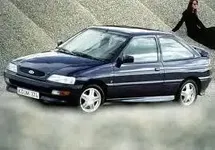
1990s extreme hot hatch, Ford Escort RS Cosworth
Other mid 1980s hot hatches included the Citroën AX Sport / GT, Daihatsu Charade GTti, Fiat Uno Turbo i.e[8] (European) / SR 1.6 (Brazil), Ford Escort XR3 and XR3i, Mitsubishi Colt 1600 Turbo,MG Metro, MG Maestro, Opel Corsa/Vauxhall Nova SR / GT / GSi / GTE, Opel Kadett/Vauxhall Astra GT / SRi / GSi / GTE. The fastest hot hatch of the 1980s was the 115kw (156PS), Opel Kadett/Vauxhall Astra GTE/GSi 2.0 16-Valve, which had a top speed of 137 mph (220 km/h). A unique to South Africa version 2.0 16V S (dubbed the Superboss) were further upgraded based on their success in production car racing and initially 500 special units were built as road cars for homologation purposes. This was a minimum requirement for entry into the Stannic Group N races. They went against BMW's 325iS (A 2.7 litre homologation special from BMW). They featured more aggressive 276-degree camshafts made by Schrick with 2 different settings for timing overlap (110° and 107°), revised intake and exhaust modifications (4-in-1 branch manifold and freeflow exhaust), Irmscher spring kit, modified engine management system by Promotec, a limited slip differential developed by Andre Verwey and special Aluett 7Jx15-inch ET35 alloy wheels, they were nicknamed the "Superboss"and produced 125kw (170PS) and held the world record for the most torque per litre (114 Nm per litre) peaking at 228nm (168lbft) from its 1998cm3 engine until recently beaten by the Ferrari 458 (117 Nm per litre). After the first 500 units were produced, many more were built to satisfy public demand.

By the end of the 1980s, the hot hatch had taken its place across Europe, and was pushing into other worldwide markets. The brief heyday of Group B rallying pushed the hot hatch genre to its limits, and small numbers of ultra-high performance variants were manufactured to comply with the rally rules (often termed "homologation specials"). These vehicles represented a brief, extreme branch of the hot hatch, and included such notable vehicles as the Lancia Delta S4, MG Metro 6R4 and Peugeot 205 T16.

Lancia Delta S4

MG Metro 6R4
From the 1990s, the choice of hot hatches widened, with most examples still from the European motor manufacturers, with the Japanese makers making an impact too, and were primarily destined for European markets. New entries to the market and higher performance versions included the Ford Fiesta RS Turbo, Ford Escort RS2000 and Escort RS Cosworth, Honda Civic Type R, Nissan Sunny GTi, GTi-R, Peugeot 106 Rallye / GTi and 306GTi-6 / Rallye, Proton Satria GTi, Renault Clio Williams / 16V, SEAT Ibiza GTi / GT 16v / Cupra, Toyota Corolla GTi. Ford also revived its historic RS2000 designation for the Escort in 1991; it had last been used 11 years earlier on the demise of the old rear-wheel drive Escort RS2000 saloon. The XR3i was discontinued in 1994. Volkswagen built on the success of its GTI models by launched an even faster VR6 version of the Golf in 1991, with a 2.8 V6 engine producing 128kW (174PS) and a top speed of 140 mph (225 km/h), which overtook the Astra GTE/GSi 16v as Europe's fastest hot hatch at the time.

Ford Escort RS Cosworth

VW Golf III VR6

Renault Clio Williams

Lancia Delta HF Integrale

Peugeot 306 GTi-6
Post-2000

A hot hatch of the 2000s, MiniCooper S JCW

A hot hatch of the 2010s, Audi A1 Quattro MTM.
In the 2000s, a new hot hatch "class" was born, engine outputs grew up to well beyond 200 PS (147 kW; 197 bhp), and by 2010 Ford and Subaru challenged each other with the Ford Focus RS 500 (350 PS (257 kW; 345 bhp)) and Subaru Cosworth Impreza STI CS400 (400 PS (294 kW; 395 bhp)). Evo magazine called these extreme versions "superhatch" in the early 2000s but the phrase did not catch on.
Most hot hatches continued to still be of European origin, with competitive models principally from Britain, France, Italy and Germany. Outside of Europe, Japan is a major exporter of hot hatches. Several hot hatches are exported to Australia and North America where they compete with local sport compact models. During the 2000s manufacturers started to emphasise the sub-brand of their hot hatch derivatives such as Renault's Renault Sport, Opel's OPC, Vauxhall's VXR and Fiat's Abarth.
Examples of post-2000 hot hatches include the Audi A1 Quattro, Alfa Romeo 147 GTA, Citroën DS3 Racing, Abarth Grande Punto, Ford Focus ST and RS, MG ZR and ZS, Mini Cooper and John Cooper Works, Opel/Vauxhall Astra SRi Turbo, OPC and VXR, Peugeot 207 GTi, Renault Clio RS 2.0 / V6, Mégane Renault Sport, SEAT León Cupra and FR,Volkswagen Golf GTI and R models.
Post 2000 also saw the introduction of the first ever Korean Hot Hatch, the 3-door Pro_Cee'd GT and 5-door Cee'd GT from Kia Motors. Kia originally intended this car to be a Warm Hatch, however the motoring press and now Kia themselves refer to it as a Hot Hatch.
Fast forwarding to current time of 2014, the most powerful production Hot Hatch is the newly released Audi RS3 with its 5-cylinder 2.5ltr turbocharged engine producing 270kw (367PS) and 465nm (343lbft) resulting in a claimed 0-100km/h time of only 4.3sec (which is 0.6sec faster than the 294kw (400PS) Ferrari 288 GTO from 1985 (the fastest car in the world at the time) and just 0.3sec slower than the vastly more expensive newly released 316kw (430PS) Porsche 911 GTS.
The most power 4-cylinder engine in series production exists in the Mercedes Benz A45 AMG with its 2.0ltr turbocharged engine producing 265kW (360PS) and 450nm (332lbft).

Ford Focus RS500

Renault Megane RS 275 Trophy

Audi RS3 2015

Mercedes A45 AMG
The hot hatch in North America
Before the Volkswagen Rabbit, the North American version of the Golf, was introduced in GTI form in September 1982 with 90 bhp (67 kW), American manufacturers already offered sporting versions of their own hatchbacks including the 1981 1/2 Dodge Charger 2.2 with 84 bhp (63 kW) and 107 bhp (80 kW) in the 1983 Shelby Charger, and the 1980 Chevrolet Citation X-11 originally with 115 bhp (86 kW). Ford offered the Escort GT and near-identical Mercury Lynx XR3. Chrysler first offered a 2.2 turbo in the Daytona and Laser in 1984 and also offered it in the Lancer/Lebaron GTS and Shadow/Sundance hatchbacks. Chrysler offered the Carroll Shelby prepared turbocharged Dodge Omni GLH in 1985 to 1986 with 146 bhp (109 kW) (which was reputed to stand for "Goes Like Hell"), and in 1986 the 175 bhp (130 kW) intercooled GLHS (Goes Like Hell Somemore). General Motors offered a few sports version of its J-car hatchbacks through 1987, including the V-6 Chevrolet Cavalier Z24 and turbocharged Pontiac Sunbird and Buick Skyhawk.
More recent American hot hatches include the 2002 Ford Focus SVT with 170 bhp (127 kW), 2007 Dodge Caliber SRT-4 and 2012 Chevrolet Sonic RS.
Japanese manufacturers launched their own sports compacts to the American market including the Acura Integra, Toyota Corolla FX-GT and Corolla GT-S and the Honda CivicSi, and the Canadian built Toyota Matrix XRS.
The hot hatch in Australia and Asia
While the term is not widely used in Australia and Asia, there were locally developed models which provided performance and visual improvements to the regular family hatchback such as the Ford Laser TX3, Toyota Corolla Levin/Sprinter Trueno GT-APEX, Honda City Turbo/Turbo II, Mazda 3 speed and Mazda 3 SGT and Suzuki Swift Sport. More recently hot hatches in Australia have included the Ford Focus XR5 and HSV Astra VXR.
Warm hatch
As hot hatches gained more power and performance during the 1990s and 2000s, the term warm hatch started to be used to denote a junior version of a hot hatchback. Warm hatches still offer improved performance whilst retaining the practicality of the standard derivatives and attracting lower insurance premiums. Warm hatches can be expected to have more muted styling features than their hot hatch cousins, they will often lack items such as front splitters and racing style bucket seats.
Whilst having improved performance, warm hatches are less powerful than the hot hatch version of the car, typically more than 100 bhp (75 kW), but less than 150 bhp (112 kW) such as the Mini Cooper,Peugeot 207 GT Suzuki Swift Sport, and Toyota Yaris SR.
For the people that couldn't afford a serious performance car such as a Porsche, Ferrari or other exotic, then the cars that would be suitable from a cost and practical point of view is the Hot Hatch.
I have owned 2 Hot Hatches in my list of vehicles over the years and these have been the most fun and memorable cars that I owned, the giant killing Golf 2 GTi 1.8 8-Valve and also the nippy and agile Opel Corsa 1.6 GSI.
The Golf 2 GTi 8-Valve is too this day the most entertaining car that I ever owned, its most memorable features were its extremely willing, potent, great sounding 1781cm3, 8-valve engine that although produced only 82kW (112PS) but when it is coupled to the close ratio, quick shifting 5-speed manual gearbox, it had terrific throttle response and excellent low to midrange pull and flexibility as well as an ability to rev to a 6700rpm cut out with ease. This combined with a low weight of 900kg resulted in quick performance for the time, I hand timed the car at 8.1sec from 0-100km/h at the coast (and 8.9sec at Joburgs high altitude), from 0-50km/h it was even more impressive only recording 2.5sec. Overtaking performance was superb, less than 3sec from 80 to 100km/h in 3rd gear and less than 6sec from 100-120km/h in top gear. Then there is the sharp and precise steering which had great feel and virtually zero understeer, excellent body control and good ride comfort, the ability to cock a rear wheel up in hard cornering with slight lift off oversteer in tight corners. Then it also had a relatively spacious cabin, with good build quality and seat support.
I found this interesting article from Wikipedia on the history of the Hot Hatch:
Origination of the term
The term hot hatch gained widespread use during the 1980s in the UK, first as 'hot hatchback' by 1983 and then shortened to 'hot hatch' in the motoring press in 1984,[1] and first appeared in The Times in 1985,[2] and is now commonly and widely accepted as a mainstream, if still informal term. It is retrospectively applied to cars from the late 1970s but was not a phrase used at the time.[3]
Within the United States, hot hatches are classified along with saloons and small coupes as sport compacts and elsewhere the term sport sedan is often used. The term is not in wide use in Australia and Oceania despite the popularity of the hatchback in this region.
Some sports cars are hatchback in form, but as they are not upgraded small family cars, they are not classified as hot hatches. Cars such as the Porsche 928, Porsche Panamera, Reliant Scimitar GTE and Ferrari FF have not been classified in print as hot hatches.
Development of the hot hatch
Example of a hot hatch before 1980, the Golf GTI 1.6 8-Valve
The car that popularised the concept of the hot hatch is the 1976 Volkswagen Golf GTI, announced at the 1975 Frankfurt Motor Show.[4]However, the Golf GTI was not the first hot hatch with several cars from the early seventies starting the trend of sportier versions of mainstream hatchbacks such as the Autobianchi A112 Abarth in 1971 and the Simca 1100 Ti which was available on sale Europe-wide by 1974. Another early hot hatch was the Renault 5 Alpine which first went on sale in May 1976 and also pre-dated sales of the Volkswagen Golf GTi, by two months.
The Volkswagen Golf GTI, with the addition of a higher performance 1.6 litre fuel injected engine, sharper handling, and sports-focusedmarketing, helped create the birth of a huge market for small, practical cars that still had excellent performance. Its top speed was a claimed 183km/h (113.7mph) at a time when most cars of this size were not even capable of 100 mph (160.9 km/h). The Golf GTI enjoyed a short run of unparalleled sales success, but by the early 1980s, car manufacturers worldwide were racing to market with their own alternatives.
Until the early 1980s, the Volkswagen Golf Mk1 GTI and the Renault 5 Alpine/Gordini dominated the retrospectively named hot hatch market segment in many European markets. However, competition was not entirely limited to non-hatchbacks, the various sports versions of the Mini, Alfa Romeo Alfasud and race-inspired enthusiasts' vehicles such as the 135 bhp (101 kW) Vauxhall Chevette HS providing sporting performance in a non-coupe body. Other hatchbacks which conformed to the new hatchback format included the 1978 Chrysler/Talbot Sunbeam Ti with 99 bhp (74 kW; 100 PS) and brisker acceleration than the Golf and followed a year later by the 2.2 litre Talbot Lotus Sunbeam offered a then astonishing 150 bhp (112 kW) and a 0-60 mph time of 6.6 seconds.
Alfa Romeo Alfasud Ti
The Eighties and Nineties
Renault 5 Turbo
From the coining of the term hot hatch in 1984, the market for small and family hatchbacks with sportier performance grew, and nearly all manufacturers included a hot hatch variant to their range. There was great variation in how the performance modifications were developed, with manufacturers selecting improving the carburettor such as the 1981 Ford Fiesta XR2, fuel injection as with the Peugeot 205 GTI and 309 GTI, turbocharging by Renault in the 5 GT Turbo and 11 Turbo or inserting larger engines such as the 2.0 litre Fiat Ritmo/Fiat Strada Abarth 130 TC. Volkswagen also experimented with supercharging in the Polo G40 and Golf G60.
VW Golf 2 1.8 GTI
Peugeot 205 GTI 1.9
Opel Kadett 1.8 GTE
1990s extreme hot hatch, Ford Escort RS Cosworth
Other mid 1980s hot hatches included the Citroën AX Sport / GT, Daihatsu Charade GTti, Fiat Uno Turbo i.e[8] (European) / SR 1.6 (Brazil), Ford Escort XR3 and XR3i, Mitsubishi Colt 1600 Turbo,MG Metro, MG Maestro, Opel Corsa/Vauxhall Nova SR / GT / GSi / GTE, Opel Kadett/Vauxhall Astra GT / SRi / GSi / GTE. The fastest hot hatch of the 1980s was the 115kw (156PS), Opel Kadett/Vauxhall Astra GTE/GSi 2.0 16-Valve, which had a top speed of 137 mph (220 km/h). A unique to South Africa version 2.0 16V S (dubbed the Superboss) were further upgraded based on their success in production car racing and initially 500 special units were built as road cars for homologation purposes. This was a minimum requirement for entry into the Stannic Group N races. They went against BMW's 325iS (A 2.7 litre homologation special from BMW). They featured more aggressive 276-degree camshafts made by Schrick with 2 different settings for timing overlap (110° and 107°), revised intake and exhaust modifications (4-in-1 branch manifold and freeflow exhaust), Irmscher spring kit, modified engine management system by Promotec, a limited slip differential developed by Andre Verwey and special Aluett 7Jx15-inch ET35 alloy wheels, they were nicknamed the "Superboss"and produced 125kw (170PS) and held the world record for the most torque per litre (114 Nm per litre) peaking at 228nm (168lbft) from its 1998cm3 engine until recently beaten by the Ferrari 458 (117 Nm per litre). After the first 500 units were produced, many more were built to satisfy public demand.
By the end of the 1980s, the hot hatch had taken its place across Europe, and was pushing into other worldwide markets. The brief heyday of Group B rallying pushed the hot hatch genre to its limits, and small numbers of ultra-high performance variants were manufactured to comply with the rally rules (often termed "homologation specials"). These vehicles represented a brief, extreme branch of the hot hatch, and included such notable vehicles as the Lancia Delta S4, MG Metro 6R4 and Peugeot 205 T16.
Lancia Delta S4
MG Metro 6R4
From the 1990s, the choice of hot hatches widened, with most examples still from the European motor manufacturers, with the Japanese makers making an impact too, and were primarily destined for European markets. New entries to the market and higher performance versions included the Ford Fiesta RS Turbo, Ford Escort RS2000 and Escort RS Cosworth, Honda Civic Type R, Nissan Sunny GTi, GTi-R, Peugeot 106 Rallye / GTi and 306GTi-6 / Rallye, Proton Satria GTi, Renault Clio Williams / 16V, SEAT Ibiza GTi / GT 16v / Cupra, Toyota Corolla GTi. Ford also revived its historic RS2000 designation for the Escort in 1991; it had last been used 11 years earlier on the demise of the old rear-wheel drive Escort RS2000 saloon. The XR3i was discontinued in 1994. Volkswagen built on the success of its GTI models by launched an even faster VR6 version of the Golf in 1991, with a 2.8 V6 engine producing 128kW (174PS) and a top speed of 140 mph (225 km/h), which overtook the Astra GTE/GSi 16v as Europe's fastest hot hatch at the time.
Ford Escort RS Cosworth
VW Golf III VR6
Renault Clio Williams
Lancia Delta HF Integrale
Peugeot 306 GTi-6
Post-2000
A hot hatch of the 2000s, MiniCooper S JCW
A hot hatch of the 2010s, Audi A1 Quattro MTM.
In the 2000s, a new hot hatch "class" was born, engine outputs grew up to well beyond 200 PS (147 kW; 197 bhp), and by 2010 Ford and Subaru challenged each other with the Ford Focus RS 500 (350 PS (257 kW; 345 bhp)) and Subaru Cosworth Impreza STI CS400 (400 PS (294 kW; 395 bhp)). Evo magazine called these extreme versions "superhatch" in the early 2000s but the phrase did not catch on.
Most hot hatches continued to still be of European origin, with competitive models principally from Britain, France, Italy and Germany. Outside of Europe, Japan is a major exporter of hot hatches. Several hot hatches are exported to Australia and North America where they compete with local sport compact models. During the 2000s manufacturers started to emphasise the sub-brand of their hot hatch derivatives such as Renault's Renault Sport, Opel's OPC, Vauxhall's VXR and Fiat's Abarth.
Examples of post-2000 hot hatches include the Audi A1 Quattro, Alfa Romeo 147 GTA, Citroën DS3 Racing, Abarth Grande Punto, Ford Focus ST and RS, MG ZR and ZS, Mini Cooper and John Cooper Works, Opel/Vauxhall Astra SRi Turbo, OPC and VXR, Peugeot 207 GTi, Renault Clio RS 2.0 / V6, Mégane Renault Sport, SEAT León Cupra and FR,Volkswagen Golf GTI and R models.
Post 2000 also saw the introduction of the first ever Korean Hot Hatch, the 3-door Pro_Cee'd GT and 5-door Cee'd GT from Kia Motors. Kia originally intended this car to be a Warm Hatch, however the motoring press and now Kia themselves refer to it as a Hot Hatch.
Fast forwarding to current time of 2014, the most powerful production Hot Hatch is the newly released Audi RS3 with its 5-cylinder 2.5ltr turbocharged engine producing 270kw (367PS) and 465nm (343lbft) resulting in a claimed 0-100km/h time of only 4.3sec (which is 0.6sec faster than the 294kw (400PS) Ferrari 288 GTO from 1985 (the fastest car in the world at the time) and just 0.3sec slower than the vastly more expensive newly released 316kw (430PS) Porsche 911 GTS.
The most power 4-cylinder engine in series production exists in the Mercedes Benz A45 AMG with its 2.0ltr turbocharged engine producing 265kW (360PS) and 450nm (332lbft).
Ford Focus RS500
Renault Megane RS 275 Trophy
Audi RS3 2015
Mercedes A45 AMG
The hot hatch in North America
Before the Volkswagen Rabbit, the North American version of the Golf, was introduced in GTI form in September 1982 with 90 bhp (67 kW), American manufacturers already offered sporting versions of their own hatchbacks including the 1981 1/2 Dodge Charger 2.2 with 84 bhp (63 kW) and 107 bhp (80 kW) in the 1983 Shelby Charger, and the 1980 Chevrolet Citation X-11 originally with 115 bhp (86 kW). Ford offered the Escort GT and near-identical Mercury Lynx XR3. Chrysler first offered a 2.2 turbo in the Daytona and Laser in 1984 and also offered it in the Lancer/Lebaron GTS and Shadow/Sundance hatchbacks. Chrysler offered the Carroll Shelby prepared turbocharged Dodge Omni GLH in 1985 to 1986 with 146 bhp (109 kW) (which was reputed to stand for "Goes Like Hell"), and in 1986 the 175 bhp (130 kW) intercooled GLHS (Goes Like Hell Somemore). General Motors offered a few sports version of its J-car hatchbacks through 1987, including the V-6 Chevrolet Cavalier Z24 and turbocharged Pontiac Sunbird and Buick Skyhawk.
More recent American hot hatches include the 2002 Ford Focus SVT with 170 bhp (127 kW), 2007 Dodge Caliber SRT-4 and 2012 Chevrolet Sonic RS.
Japanese manufacturers launched their own sports compacts to the American market including the Acura Integra, Toyota Corolla FX-GT and Corolla GT-S and the Honda CivicSi, and the Canadian built Toyota Matrix XRS.
The hot hatch in Australia and Asia
While the term is not widely used in Australia and Asia, there were locally developed models which provided performance and visual improvements to the regular family hatchback such as the Ford Laser TX3, Toyota Corolla Levin/Sprinter Trueno GT-APEX, Honda City Turbo/Turbo II, Mazda 3 speed and Mazda 3 SGT and Suzuki Swift Sport. More recently hot hatches in Australia have included the Ford Focus XR5 and HSV Astra VXR.
Warm hatch
As hot hatches gained more power and performance during the 1990s and 2000s, the term warm hatch started to be used to denote a junior version of a hot hatchback. Warm hatches still offer improved performance whilst retaining the practicality of the standard derivatives and attracting lower insurance premiums. Warm hatches can be expected to have more muted styling features than their hot hatch cousins, they will often lack items such as front splitters and racing style bucket seats.
Whilst having improved performance, warm hatches are less powerful than the hot hatch version of the car, typically more than 100 bhp (75 kW), but less than 150 bhp (112 kW) such as the Mini Cooper,Peugeot 207 GT Suzuki Swift Sport, and Toyota Yaris SR.