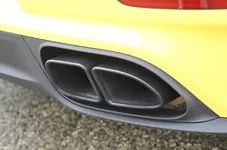
911 (991) [Official] Porsche 911 Turbo (991)


The Porsche 991 is the seventh generation of the Porsche 911 sports car, produced from September 2011 to December 2019. It was unveiled at the 2011 Frankfurt Motor Show on 15 September as the replacement for the 997.
http://www.bbc.com/autos/story/20130514-speed-evolved-911-turbo-s-vs-959

Speed, evolved: Porsche's 2014 911 Turbo S vs 1986 959

Since the early 1990s, the arrival of each new 911 Turbo has prompted comparisons with the father of all modern Porsche supercars, the vaunted 959. And the recent debut of the 2014 911 Turbo S is no exception.

spite nearly three decades between them – is a testament to the midnight oil burned during the creation of the former.
The 959 was created as a Group B rally car. The road car, which Porsche unveiled at the 1985 Frankfurt Motor Show, was born of a homologation rule from the World Rally Championship’s governing body, the Fédération Internationale de l'Automobile (FIA), stipulating a run of at least 200 street-legal versions.

In 1986, the 959 stickered for a cool 420,000 deutschmark (about $225,000, or close to $480,000 in 2013 dollars) – provided, of course, that you were among the anointed few who were afforded the honor of buying one. Some 300 were built between 1985 and 1988, including prototypes, pre-production cars and production Comfort and Sport models. By comparison, the quicker, faster and more agile 2014 911 Turbo S, which starts at $182,050 and can be purchased through any of Porsche’s 900 or so worldwide dealerships, looks like a bargain.

Just how similar are they? Take a look at this informal side-by-side comparison:

1986 Porsche 959
  • Curb weight: 3,190lb
  • Wheelbase: 89.5in
  • Track, F/R: 56.4in / 58.7in
  • Length: 168.9in
  • Width: 72.4in
  • Height: 50.4in
  • Fuel capacity: 23.8gal
  • Drag coefficient: 0.31
  • Engine: Twin-turbo DOHC flat-6
  • Displacement: 2.8 litre
  • Compression ratio: 8.3:1
  • Horsepower: 444hp @ 6500rpm
  • Torque: 370lb-ft @ 5500rpm
  • Fuel delivery: Electronic port injection
  • Transmission: 6-speed manual
  • Layout: Rear engine/all-wheel drive
  • Brakes, F/R: 12.7in vented discs / 12.0in vented discs
  • Wheels: Hollow-spoke magnesium; F: 17 x 8in; R: 17 x 9in
  • Tires, F/R : 235/45VR-17, 255/40VR-17
  • Suspension, F and R: upper and lower A-arms, coil springs, dual shocks, adjustable ride height and damping, anti-roll bar
  • 0-60 mph: 3.6 seconds
  • Top speed: 197mph
  • Price: $225,000 (approximately $480,000 in 2013 dollars)
2014 Porsche 911 Turbo S
  • Curb weight: 3,538lb
  • Wheelbase: 96.5in
  • Track, F/R: 60.6in / 62.6in
  • Length: 177.4in
  • Width: 77.9in
  • Height: 51.0in
  • Fuel capacity: 16.9gal
  • Drag coefficient: 0.31
  • Engine: Twin-turbo DOHC flat-6
  • Displacement: 3.8 litre
  • Compression ratio: 9.8:1
  • Horsepower: 560hp @ 6500rpm
  • Torque: 516lb-ft @ 2100rpm
  • Fuel delivery: Direct injection
  • Transmission: 7-speed dual-clutch automatic
  • Layout: Rear engine/all-wheel drive
  • Brakes, F/R: 14.96in vented and drilled discs/14.96 vented and drilled discs
  • Wheels: Forged alloy; F: 20 x 9in; R: 20 x 11.5in
  • Tires, F/R : 245/35ZR-20, 305/30ZR-20
  • Suspension, F: MacPherson strut, coil spring, electronically adjustable damping; R: five-link, coil spring, electronically adjustable damping
  • 0-60 mph: 2.9 seconds
  • Top speed: 198mph
  • Price: $182,050
 
19dc575521e77c85bca3769c0255f9c4.webp

ab47641f5b2e9dad7674c35ed7ed7de8.webp
06a7f50a3716ae184d7b476b451e149a.webp


http://i.imgur.com/4B6GLJ1.jpg
http://i.imgur.com/S3QTxhN.jpg
http://i.imgur.com/Vzhw2Ga.jpg
http://i.imgur.com/6waTCvm.jpg
http://i.imgur.com/6HUeKvS.jpg
http://i.imgur.com/69lbISs.jpg
http://i.imgur.com/Trv9Qtp.jpg
 
Oh, how I hate that side-intake. It looks disgusting, it reminds me of a pneumostome.
 
To view this content we will need your consent to set third party cookies.
For more detailed information, see our cookies page.
 
Well, watching this video, with two passengers, not the best conditions of tarmac and climate, they managed to be worse than the 997. What should we blame for? The two first gears ratio?
 
It looks like a 99% ready car. Still... 0-200 km/h slower than pretty much every german performance sedans. That's worse than the 0-100 km/h number itself. I guess both car and conditions weren't proper. So why invite the press to drive it? I don't like what Porsche is doing with these cars. The 918 Spyder had lots of these 'press moments'. "It's 800 PS a raw flat-plane crank V8 noise". "No, now it's definitively 900 PS with 458 Italia's noise". With the GT3 offering PDK some 997 Turbo MkII owners might consider the sporty brother.
 
Altitude, temperature, load, etc... on a cold November day, at a German runway, with one person onboard it will destroy the 997 Turbo S. :cool:
 
The first two gear rations are definitely not to blame. The performance is weak above 100 km/h and 200 km/h as well. I don´t think that final performance 0-100/0-200/0-250 will be 4s/12s/20s as in the video, but I would now be very surprised if the 991 Turbo S would be real performance monster in the straight line and comparable to MP4-12C.

Yes, we have already had the performance claims (0-200 km/h in 10,3s), but there was still hope that 991 Turbo S will undercut them significantly. I have somehow lost the hope we will see 0-200 km/h in less than 9,5s. It will probably be only slightly faster than 997 Turbo S in the straight line. It might still be a monster on the track since 991 Turbo S on normal tires apparently is as fast as 991 GT3 on semi-slicks, according to Porsche.

I am however positively surprised as far as sound is concerned. It sounds like a NA Carrera inside and does have the same crackling exhaust in the end of the video. Gearbox seems to be instantanous and fuel consuption quite amazing too with 11l/100km over 150km Sport Auto trip.

It will definitely be the best daily driver out there.
 
They have somehow managed to make the Turbo S sound better. Launch from nearly 6000 rpm is quite insane. :eek:

Quite surprising. Still nowhere near as good as the GT3, but still way more sonorous than the 997 Turbo S.

Shift rpm is now 7200 (previous Turbo S: 6800 rpm).

To view this content we will need your consent to set third party cookies.
For more detailed information, see our cookies page.
 
http://www.autocar.co.uk/car-review/porsche/911/first-drives/porsche-911-turbo-first-drive-review

ad4b124a033b5f62d615708ca573825a.webp


What is it?

The Porsche 911 Turbo S is the fastest-accelerating car that Porsche has ever placed into open-ended series production.

With an official 0-62mph time of 3.1sec, it is faster than the Ferrari 458 Italia, surely its keenest supercar rival, for outright straight-line pace. And that’s to say nothing of its claimed 0-124mph time: 10.1sec.

Fitted with an updated version of its predecessor’s twin-turbo 3.8-litre, horizontally opposed six-cylinder engine, the new 911 Turbo S develops a hard-hitting 552bhp. That’s 30bhp more than the standard 911 Turbo, along with which it will go on sale in the UK next month, and 29bhp more than the old 911 Turbo S, a car that didn’t exactly come across as lacking in firepower.

Torque is also up, by 30lb ft on the standard 911 Turbo but only by 7lb ft over its direct predecessor, with 516lb ft served up between 2100rpm and 4250rpm. But in a new development that brings an added dimension to the driving experience, there’s now an overboost function.

This increases the engine’s nominal 1.2 bar of turbocharger boost pressure to 1.4 bar and ramps up the torque to a rather severe 553lb ft for momentary bursts of full-throttle acceleration.

Another crucial change concerns how the new 911 Turbo S gets its reserves to the road. For the first time, the range-topping 911 does without a traditional manual gearbox, even as an option.

Buyers are restricted to a standard dual-clutch automatic. There are a range of driving modes to choose from, including Standard, Sport and Sport Plus.

The multi-plate-clutch-controlled four-wheel drive system of the old 911 Turbo S has also been reworked, with electro-hydraulic actuation replacing the exclusively hydraulic operation used up until now. The result, claims Porsche, is a more rapid apportioning of power between the front and rear axles, together with a torque-vectoring function to juggle the amount of drive that goes to each rear wheel.

It is unlikely that anyone in the market for a car like the 911 Turbo S will place a great deal of emphasis on overall efficiency. Nevertheless, the inclusion of new fuel-saving technology, including a stop-start system that cuts the engine at 4mph as you roll to a standstill as well as the coasting function brought to other 911 models, has helped its credentials in this area. Fuel economy has improved by a claimed 4.3mpg at 29.1mpg, and average CO2 emissions drop from 268g/km to 227g/km.

Like other recent new Porsche 911 models, the Turbo S has grown in size, gaining 56mm in length, 28mm in width and 3mm in height. The main impression when you see it up close is the added width brought to the rear haunches, which are 85mm further out than the front wings and 28mm wider than those of the latest 911 Carrera 4S.

All the classic styling cues are present, including uniquely shaped and profiled bumpers, which up front have hydraulically operated elements that deploy above 75mph to reduce lift at speed, wider sills underneath the doors, cooling ducts within the rear wings and a prominent bi-plane rear wing that also extends at 75mph. There are wider and larger centre-lock wheels and tyres as standard – a set of 20-inch cast aluminium rims, 8.5 inches wide up front and 11.0 inches at the rear, shod with 245/35 and 305/30-profile rubber respectively.

Yet despite the bigger dimensions, a series of weight-saving initiatives – including the adoption of an all-aluminium bodyshell for the very first time – pegs the increase in kerb weight to 20kg, at 1605kg. As a result, the power-to-weight ratio has risen by 14bhp per tonne to 344bhp per tonne.
What is it like?

Driving the Porsche 911 Turbo S is far from the white-knuckle affair that the specifications suggest.

Yes, this is one of the fastest point-to-point road cars that you’re ever likely to encounter, but the towering performance is delivered in a fashion that makes its deep reserves approachable and even exploitable in the right conditions.

I drove the 911 Turbo S on a mixture of roads in the hills behind Stuttgart and some unrestricted sections of autobahn – the very same territory in which we experienced the new Porsche 911 GT3 recently. First impressions reveal a significantly more fluid nature to the handling than the old model, with even less body roll, a clear lift in overall agility, greater levels of purchase and mind-boggling traction as you get on the throttle out of corners.

There’s an almost clinical competency to the way that the new Porsche can be made to dissect challenging sections of blacktop. It romps from one apex to the next with rabid enthusiasm, seemingly without any clear limit to its dynamic prowess and great neutrality. Its ability to carry big speeds through a series of corners without any premature breakaway is simply stunning – clearly on a higher level than its rear-wheel-drive sibling, which is arguably more fun to drive in isolation but not quite in the same league on pure ground-covering.

Reflecting the changes brought to other Porsche 911 models, the chassis is completely new. The wheelbase is 100mm longer, at 2450mm, the front track is 49mm wider, at 1539mm, and the rear track is 1590mm, 42mm wider than before.

Further developments include switchable PTM (Porsche Traction Management), which includes stability control and a locking differential function; PASM (Porsche Active Suspension Management), with adaptive damping control in two distinct steps, and PDCC (Porsche Dynamic Chassis Control), with hydraulically operated anti-roll bars to reduce body movements during corners. They all come as part of the Sport Chrono package, which is standard on the 911 Turbo S.

The most impressive achievement is how the PTM system works when left on, because it allows the 911 Turbo S to be driven up to the limits of adhesion without any premature electronic intervention in both dry and wet conditions. Only when the tenacious grip is finally breached does it spring into action, and even then it is incredibly subtle. It doesn’t attempt to reel you in when you’re pushing hard but merely serves to provide a safety net when all options are exhausted. Oversteer? You can get the tail to hang out in slower corners when the PTM is switched off, but it takes a good deal of provocation. And even then, the quick reactions of the four-wheel drive system ensure that it is only fleeting.

The steering is also new and very much state of the art. The front electro-mechanical system is shared with other 911 models. But as on the 911 GT3, it operates in conjunction with an electro-mechanical rear-wheel steer system. At speeds of up to 37mph, it steers the rear wheels in the opposite direction to those up front, enhancing low-speed agility. Above 50mph, the rear wheels are operated parallel to the front wheels to enhance longitudinal stability. There’s added directness, more consistent weighting and an inherent calmness to how it operates, but the electro-hydraulic system lacks the overall feel, feedback and sheer confidence-boosting factor of the old hydraulic system.

There’s nothing much wrong with the ride, though. There’s now a broader variance in the firmness of the two-stage dampers and added control from the springing. It delivers truly impressive compliance for a car with such potent performance. The brakes seem similarly over-engineered, thanks in part to huge six-pot front and four-pot rear Brembo calipers that operate on 410mm front and 390mm rear carbon-ceramic discs, which come as part of the Sport Chrono package.
But for all of its enhanced back-road agility, it is on more open roads where the 911 Turbo S is at its dazzling best. The engine is a remarkable feat of engineering and truly compelling, providing standing-start and in-gear acceleration that borders on the preposterous.

Initial response isn’t quite as razor sharp as in some super-sports cars, though. There is some telltale lag in the delivery low down as the two turbochargers spool up to their maximum boost. But when they do hit their nominal 1.2-bar operating window and then extend a further 0.2 bar on overboost, you are thrust forward with great force at anything above 2100rpm – the point where the prodigious peak torque arrives. That action in the lower gears verges on outlandish, while in the higher ratios it is a little less brutal but unremitting nevertheless.

True, this engine doesn’t rev with quite the same eagerness as the 458 Italia’s naturally aspirated 4.5-litre V8. Nor does it reach such dizzying heights; the 7200rpm cutout is well short of the Ferrari’s 9000rpm top end. But that hardly matters when the surge of torque is so titanic.
There is very little let-up in the rush of speed until you are well into three figures, by which time the longer wheelbase, widened chassis and some of the most advanced active aerodynamics brought to any road car combine to provide Zuffenhausen’s latest supercar with vastly improved tracking ability and phenomenal longitudinal stability.

The 911 Turbo S has always shown a penchant for wandering a bit at higher velocities, due to its relatively narrow tracks and inherent lightness at the front. Not this new one. A three-stage front spoiler works in tandem with a three-step rear wing to ensure vastly improved levels of downforce. It is remarkably stable, even when approaching its claimed 198mph top whack on an unrestricted section of autobahn, at which it is also claimed to develop a serious 132kg of downforce.

Should I buy one?

Arguably better looking, a good deal roomier, more powerful, faster over any given road, infinitely more stable at speed and more engagingly agile than before, the new Porsche 911 Turbo S is everything that we expected.

It’s also more sensible as an everyday proposition than a Ferrari 458 Italia. But is the 911 Turbo S as desirable?

Technically, it appears to have the edge. But despite its ability to tear up roads at speeds that few current series-production road cars could ever hope to match, it lacks the sheer sense of occasion that comes with driving the Ferrari.

That’s not to say that it lacks for excitement – just that it manages to pull it all off with so much latent ability that it all seems… well, easy.

Porsche 911 Turbo S
Price £140,852; 0-62mph 3.1sec; Top speed 198mph; Economy 29.1mpg; CO2 227g/km; Kerb weight 1605kg; Engine 6cyls, horizontally opposed, 3800cc, twin turbocharged, petrol; Power 552bhp at 6500rpm; Torque 516lb ft at 2100rpm; Gearbox 7-speed dual clutch
 

Porsche

Dr. Ing. h.c. F. Porsche AG, is a German automobile manufacturer specializing in high-performance sports cars, SUVs, and sedans, headquartered in Stuttgart, Baden-Württemberg, Germany. Owned by Volkswagen AG, it was founded in 1931 by Ferdinand Porsche. In its early days, Porsche was contracted by the German government to create a vehicle for the masses, which later became the Volkswagen Beetle. In the late 1940s, Ferdinand's son Ferry Porsche began building his car, which would result in the Porsche 356.
Official website: Porsche

Back
Top