Except I am not making them up. These patterns I listed are not some figment of my imagination. I didn't come up with it. They are well studied, researched phenomena that is well documented by economists. There are many published work on the same, the most famous one being "The Innovator's Dilemma" by Clayton M. Christensen. You should read it. This is not a new or rare thing either - most established companies fail to react in time technological disruption. It is the rule rather than the exception. It doesn't take any imagination or logical leaps to see the same happening atBMW/other legacy manufacturers
I'm not suggesting the concepts behind distruptive technology vs legacy technology aren't valid, but I am suggesting that BMW is not 100% at the mercy of such change. I will keep this in the context BMW because I agree that some of the less premium manufacturers don't generate enough profit on current business to remain viable, let alone handle the significant shifts in the decades to come.
BMW set up Project-i in 2007 because as had become apparent, battery technology had reached a point where it was becoming viable to produce an electric car that wasn't total shit. It was at this point BMW very clearly accepted that the future was sustainable mobility... not selling ICE power cars. The rate of development since, I maintain, has been dictated by what they can bring to market at a market price and profitability that matches what they do at the moment.
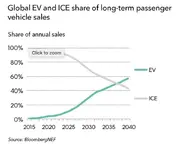
There are also external influences that can reasonably rigidly dictate how steep the S curve can be with new tech, and that's infrastructure in the case of EV's. If infrastructure can only improve at a given rate, that has to be a factor in how quickly you bring a product to market. Superficially that's charging networks, but the underlying thing their is national energy infrastructure. I'll quote Cashmere here because it's a sensible enough statement, but for ICE sales to "drop off a cliff by 2021" (i.e. in the next 18 months), energy distribution and production needs to climb one. As EnI points out the real disruptor here is government legislation, they can make the laws, but for manufacturers to meet them, they're dependent on the same governments to provide energy infrastucture to meet the massive increased demand they are legislating for.
"now" in relation to when? If you think I am claiming you can start a venture and turn profit on day 1 or even year 1 you are grossly misstating. Like any venture, it takes investment, time and effort before your can reap the benefits. Having done that, yes they could be selling EV profitably "now".
No intention to misstate anything, I'm keeping this in the context of existing OEM's that essentially have a significant head start on new Ventures. I'm saying "Now" in relation to the launch of the electric Mini since that appeared to be your catalyst for questioning the validity of such a product.
Who says nobody is doing it?Tesla is selling their cars at a profit. The gross margin on the Model 3 is ~20+% on average price of $55000. Believe it is even higher for Model S/X. It is a different matter the company chose to invest that (and more) back into growing it's business vs paying dividend.
Link in case it works - Here’s HowTesla Can Keep Model 3 Profit Margins Up
If it's 20% on 55k (11k) then it's no wonder Musk admits it would've killed Tesla to sell them at his goal of 35k, which is one of those benchmark statements Musk should be judged by, IMHO - becuase admitting you're wrong AFTER manipulating the market doesn't make it ok. The fact is Tesla has yet to demonstrate a sustainable business case for what it does is indisputable to me, it may well come, but it hasn't happened yet. Raising money from legitimising those polluting combustion engine sales for FCA, and further share issues are representative of opportunism, not sustainability.
In US, you can buy a $40,000 ($36,250 after tax rebate) model 3 with 240 mile EPA range today. I can't buy aBMW EV with 200 mile range for any amount. So not sure what your point is. No one is criticizingBMW for not selling a $35000 EV, they are not even selling one with decent range for even $70000.
My point is that 3 years after going on sale the car is only just materialising in the UK... and I'd question why... is it because of "an exec's aversion to risking failure and losing his contract renewal, a manager's fear of losing his annual bonus, an engineer's deep conviction what he knows is the best, a worker's fear of being outside the comfort zone" or is it because "sufficient market demand and sufficient resource supply to do it profitably and sustainably" took years to become (even remotely) real (and at this point there's STILL question marks over battery supply viability for Tesla - and they've supposedly got this shit nailed and are only serving a tiny, tiny percent of the Automotive market)
I think fundamentally neither of us disagree on where the future lies, it seems we just disagree on the gradient of that S-curve, I'm literally in pain typing out this post, and one-fingered left hand typing means it's taken well over an hour to do so... so I suggest we revisit this thread in.. say... 2025 and see how things transpired, and not fall out in the meantime, I'm not up to multi-quote jousts at this point in time!


 I understand your hatred for Tesla and how you can’t stomach change but please don’t spread misinformation.