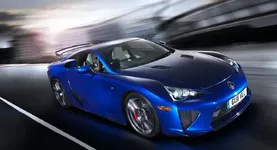
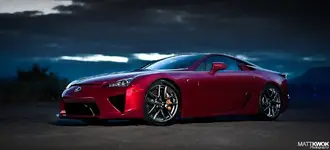
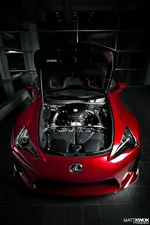
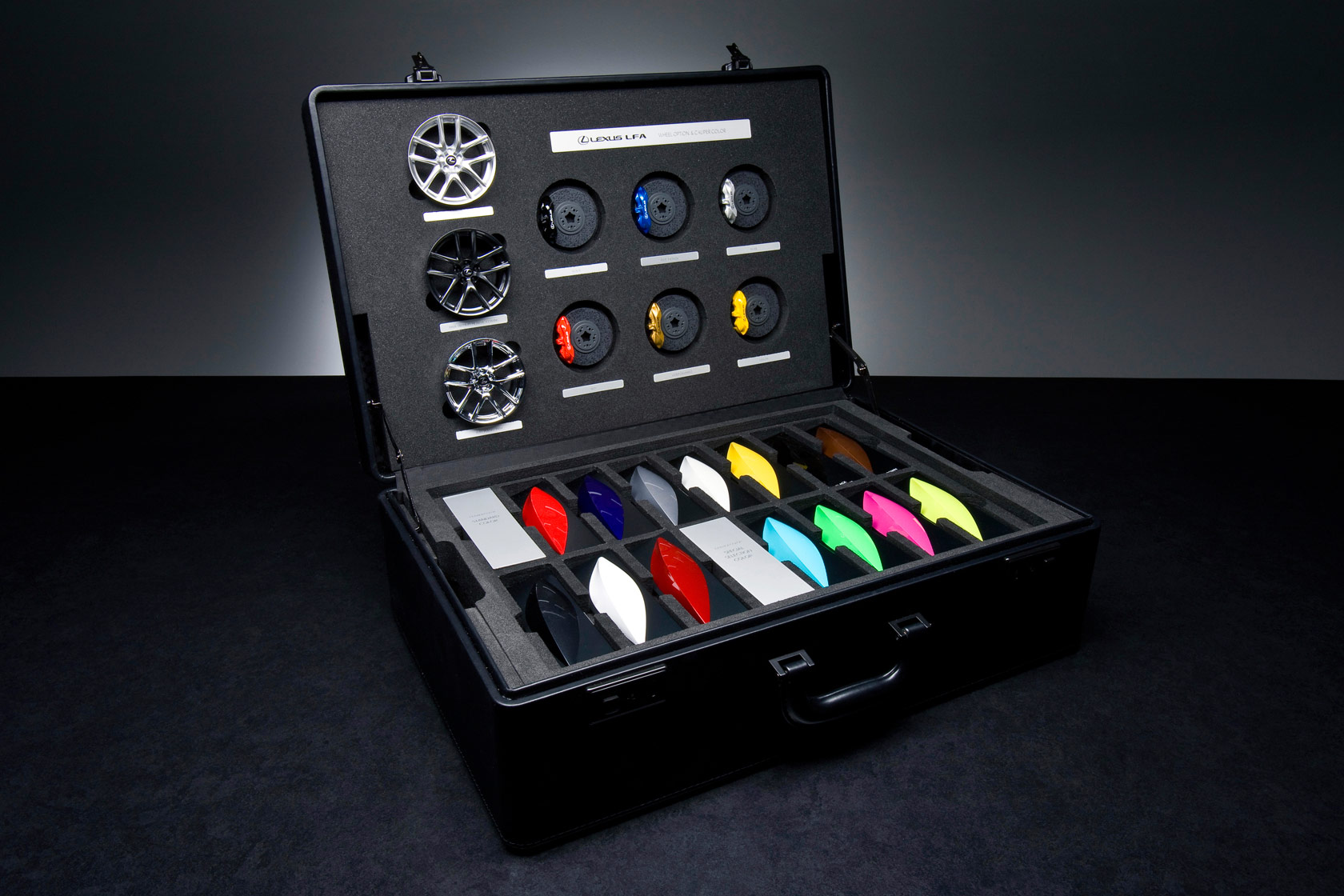
I agree with nearly everything you said. Funny how I was quickly reminiscent of exactly the same paragraph when they talked about "value per dollar" argument where they debunked it. It is more of a stunt to get a lot of flame fest going on the internet (seeing what the LFA vs GTR comparison brought many million views most of which were disgruntled GTR fans for awarding LFA the win) leads to a lot of sponsorships and popularity due to increased traffic.
CarAndDriver and Insideline are the two best one's US has. RoadAndTrack is not bad. MotorTrend is another story.
Still absurdity is clear in their criticism of an exotic supercar for being "too loud" (especially when it is a Lexus), the transmission being slow in daily driving (single-clutch automated are notorious for being slow in daily driving in automatic mode), calling the engine "buzzy" when it is arguably the smoothest engine in production today are completely absurd. It does not even slightly shudder at 9500 rpm in the engine bay. Calling the computer monitor that is the gauge cluster "fake needle" etc.
Though, acceleration is difficult to compare since those are some of the worst LFA acceleration numbers comparable to a 911 Carrera S, but still LFA proved around certain tracks (Nurburgring, for instance), it is quicker than the Enzo and Carrera GT, which does speak volumes, yet they never mention it.
p.s. Lexus LFA does have the baffles you are talking about that open at 4000 rpm. Below 4000 rpm, the baffles are closed and when the engine revs up, the baffles open. I could not imagine it being anywhere near 4000 rpm at cruising highway speeds.
CarAndDriver and Insideline are the two best one's US has. RoadAndTrack is not bad. MotorTrend is another story.
Still absurdity is clear in their criticism of an exotic supercar for being "too loud" (especially when it is a Lexus), the transmission being slow in daily driving (single-clutch automated are notorious for being slow in daily driving in automatic mode), calling the engine "buzzy" when it is arguably the smoothest engine in production today are completely absurd. It does not even slightly shudder at 9500 rpm in the engine bay. Calling the computer monitor that is the gauge cluster "fake needle" etc.
Though, acceleration is difficult to compare since those are some of the worst LFA acceleration numbers comparable to a 911 Carrera S, but still LFA proved around certain tracks (Nurburgring, for instance), it is quicker than the Enzo and Carrera GT, which does speak volumes, yet they never mention it.
p.s. Lexus LFA does have the baffles you are talking about that open at 4000 rpm. Below 4000 rpm, the baffles are closed and when the engine revs up, the baffles open. I could not imagine it being anywhere near 4000 rpm at cruising highway speeds.
All in all, there was some balance to the review. Perhaps in the name of stirring website traffic and ad revenue. Of all the mags, Motor Trend does seem to be the most bipolar. They post up an article and video of how the ZR1 "demolishes the world" on the basis of track numbers, then in another article they tear it down showing how as a driver's car, it's really not that good. Not anywhere near the level of a Cayman. And then in a blog, they say how performance numbers by themselves are meaningless, as they tell you virtually nothing about how the cars in question actually drive. In the end, who wins? Chevrolet wins one, Porsche wins one, Motor Trend scores revenue in viewership from both.
I get the feeling some on their staff were upset when their numbers hero the GT-R failed to trash the LFA in the previous review, which ended:
"Remove the collectors and speculators from the equation, and the LFA is merely another absurdly fast, glorious sounding supercar, right? Oh, if it were only that simple. Armchair experts, looking hard at our images and videos, will dissect and ultimately denounce the LFA for not being invincible. Sure, if a GT-R can catch it off guard, so can a Lamborghini Gallardo, Porsche 911 Turbo, Corvette ZR-1, and Dodge Viper -- all for a lot less money. But citing times, trap speeds, or dollar signs as enough reason to elevate any one of those over the LFA is missing the point entirely. The LFA belongs in the elite supercar club as much as any choice Porsche, Ferrari, or Corvette. It looks and sounds like nothing else on the road, and is as fiendishly fast as it is complicated and indulgent -- the very embodiment of the country and motoring culture from which it comes.
As for what its worth on the street? You need only hear the intoxicating bark of that V-10 touching 9000 rpm to know the answer.
Every penny."
And now, they bring back the old bang/buck argument. In a way, they've undermined this point in regards to the Porsche Turbo and GT-R in the previous paragraph (those turbocharged cars will never deliver the instant throttle response of the LFA). And while the LFA doesn't quite match the performance of the Enzo and the CGT, I think the fact that they're even comparing a Lexus to arguably the greatest hypercars of the past decade from such esteemed marques can only be good news for Lexus.
Yet, it doesn't quite compare with those cars. The Ferrari's interior looks more industrial, less luxurious, like an FIA GT car marginally adapted for street use. Its engine is less special, going on to power the MC12 and 599s. The Carrera GT cost about as much, but sold 1200+ units so it's not as if Lexus are asking too much. As the article states, the Lexus seems to occupy its own time in space. It doesn't compare all that well against anything on the market, and that further underscores its innate uniqueness.
As for the exhaust, I can imagine it might be tiring on a long highway trips. Lexus probably could have fit active exhaust baffles as you get on Ferraris, Astons and Corvettes to appeal to more people. They could have fit an adjustable suspension system as they've done on other models to improve the ride over more road surfaces. But the fact that they haven't probably shows their commitment in trying to make a purer driver's car, and is in line with the ethos of the supercar: every drive should be special and dramatic. We have seen in recent comparos that being more composed over bumps and more muted in sound makes for a better luxury sedan, but doesn't necessarily make for a better supercar.