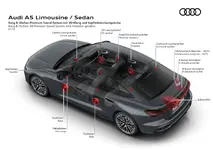
#audi #audia5 #a5 #a5avant #audis5 #s5 #s5avant #audis5avant #audia5avant #audidesign
Audi is opening the next chapter in its successful history in the mid-size segment with the new A5 family. Launching 30 years after the first Audi A4, the sharpened design language of the latest generation, now called the Audi A5, captivates with premium proportions. Both body styles, Sedan and Avant, perfectly embody the sporty essence of the Audi design philosophy. A new design language in the interior creates a generous feeling of space and places the displays on a digital stage. The new operating concept increases interaction with the vehicle. Efficient, partially electrified combustion engines and thrilling S models round off the range.
- Audi Design redefines the Sedan and makes the Avant even more attractive
- Technology meets comfort in the interior with new electronic architecture
- First combustion-engine version to enable partially electric driving thanks to drivetrains with MHEV plus technology
- Gernot Döllner, CEO of Audi: "The new A5 shines with its sporty design, new interior and modern electronic architecture. It also marks the launch of our new generation of efficient combustion engines"
Audi CEO Gernot Döllner on the new model family: “In tandem with the expansion of our all-electric portfolio, we are launching a new generation of models with efficient combustion engines. The Audi A5 family with its athletic design, completely new interior and future-proof electronics architecture will be the first. The advanced MHEV plus technology enables partially electric driving and therefore even more efficient driving.”
The new models are growing in length and width. Audi is also expanding their standard equipment, positioning the new Audi A5 in the upper mid-size segment. The new user experience based on the 1.2 version of the E³ electronic architecture matches this aspiration. Optional equipment is bundled in various packages.
Dynamic and muscular exterior design
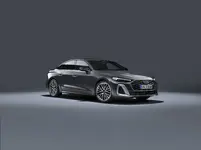
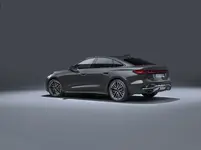
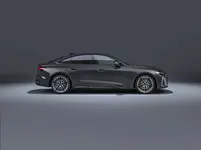
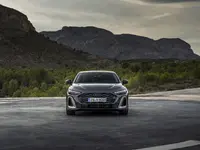
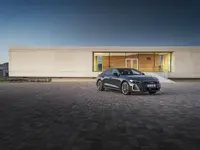
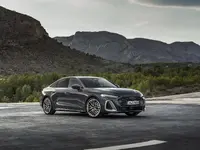
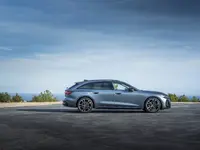
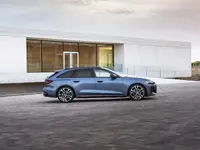
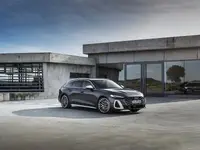
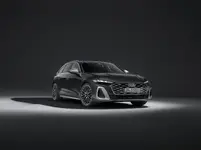
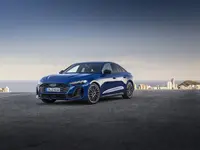
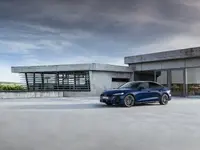
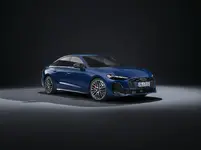
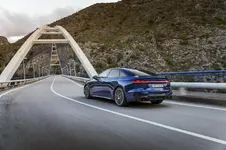
Even at first glance, the completely redesigned A5 family has a powerful and clean design. The modified proportions with a long wheelbase, large wheels and the low, sporty body embody progressive dynamism and premium standards. In the Sedan, the sporty, compact-looking greenhouse stretches to the rear in a sweeping arc, flows seamlessly into the shallow rear window in a coupé-like manner, and ends at the visually short tailgate with a striking spoiler lip.
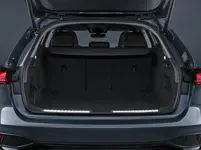
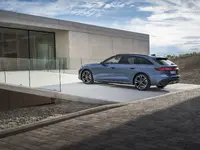
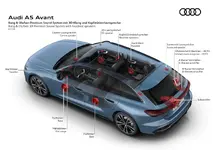
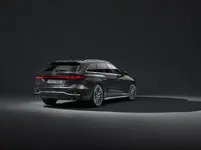
The rear hatch, which is new in this vehicle segment, offers a convincing symbiosis of design and functionality. It opens with the rear window and its size makes access to the luggage compartment considerably easier. This results in a completely new sedan concept for Audi. In the Avant, the dynamic, taut roofline merges into a seamlessly integrated roof spoiler that spans the sporty, flat rear window. The D-pillars, which are steeply raked, emphasize the dynamic side view of the A5 Avant.
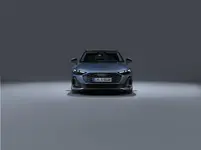
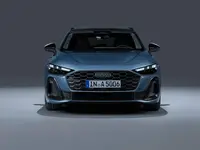
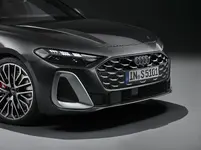
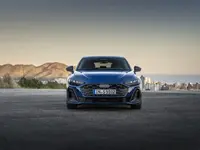
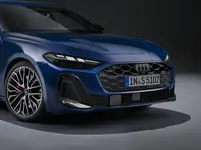
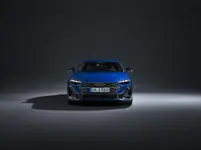
The front is dominated by the wide and significantly flatter proportioned Singleframe with a three-dimensional honeycomb structure. Together with the slim and precisely drawn headlights, it shapes the face of the vehicle and gives it a striking and focused expression. Thanks to the “soft nose” integrated into the bumper, the hood is flush with the front end. The blisters protruding powerfully from the shoulder area at the front and rear wheels are reminiscent of the Audi Urquattro and a core element of the Audi design DNA.
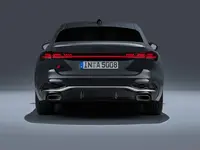
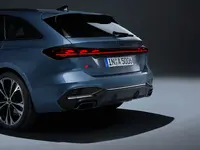
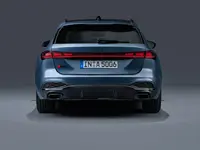
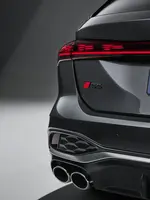
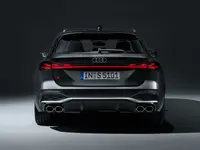
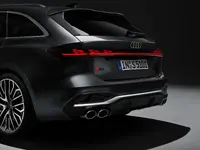
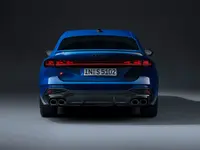
The striking, distinctive rear combines sporty, emotional design and intelligent technology. A combination of sculptural geometry and continuous, three dimensionally offset light strip gives the rear of the new Audi A5 presence and visual dynamism. Further highlights of the rear view in the base models are the clear, modern design of the bumper with a dark diffuser and the high-quality rectangular exhaust tips.
New standards in digital light
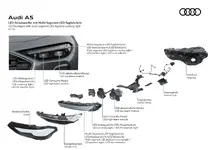
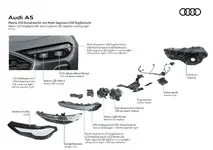
The Audi A5 family offers digital daytime running lights with LED technology at the front and second-generation digital OLED rear lights at the rear. With around 60 segments per digital OLED panel, they are increasingly becoming a display at the rear of the vehicle on the A5.
This enables car-to-x communication and increases safety on the road - for example with the new communication light. The dynamic lighting effects when unlocking and leaving the vehicle reflect the aesthetics of movement as part of the Audi light DNA. The active digital light signature does so too, conveying a new sense of liveliness.
The headlights and rear lights are three dimensionally designed, offer optional digital light signatures, and thus bring the physical and digital worlds together.
Technology meets comfort in the new interior
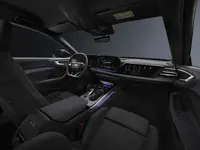
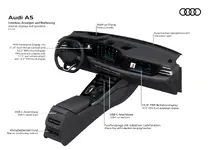
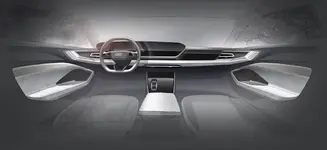
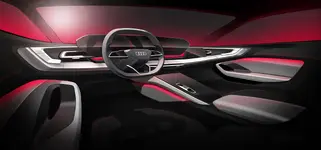
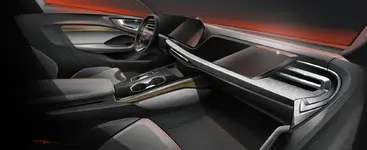
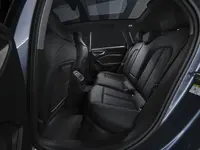
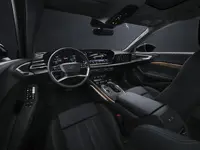
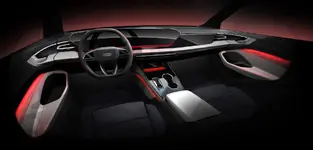
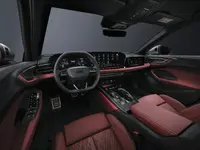
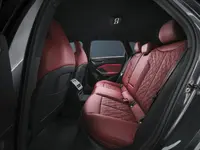
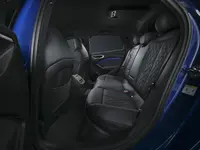
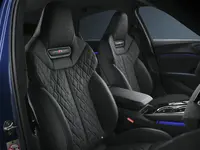
The design of the interior of the new Audi A5 is based on four characteristic features. Firstly, the interior has a human-centric design, i.e., it is consistently geared towards the needs of its users. The second special feature is the Digital Stage that establishes itself in clear view of the driver and front passenger in the form of the Audi MMI displays. With its Material Driven Design, the Audi A5 series meets the requirement for a generous sense of space with a high level of comfort. The clear layout and easy operation of the interior provide an overview in all situations to form the fourth feature: Visual Clarity. Added to this is the optional dynamic interaction light to support the car's interaction with the occupants.
Audi MMI panoramic display and head-up display
The new operating concept of the Audi A5 family increases interaction with the vehicle thanks to the E³ electronic architecture. The new Audi A5 integrates seamlessly into our customers’ digital ecosystem and offers a personal connectivity experience. The slim, free-standing Audi MMI panoramic display has a curved design and uses OLED technology. It consists of the Audi virtual cockpit with a 11.9-inch visible screen diagonal and the 14.5-inch MMI touch display. Audi complements the digital stage for the front passengers with the optional 10.9-inch MMI front passenger display, which is perfectly integrated into the dashboard design. The new A5 has a configurable head-up display that has been further developed compared to its predecessor. For the first time, drivers now have the option of controlling vehicle and infotainment functions via the head-up display.
Advanced hybrid system MHEV plus
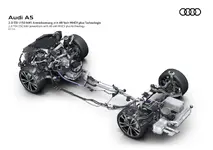
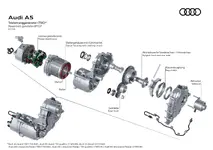
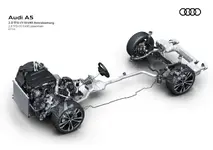
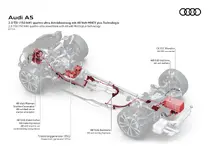
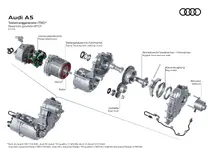
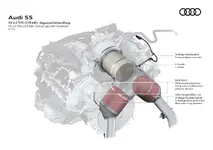
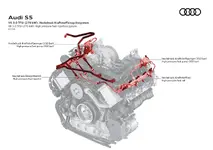
The new MHEV plus system based on a 48-volt on-board electrical system supports the combustion engine and reduces CO2 emissions while increasing performance. The powertrain generator (PTG) enables partially electric driving that contribute to a reduction in fuel consumption.
The new MHEV plus system enables significant advantages in CO2 emissions and fuel consumption in the Audi A5 model series compared to an MHEV system.
These total up to 10 g/km or 0.38 l/100 km in the 2.0 TDI (150 kW, front-wheel drive/quattro) (combined fuel consumption in l/100 km (62.1 mi): 5.6-4.7 (42.0-50.0 US mpg); combined CO2 emissions in g/km: 147-124 (236.6-199.6 g/mi); CO2 class: E–D ) and up to 17 g/km or 0.74 l/100 km in the V6 3.0 TFSI (270 kW, quattro) (combined fuel consumption in l/100 km (62.1 mi): 7.9-7.4 (29.8-31.8 US mpg); combined CO2 emissions in g/km: 180-167 (289.7-268.8 g/mi); CO2 class: G–F) up (in the WLTP driving cycle)[1].
The PTG can also add up to 18 kW (24 PS) of electric power to the output of the combustion engine. When decelerating, the PTG feeds energy back into the battery (recuperation) at up to 25 kW. As a result, purely electric maneuvering and parking are possible to a limited extent. Thanks to the option of using an electric air conditioning compressor, the air conditioning system can also be operated when the vehicle is stopped at traffic lights and the combustion engine is switched off.
With the integrated and blending-capable brake control system (iBRS), the brake pedal and the brake hydraulics can be completely decoupled. In models with the MHEV plus system, for example, it achieves the necessary deceleration without using the friction brakes thanks to regenerative braking. This means that deceleration is initially achieved solely by recuperation. The friction brakes only kick in when the brake pedal is pressed harder. The brake feel remains unaffected by this.
Motors at market launch
The efficient engines in the Audi A5 family cover a wide range: from the conventionally powered entry-level model to the comfortable long-distance runner and the dynamic sports car. The packages of engines, transmissions, the degree of electrification and type of drivetrain are geared towards the expectations of our customers.
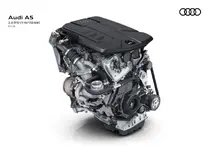
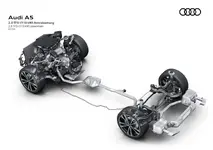
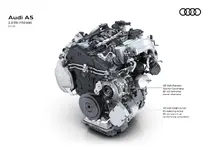
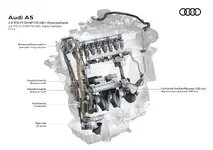
The entry-level engine is a 2.0 TFSI with 110 kW (150 PS) (combined fuel consumption in l/100 km (62.1 mi): 7.6-6.6 (30.9-35.6 US mpg); combined CO2 emissions in g/km: 173-150 (278.4-241.4 g/mi); CO2 class: F–E). Optionally, the same engine is available with an output of 150 kW (204 PS) (combined fuel consumption in l/100 km (62.1 mi): 7.9-6.6 (29.8-35.6 US mpg); combined CO2 emissions in g/km: 179-152 (288.1-244.6 g/mi); CO2 class: G–E). This TFSI engine is equipped with a turbocharger with variable turbine geometry (VTG) and works with a modified combustion process that is particularly fuel-efficient under partial load.
VTG technology enables a consistent and agile build-up of torque even at low engine speeds in gasoline engines. The turbo four-cylinder is available with a dual-clutch gearbox. The 110-kW variant is available as a purely front-wheel drive model and the 150-kW variant with front-wheel drive or quattro ultra.
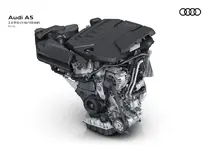
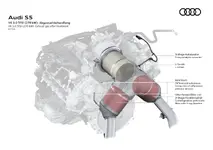
The 2.0 TDI with 150 kW (204 PS) (combined fuel consumption in l/100 km (62.1 mi): 5.6-4.7 (42.0-50.0 US mpg); combined CO2 emissions in g/km: 147-124 (236.6-199.6 g/mi); CO2 class: E–D) sets new standards in the A5 thanks to its MHEV plus technology. This two-liter engine from the EA288 evo generation inherits the optimized combustion from its predecessor thanks to the cylinder pressure sensor, TwinDosing for exhaust emission control and two balance shafts for smooth engine operation. It develops 400 Nm of torque between 1,750 and 3,250 rpm. The 2.0 TDI is available with a dual-clutch gearbox and front-wheel drive or with quattro ultra. To increase efficiency and comfort, the engine is partially electrified using the new 48-volt MHEV plus system. The electrified drivetrain components reduce CO2 emissions thanks to high recuperation performance. In addition, the comfort of the TDI is further enhanced by a 48-volt starter generator for a smooth engine start. The reaction time when starting off is reduced and the car is noticeably more agile.
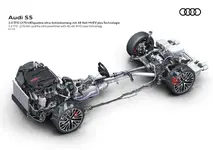
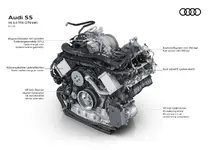
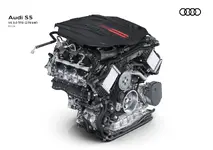
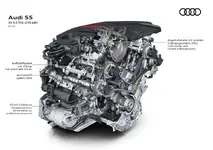
The S52, 1 is a sports car based on a 3.0-litre V6 TFSI engine with 270 kW (367 PS) (combined fuel consumption in l/100 km (62.1 mi): 7.9-7.4 (29.8-31.8 US mpg); combined CO2 emissions in g/km: 180-167 (289.7-268.8 g/mi); CO2 class: G–F) and an optimized combustion process. It has a turbocharger with variable turbine geometry (VTG) and MHEV plus technology for the first time. The revised S tronic dual-clutch transmission in the Audi S5, designed for more torque, also reduces the weight on the front axle and improves agility. Partial electrification by means of the new 48-volt MHEV plus system leads to reduced CO2 emissions via electrified driving components and high recuperation performance. Compared to an S4 Sedan TDI (predecessor model), the S5 Sedan TFSI (combined fuel consumption in l/100 km (62.1 mi): 7.7-7.4 (30.5-31.8 US mpg); CO2 emissions combined in g/km: 175-167 (281.6-268.8 g/mi); CO2 class: F) reduces CO2 emissions by up to 14 g/km. Its fast, dynamic torque build-up underlines the sportiness of the S52, 1. The standard use of a quattro sport differential with torque vectoring in combination with an adjustable all-wheel drive clutch is tuned for lateral dynamics at the highest level.
Dynamic design of chassis and steering
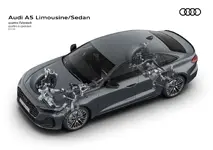
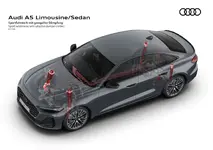
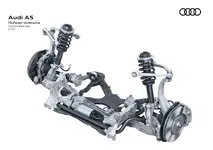
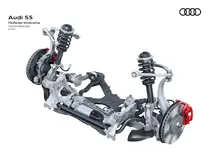
Thanks to the continued development of the suspension, the new Audi A5 brings the driving characteristics typical of the Audi brand perfectly to the road. As a result of extensive detail work on the suspension and steering, the Audi A5 offers precise, effortless, and largely neutral handling which, if the optional suspension with adaptive dampers is optioned, can be differentiated significantly more between comfort and sportiness. The steering, which is as always Audi progressive steering in the new model, has also become considerably more precise.
Market launch and prices
Audi is opening the next chapter in its successful history in the mid-size segment with the new A5 family. The Audi A5 and Audi S52, 1 will be launched in Germany and numerous other European countries in November. The Audi A5 family will be available to order in Germany from July 2024. The Audi A5 Sedan TFSI 110 kW (combined fuel consumption in l/100 km (62.1 mi): 7.5-6.6 (31.4-35.6 US mpg);CO2 emissions combined in g/km: 171-150 (275.2-241.4 g/mi); CO2 class: F-E) will be offered in Germany at an entry price starting at EUR 45,200 and will include navigation, an electrically powered rear hatch, and a telephone tray with inductive charging as standard.
read on
Audi MediaCenter
[1] The advantages described regarding CO2 emissions and fuel consumption include the influence of the additional weight of the MHEV plus system compared to the MHEV system. Further CO2 -effective effects at vehicle level, which may result from deviations in the drivetrain, weight or driving resistance of the vehicle under consideration with the MHEV plus system compared to a reference vehicle with MHEV technology (e.g., further development of the combustion engine or basic transmission, changes in rolling resistance, aerodynamics or weight) are not taken into account.
1. Audi S5 Avant TFSI: Combined fuel consumption in l/100 km (62.1 mi): 7.9-7.5 (29.8-31.4 US mpg); CO2 emissions combined in g/km: 180-169 (289.7-272.0 g/mi); CO2 class: G-F
2. Audi S5 Sedan TFSI: Combined fuel consumption in l/100 km (62.1 mi): 7.7-7.4 (30.5-31.8 US mpg); CO2 emissions combined in g/km: 175-167 (281.6-268.8 g/mi); CO2 class: F
----
Reference thread:
Renders - Audi A5 (B10)
Autobild reports: - A4 coupe will replace A5 and TT - 10.000€ cheaper than C-clas coupe and 4 series - build on LWB version of MQB Evo (Octavia, Tiguan) to save costs (about €750 to €1.400 per car) - electric version and hybrid planned - A5 Cabrio sells 15.00 units a year, A3 Cabrio sells...
 www.germancarforum.com