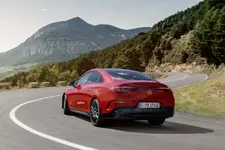
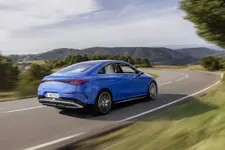
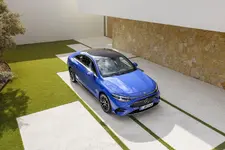
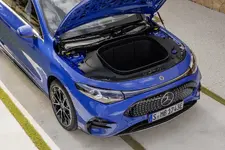
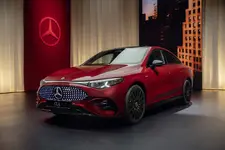
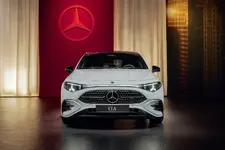
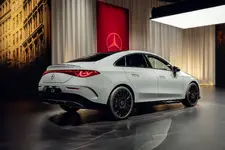
CLA (C178) The all-new Mercedes-Benz CLA: gorgeous, effortless, intuitive, and flexible


The Mercedes-Benz C178 is the third generation of the CLA series of luxury subcompact executive cars. Model codes: C178 (4-door coupé), C174 (EV), X178 (shooting brake), and X174 (EV shooting brake). It is preceded by the CLA (C117). Production: 2025-
25C0063_003.jpg

#mercedesbenz #cla #newcla #newmercedes #mercedescla #mercedesbenzcla #allnewcla

The new CLA offers more to customers in every dimension: more space, more refinement, more comfort, more intelligence, and more efficiency compared to its predecessor. It is the cleverest car Mercedes Benz ever made – and the first model in a completely new family of vehicles. Each new model will be available with both electric and high-tech hybrid drives. The debut is made by the all-electric CLA.

The all-new Mercedes-Benz CLA: the highlights

Intuitive: The most intelligent Mercedes-Benz ever thanks to the Mercedes-Benz Operating System (MB.OS)

Up-to-date for years and always ready for new features: regular over-the-air updates

The new CLA is the first vehicle to fully operate on the in-house developed Mercedes‑Benz Operating System (MB.OS), making it the most intelligent Mercedes-Benz ever. The new AI-enhanced system makes it possible to equip every vehicle with a supercomputer connected to the Mercedes‑Benz Intelligent Cloud. This enables regular over-the-air updates[1] for the most important vehicle functions, including driving assistance systems for the first time. This keeps the CLA up-to-date and attractive for years to come.

On the way to a hyper-personalised digital experience: the fourth MBUX generation
MB.OS marks the start of the fourth MBUX generation. It opens up a new world of personalised experiences and intuitive interaction between human and vehicle, setting new standards in the automotive industry. The new MBUX generation is the first in-car infotainment system to integrate artificial intelligence (AI) from both Microsoft and Google. This combines multiple AI agents in one system for the first time. MB.OS offers maximum flexibility to seamlessly integrate content from third-party providers. The typical Mercedes interface remains, delivering the familiar customer experience.

Exceptionally intuitive and individual: the new MBUX UI/UX concept
The MBUX Superscreen is powered by state-of-the-art high-performance chips and real-time graphics from the Unity Game Engine. The new control and display concept is tailored to individual customer preferences. The further developed MBUX Zero Layer on the central display shows the most important information, suggestions and, for the first time, the most recently used apps1. In the app view, apps can now be moved and grouped into individually named folders, similar to how it works on a smartphone. When an app is open, a simple swipe to the left returns to the app view. Another swipe takes the user back to the Zero Layer. Alternatively, they can still go directly to the Zero Layer at any time via the home button.

Intelligent, easy to talk to and empathetic like a friend: the new MBUX Virtual Assistant
With generative AI, the new MBUX Virtual Assistant revolutionises the relationship between vehicle and driver. It enables the kinds of complex, multi-turn dialogues one might have with a friend and has short-term memory. Based on ChatGPT4o and searches with Microsoft Bing, it unites the collective knowledge of the internet. Thanks to Google Gemini, the virtual assistant is also well-versed in navigation-related questions. It can access information from the Google Maps platform to provide users with detailed and personalised answers to questions about navigation, points of interest and much more. The MBUX Virtual Assistant is always present on the Zero Layer as a “living” avatar in the form of the Mercedes‑Benz star. During an active dialogue, it recognises emotions and can respond accordingly.
Intelligent navigation you can trust: bespoke Google Maps solution

In the new CLA, the navigation experience is based on Google Maps[2]. The navigation solution developed as part of the partnership between Google and Mercedes-Benz is one of the first integrations of Google Cloud’s new Automotive AI Agent for in-vehicle conversation services with Google Maps. Mercedes‑Benz Navigation with Electric Intelligence plans the fastest and most convenient route, including charging stops, based on numerous factors. Integrated visual communication also reaches a new dimension with MBUX Surround Navigation. It seamlessly integrates the driver-assistance view with a 3D representation of the surroundings and route guidance in real-time on the driver display. Drivers benefit from improved situational awareness, seeing what the CLA sees and how the assistance systems support them.

MB.DRIVE sets a new standard with state-of-the-art driving assistance and parking systems
The new CLA models in Europe come as standard with extensive safety features and the DISTRONIC Distance Assist. Additional comfort assistance systems are bundled by Mercedes-Benz under the name MB.DRIVE². MB.DRIVE ASSIST will be optionally available in Europe from market launch. It complements Distance Assist DISTRONIC with Steering Assist, making it a state-of-the-art SAE Level 2 driving assistance system. New in the CLA is Lane Change Assist, which facilitates lane changes with a simple click of the indicator lever. The safety assistance systems can prevent a multitude of accidents.
Effortless on the road: The CLA with EQ technology is the “one-litre car” for the electric age
Remarkably low consumption and high range

The carbon footprint of the new all-electric CLA is reduced by 40 per cent over the entire value chain compared to its non-electrified predecessor. With remarkably low consumption and an impressive range in this segment, the CLA is taking electric mobility in everyday life to a new level. The first models to come to markets are the CLA 250+ with EQ Technology (energy consumption combined: 14.1-12.2 kWh/100 km | CO₂ emissions combined: 0 g/km | CO₂ class: A)[3] and the CLA 350 4MATIC with EQ Technology (energy consumption combined: 14.7-12.5 kWh/100 km | CO₂ emissions combined: 0 g/km | CO₂ class: A)3. With a range of up to 792 kilometres according to the WLTP³, the 200 kW CLA 250+ with EQ Technology offers a large radius in its class. The CLA 350 4MATIC with EQ Technology with 260 kW is positioned as the performance version at the top end of the model range.
The 800-volt electric architecture makes charging almost as fast as refuelling
The 800-volt system can significantly reduce charging time in conjunction with the new battery generation. The CLA 250+ with EQ Technology can be recharged to a range of up to 325 kilometres[4] within ten minutes. Fast DC charging with up to 320 kW is possible for the CLA 250+ and CLA 350 4MATIC.
New battery generation with high energy density and a smaller carbon footprint
The new all-electric models CLA 250+ and CLA 350 4MATIC feature the top variant of lithium-ion batteries with a usable energy content of 85 kWh. The cells have anodes that mix silicon oxide with graphite. Compared to the previous battery with conventional graphite anodes, the gravimetric energy density has been increased by up to 20 per cent. The volumetric energy density of the cell chemistry is 680 Wh/l. The cobalt content has been further reduced. The new battery generation reduces the carbon footprint by about 30 per cent per cell compared to its predecessor. This is thanks to carbon reduction measures, net carbon neutral[5] cell production and the use of electricity from renewable energy sources in anode, cathode and cell housing production.

Sprinter and marathon runner in one: the new two-speed transmission
The two-speed gearbox on the main drive at the rear axle combines dynamism with high efficiency in all situations. The first gear enables excellent acceleration right from the start and a high towing capacity. It also offers great efficiency in urban traffic. The second gear is designed for power delivery at high speeds and high efficiency on the motorway. It ensures outstanding range and long-distance comfort. The top speed is also achieved in the second gear.

“Free” heat for efficient pre-conditioning: multi-source heat pump as standard
The electric CLA is the first Mercedes-Benz vehicle to feature an air-to-air heat pump. It no longer takes the detour through a water circuit and, as a so-called multi-source model, can use three energy sources in parallel: the waste heat from the electric drivetrain, the battery, as well as the ambient air. By using this “free” heat, the air-to-air heat pump contributes to the high efficiency of the CLA. It requires only about one-third of the electrical energy that a comparable auxiliary heater would need for the same output.

Flexible for individual needs: all-electric or with high-tech 48-volt hybrid drivetrain

A modern hybrid with three power levels will follow towards the end of the year

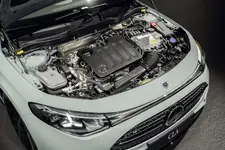
All-electric models play a key role in implementing Mercedes‑Benz’s sustainable business strategy. However, the wishes and mobility needs of customers in different regions of the world determine the pace of this transformation. Towards the end of the year, the new CLA will also be available as a hybrid with 48-volt technology and an electric motor integrated into the transmission. The modular architecture of the CLA model family allows Mercedes‑Benz maximum flexibility in the drive concept and production. The state-of-the-art combustion engine of the CLA hybrid will initially be available in three power levels. Customers will have the choice between front-wheel drive and 4MATIC all-wheel drive.

CLA hybrid models can drive all-electrically and recuperate
The electric motor, inverter and transmission form a highly integrated unit. The electric motor provides intelligent support across the entire speed range. At urban speeds and when less than 20 kW is needed, the hybrid models can drive on electric power alone. So-called electric cruising is possible at speeds of up to around 100 km/h. A special feature of the combustion engine is its ability to recuperate in all eight gears, recovering up to 25 kW of energy.

Gorgeous: emotional expression of athletic power

A desirable statement: athletic proportions and striking character lines

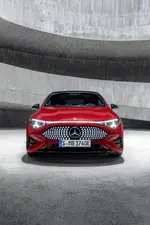
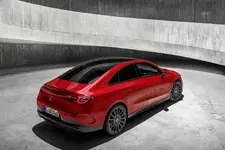
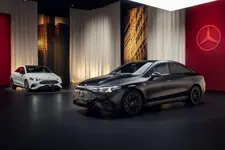
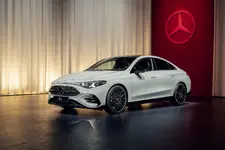
The CLA with EQ Technology captivates with an exciting interplay of intelligence and emotion, redefining desire. The long wheelbase, short overhangs and a powerful GT rear are an emotional expression of athletic power. The car’s sporty proportions are enhanced by a low greenhouse, long bonnet with power domes and large wheels. The car’s muscular and athletic shoulders start at the front wheel arches and extend to the sculptural rear. The clear design language emphasises the sculpted surfaces with reduced lines and precise joints. The striking character lines on the flank create an interesting interplay of light and shade when viewed side-on.

Radiant “face”: panel with illuminated Mercedes-Benz pattern
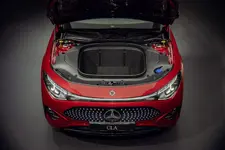
The iconic and sporty A-shape grille has been reinterpreted for the electric age. The innovative seamless star panel is fully illuminated for the first time on a Mercedes‑Benz production vehicle. A total of 142 individually animated LED chrome-effect stars create a distinctive brand signature. One of the few visual differences distinguishing the CLA hybrid is its classic radiator grille. It features a Mercedes-Benz pattern in chrome, framed by an LED lightguide as standard.

Brightens the day and night: star-shaped headlights and taillights
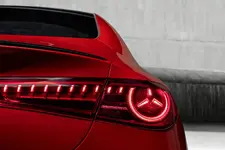
With the optional MULTIBEAM LED headlights, the daytime running lights take the form of a Mercedes‑Benz star. Connecting the headlights is a band of light. The taillights are also star-shaped and connected by an illuminated design element. This combination gives the CLA a strong and unique visual presence. In conjunction with the optional MULTIBEAM LED headlights, it forms the new Mercedes‑Benz signature. It makes a Mercedes instantly recognisable at all times of the day or night – an unmistakable statement of iconic luxury. The standard-fit LED High Performance headlights have a chrome-plated design element in the shape of a star.

Light-flooded ambiance: panoramic roof fitted as standard for a generous interior feel
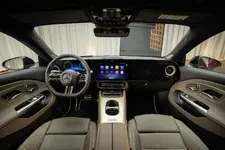
All CLA models come as standard with an expansive panoramic roof. This one-piece fixed glass roof has no central brace and extends seamlessly from the windscreen frame to the rear. It provides a new interior experience with an almost unobstructed view upwards. At the same time, the panoramic roof contributes to more generous headroom compared to its predecessor. Heat-insulating laminated safety glass, infrared film and low-emissivity (LowE) coating protect against sunlight and heat.

New spatial experience: minimalist interior design focusing on three iconic high-tech elements
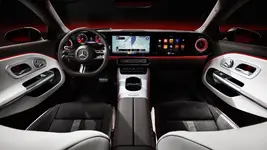
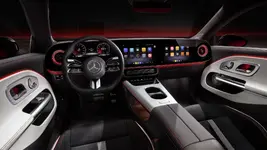
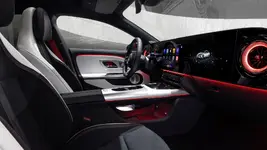
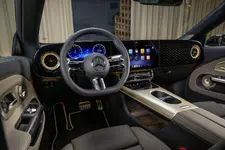
The interior of the CLA offers a new luxury experience in this vehicle class. The design follows the principle of reduction to the essentials. It de-emphasises the underlying structure and focuses on a few iconic high-tech elements. The highlight is the optional, floating MBUX Superscreen, which extends across the entire width of the interior. Behind a large glass surface are the 26-centimetre (10.25-inch) driver display and the 35.6-centimetre (14-inch) centre display. After market launch of the CLA, the MBUX Superscreen will be available as an optional extra with an additional 35.6-centimetre (14-inch display) for the front passenger. Another eye-catcher is the centre console. Appearing to float in mid-air, its high position enhances the sporty feel. As in higher vehicle classes, it is split into two levels. The upper section offers an expansive, three-dimensional trim surface – with an integrated double cup holder and optional wireless smartphone charging cradle. The third high-tech element is the large leather-clad door centre panels, which likewise seem to float. They wrap three-dimensionally over the profile of the pull handle, which is designed in a classic tubular form.

Best-in-class equipment: a reinterpretation of modern luxury at Mercedes-Benz
An attractive and versatile range of colours and materials underscores Mercedes‑Benz’s commitment to exceptional design and distinctive features. Options include the new paint colours aqua mint and clear blue metallic as well as newly developed seat upholstery with a technical-looking pearl effect in black/clean white pearl. Also available are trim elements made of open-pore wood, brushed aluminium, a coating with an anodised look and a decorative paper surface that is new in the automotive industry.

Continue reading...

[1] A personal Mercedes me ID and agreement to the Terms of Use for the Mercedes-Benz Digital Extras are required to use the services. In addition, the vehicle must be paired with the corresponding user account. Upon expiry of the initial term, the services can be renewed for a fee, provided they are at that point still offered for the corresponding vehicle.
[2] A personal Mercedes me ID and agreement to the Terms of Use for the Mercedes-Benz Digital Extras are required to use the services. In addition, the vehicle must be paired with the corresponding user account. Upon expiry of the initial term, the services can be renewed for a fee, provided they are at that point still offered for the corresponding vehicle.
[3] The specified values were determined in accordance with the prescribed WLTP (Worldwide harmonised Light vehicles Test Procedure) measurement method. The ranges given refer to the European market. The energy consumption and CO₂ emissions of a car depend not only on the efficient utilisation of the fuel or energy source by the car, but also on the driving style and other non-technical factors.
[4] At DC fast-charging stations with 500 amps based on the WLTP range.
[5] Net carbon-neutral means that carbon emissions that are not avoided or reduced at Mercedes-Benz are compensated for by certified compensation offsetting projects.
 

Attachments

Even the CLA interior looks vastly bette than before. Has anyone sat in one yet?

M

It is indeed solid, assembly fit and finish impressive. Materials appear durable, haptics and tactility fine. Ambience is...o.k. Being an entry level model line from a premium brand, all satisfactory. Do NOT like the exterior, but that's just me.
 
Autocar test of CLA250+. They gave it 4 stars overall and surprisingly marked the interior down due to the quality not been so premium.

1775730199107.webp


1775730213315.webp


The very latest new electric cars have a surefire way of making nearly new ones age so much quicker than their petrol-powered antecedents ever used to.

The electric Mercedes-Benz CLA certainly felt like the future, about five minutes ago. It was announced in spring 2025. It remains the reigning European Car of the Year. It has the kind of performance, range and efficiency that was considered good enough, back then, to be class-leading.


And now? The BMW i3’s the new flavour of the month, taking claimed range beyond 550 miles WLTP. Mercedes, meanwhile, has to look to some added variety to keep the custom rolling in. Which is why we’re now testing not only a CLA Shooting Brake body derivative, but also getting our first go in a twin-motor, -350 4Matic version.

The arrivals of these derivatives is part of the usual fleshing out of the model range. There’ll be a 58kWh CLA 200 joining the party this summer as well, for which is claimed a WLTP range of as much as 321 miles in Shooting Brake form, and can be bought from a whisker over £40,000.

Here's Mercedes-Benz, then, with one of the longest-range electric cars on sale in the UK – and it’s not the brand’s top-dollar technology flagship but the entry-level saloon. The Mercedes-Benz CLA achieves this not with some next-generation battery, but with a combination of the fairly traditional engineering that Mercedes has long been known for – gearboxes and aerodynamics – and the electric motor expertise it has gathered over the past few years of volume EV making.

It proved a match for the Tesla Model 3 in a recent group test, even if it couldn’t quite beat it. Now to see how it fares in our range of instrumented tests.

1775730281597.webp


1775730306587.webp


The CLA introduces an entirely new platform for Mercedes-Benz, named MMA or Mercedes Modular Architecture. With it comes a shift in strategy, one that is surprisingly the opposite of BMW’s approach with its Neue Klasse cars. Where Mercedes’ EQ cars have so far been completely separate from their combustion-engined counterparts (the EQE and E-Class share very little), the MMA also supports a range of 48V hybrids (Read our review of the Mercedes CLA Hybrid here). The need to house an engine, as well as the mixed reception to the design of the EQE and EQS, means that the CLA looks more conventional than those cars, with a relatively long bonnet.

Despite looking less overtly aero-optimised, drag-reducing measures are still a big part of the CLA’s design. At the front, the ‘grille’ is of course closed off on the EV (it becomes an actual air intake on the hybrids) and the joins between headlights and body panels are sealed as much as possible. Suspension components have their own covers to stop them disturbing the airflow. Just how slippery the CLA is does depend on the version you pick. The most optimised version, with aerodynamic 17in wheels and flush door handles, achieves a Cd of 0.21. This particular spec doesn’t exist in the UK and the more popular AMG Line cars, with slightly more open 19in wheels, will be closer to 0.23.

1775730374769.webp


On the drivetrain side, the CLA gets a new generation of batteries. It is being launched with an 85kWh (usable capacity; Mercedes refuses to disclose total capacity) nickel-manganese-cobalt pack that uses less cobalt and has much-improved energy density compared with previous generations. Mercedes quotes 680Wh/l rather than the more common Wh/kg, but it does seem to compare favourably with Tesla.

In the latter metric, it might not be so impressive, given the CLA 250+ we weighed tipped at 2029kg on our scales, which is similar to the Hyundai Ioniq 6 but significantly more than even the dual-motor Tesla Model 3, which we weighed at 1846kg.

The CLA’s efficiency party trick is its rear motor, which drives through a two-speed automatic transmission. First gear uses an 11.0:1 ratio, which is similar to the Ioniq 6’s 10.1:1, whereas second gear is much longer, at 5.0:1, to make it more efficient at motorway speeds. For comparison, the Tesla Model 3 uses a single ratio of 9.0:1.

As regards the wider derivative range: the CLA 250+ is now joined by the CLA 200, which uses a 58kWh battery. That won’t be much lighter given it uses a lithium-iron-phosphate pack, which tend to be less energy dense. Both battery options use 800V architecture, to allow the bigger pack to charge at up to 320kW and the smaller one at up to 200kW.

And at the other end of things, there is also now the CLA 350 4Matic, which adds an additional motor on the front axle, for a total output of 349bhp; and 0-62mph in around 5.0sec. Unusually, this is also a permanent magnet synchronous motor, albeit with a disconnect clutch. Most dual-motor EVs use an asynchronous unit as the secondary drive motor because they are cheaper and cause less drag when not in use. However, synchronous ones are more efficient when in use, and the disconnect clutch entirely removes any drag when it is not.

And while we're on the topic of drag: tou might imagine that an elegant Shooting Brake body, wrapped around the same chassis that the saloon uses, ought to result in a more aerodynamic, longer-range EV. Well, not the one that's just been added to the CLA range.

The car has precisely the same major exterior dimensions as the saloon, right down to the rear overhang (often where ‘wagon’ versions differ). That means it’s a little bit longer overall than the last-gen CLA, with a wheelbase stretched by some 61mm.

1775730440356.webp

1775730470704.webp

1775730486811.webp

1775730497457.webp

Quite why the growth spurt that the CLA has just had doesn't result in bigger second-row quarters (one of the predecessor model's conspicuous failings) - or a bigger boot in the case of the Shooting Brake version (also slightly smaller than the last CLA offered; an only moderately large 455 lites vs 485-) - we can only assume has something to do with electrification.

In the Shooting Brake, at least, a standard panoramic glass roof does deliver a modest gain on second-row headroom, Mercedes would counter. And yet to sit in the back of it still isn’t to be as comfortable as in a Tesla Model 3, a VW ID7, or an MG IM5. Leg-, knee- and underseat footroom will be tight for any average-height adult traveller, and access remains a squeeze.

Up front, spaciousness is better. There’s further proof that Mercedes’ new ‘MMA’ platform (which somehow gives the cars built on it more of a fighty, aggressive vibe than otherwise suits them) doesn’t make for the most convincing, traditional Mercedes cabin quality. Then again, the company’s smaller models have never really felt quite as solidly appointed and expensively finished as their larger counterparts.

There are simply too many shiny mouldings and glossy-smudgey, creaky plastic fixtures for the CLA to really seem classy or luxurious; or even much different than the modern techno-premium brand norm. The plain truth us, brands that focus on a less chintzy, high-gloss look, and a more consistently expensive tactile feel, do it better these days.

But there is certainly tech. Mercedes’ ‘MBUX Superscreen’ dashboard (standard on AMG Line Premium & Premium Plus models) puts a seconary 14in touchscreen display in front of the passenger, in addition to the identically sized one in the middle of the fascia. You can stream media on it; browse the web; and play video games. None of what you see is made invisible to the driver sitting next to you, though - which is mildly concerning from a distraction point of view.

While some other manufacturers are slowly revising their touchscreen-dominant strategies, Mercedes is ploughing on full steam ahead. As on other Mercedes, the approach is at least relatively cohesive here. The CLA's startlingly vertical fascia and relatively short dashboard are unusual, and call forth a 1950s vision of the future.

While Mercedes largely pulls off its wilfully modern design, it has gone too far in stripping away physical controls. Even compared with other recent Mercedes, the CLA has lost its buttons for the heated seats and lumbar support, and neither is especially easy to access in the touchscreen either. Meanwhile, the touch-sensitive controls on the steering wheel are not the worst of their kind but have outstayed their welcome.

1775737068432.webp

Nonetheless, there is plenty to like about the CLA’s interior. The touchscreen generally works intuitively, with the maps, media and essential vehicle controls all accessible directly from the home screen. The built-in navigation uses Google data, so it’s very aware of traffic conditions and will even warn you of potholes (we found it quite accurate). It gives you pretty good tools to find a fast charger, though it’s not infallible and misses some compatible chargers. The AI-assisted voice control is one of the best around, if no substitute for proper buttons. Switching in and out of smartphone mirroring is quick and easy, though Apple CarPlay did drop out occasionally, before reconnecting automatically.

Despite the sizeable battery, the CLA doesn’t give the driver the feeling of sitting on top of the car, and there is plenty of adjustment in the seat and steering column to find a comfortable driving position. The seats themselves are excellent as well, with softer padding than most Mercedes seats but plenty of support. We can’t help regretting the dearth of upholstery options, though. Even on Premium Edition+ trim, you’re limited to faux leather and microsuede in somewhat garish colours, whereas German buyers can spec black or brown leather. There is a good amount of interior storage, with generous cupholders and a dual-level centre console.

1775737115748.webp

1775737146349.webp

1775737185757.webp

Doing a full-throttle acceleration run in the CLA 250+ saloon was an unusual experience for an EV. With its 268bhp, the 250+ is about averagely powerful for the class. After all, it’s not meant as a performance model and it doesn’t have a launch control function. In fact, it somehow feels slightly slower than it really is. It reaches 60mph a few tenths behind the Volkswagen ID 7. Shortly after that, there’s a slight hesitation as it shifts to its second gear – an operation that is less instant than it is in the Porsche Taycan. With second gear engaged, it subjectively seems to get a second wind. In reality, the data shows that it loses some accelerative force compared with first gear but maintains its acceleration better than rivals. It reaches 110mph slightly sooner than the ID 7.

Look closely at the data, and you will notice that up to 70mph our test car was actually slightly faster with battery charge below 10% than with it over 90%. This was due to getting a better getaway, but it does show clearly that as far as UK road speeds are concerned, it doesn’t lose any performance at a low state of charge whatsoever, which is impressive.

1775737239253.webp

Just as impressive is the CLA’s general drivability. There are no paddles to control the regenerative braking; instead you push and pull the drive selector stalk. This gives you the choice of a freewheeling mode, a one-pedal mode, a few regen strengths in between and an adaptive mode. Most testers preferred the freewheeling setting, because in combination with the very progressive brake pedal it makes the CLA deeply relaxing and intuitive to drive. Some testers found the one-pedal mode a little too fierce.

While on the subject of the drive selector, we do have an unusual complaint. There is no Park mode. Instead, the button at the end of the stalk turns the car on and off. If you instinctively try to put it in Park (for instance, when pulling over to look at your phone), this will kill some of the infotainment functions, and cycle all the ADAS features that legally need to default to on, which is irritating and unnecessary. You can, of course, put it in Neutral and engage the handbrake, but that’s unintuitive and fiddly.

1775737272750.webp

Performance testing also uncovered one of the CLA’s most disappointing attributes. In the dry, its stopping distances are unremarkable if unusually variable. However, it needed 64.3m to stop from 70mph in the wet. When you consider that most cars, regardless of weight, need around 55m (Kia EV3: 50.5m; Volvo XC60 T8: 56.2m), this is unacceptable for a company that prides itself on safety. The Volkswagen ID 7 GTX recorded a similar stopping distance (62.8m), so it’s not entirely unusual - but if Mercedes has fitted tyres that compromise wet braking for efficiency to this degree, we would argue it was the wrong choice.

The only other CLA powertrain derivative we've tested is the 350 4Matic. Twin-motor derivatives of EVs like this have often come over as unusually irrational propositions these last fives years or so, in obliging people to pay more for heavier cars with less electric range, which only really pay you back with what can seem like a pretty superflous performance level. The CLA 350 4Matic, however, doesn’t suffer in the same way.

Mercedes claims that the additional motor on the front axle, and its associated ballast (as little as 33kg, depending on optional specification), only costs between 15- and 20 miles of range on the WLTP cycle. Our test car indicated a real-world, mixed-road 375 miles of range on a full charge. That’d drop a bit in quicker motorway use - but you could still expect 300 miles even there, which is commendable enough.

The car doesn’t feel fast enough to be a typical range-topping Mercedes performance derivative (we’d expect an AMG version to fill that gap), but it certainly addresses the slightly disinterested-feeling performance level of the regular 250+ version. It’s brisk but not excessive. The work of the front-mounted motor also helps to cover for the interruption in power delivery you can sense in the lesser version when it’s shifting gears.

1775737326742.webp

1775737347613.webp

1775737364224.webp

The CLA’s chassis conjures Mercedes of old in some ways, in that it is quite light on whiz-bang ‘features’ – lacking any form of active suspension or four-wheel or variable-ratio steering (though other cars on the MMA platform, such as the GLB SUV, do have adaptive dampers) – but it manages to feel very cohesive all the same. It’s the sort of set-up that could only have come from a car maker with over a century of experience in tuning such things. At the rear is the expected multi-link, while at the front there’s a variation of a MacPherson strut. Mercedes calls it a three-link as the tie rod adds more support than usual. Dampers are simple passive items.

Nevertheless, Mercedes has struck a particularly pleasant balance of ride and handling. The suspension doesn’t completely iron out the bigger bumps like some air-sprung systems but is settled and just lets you know what’s going on underwheel. If it were any softer, it might risk becoming floaty. Equally, high-frequency impacts are reduced to blunt thumps. Smaller wheels with taller tyres might make those even less noticeable, but we wouldn’t expect miracles from the 18in wheels. It’s fairly quiet at motorway speed too.

1775737399457.webp

Point the CLA at a corner, and it makes the most of its rear-drive layout. The steering is nicely uncorrupted, intuitively geared and weights up a little as you load up the chassis. It initially turns in quite keenly, but if you’re really pushing it, you soon run into the limits of those economy-focused tyres. In Germany, it’s possible to spec ‘sport’ tyres, which might just tip the CLA into sports saloon territory and shorten that wet braking distance. There is initially little sense of rear-drive balance, as the stability control is very conservative. Switch to the ‘off’ mode (which isn’t fully off), and the CLA will rotate quite progressively on the accelerator. On both the wet and dry handling tracks, the alliance of a powerful rear motor and quite a rear-heavy weight balance made the CLA amusingly adjustable.

As regards the pricier 350 4Matic version; there's more impressive news. A nicely fluent, supple and well-isolated ride to enjoy, for a start; as well as fairly nonchalant yet effective body control, and precise, agile and intuitive handling that allows the CLA to flow along a fast mountain road rather agreeably. Just as in the 250+, you can use the car’s drive selector column shifter, pushed backwards and forwards rather than up or down, to manage motor regen manually as you drive, if you like.

Finally, a brief note on the assisted driving systems. Mercedes-Benz basically invented adaptive cruise control with the S-Class of the early 2000s, and still has one of the best such systems. Except, it doesn’t seem to have fitted it to the CLA. The system is less confident than on other Mercedes, and it more regularly slows down for traffic that isn’t there. The undertaking prevention also can’t be disabled. Although our test car supposedly had matrix LED headlights, they did not seem to work – instead simply activating and deactivating the high beam as necessary. On the mandatory safety features front, it’s better news. The lane keep assist and driver monitoring are a bit of a faff to disable but generally unintrusive, while the speed limit warning is better than most and very easy to turn off.

1775737456077.webp

At £45,615, the entry-level Sport trim is priced in line with a Long Range Single Motor Model 3, though the Tesla is much more generously equipped as standard. However, the Sport is the version we would recommend, since the smaller wheels might just improve the ride further and net you a few more miles of range. It also comes with normal rather than the flush door handles of our test car, which didn’t always pop out when we expected them to. Whichever spec you choose, though, the Tesla is much cheaper on PCP finance. Compared with other rivals, the Mercedes is fairly decent value.

1775737491254.webp

o what of that much-vaunted range and efficiency? There’s no doubt that the CLA performed very well – 3.6mpkWh on our touring test (which tends to be more pessimistic than regular motorway driving) and 4.6mpkWh on the ‘everyday’ test are among the best figures we have recorded. But given all of its tech, we expected it to really outshine the Teslas, though; and it's a telling measure of how efficient the Model 3 continues to be that it didn't.

The better news for CLA owners may be that you can go for the twin-motor 350 4Matic model and not suffer too much on inefficiency. On a preliminary test in Spain, our 350 test car suggested it would cover a range of 350- to 375 miles in mixed used; dropping to 300- at exclusively motorway pace. So it really isn't a lot less usable on range than the 250+ version.

The car tells a similar story on rapid charging as it did on efficiency. A weighted average of 195kW and a (very brief) peak of 330kW are undoubtedly impressive, but equally it’s not the leap that we hoped for. For reference, we recorded 180kW from the Hyundai Ioniq 6 two years ago. It was a little disappointing how quickly the CLA’s charging speed dropped off.

The biggest potential hiccup of all is that, as standard, the CLA won't take a DC rapid charge from an older-tech-style, 50-100kW, 400-volt rapid charging post; a result, it's claimed, of the fact that it has an 800v electrical architecture, and a charging system optimised for that rating.

You may decide that doesn't matter to you; especially if you never need to use those older rapid chargers (which tend to be the unreliable ones anyway, of course). But Mercedes will now include a converter to deal with the problem; but only at a cost of £850. It's a conspicuous cash grab from the company, and a little strange given that it's a move without precedent among other EVs that we know of.

1775737533995.webp

1775737559324.webp

1775737588759.webp

Following a group test and a road test, we are thoroughly impressed with the new CLA. It’s very pleasant and enjoyable to drive thanks to its balanced suspension, configurable drivetrain and comfortable driving position. It’s also at the forefront of EV tech, being among the fastest-charging cars and having a long range that’s a result of clever energy usage instead of brute force.

Moving up the showroom range, there's more to like. As electric driving experiences go, the CLA 350 4Matic’s does feel assuredly ‘premium’; but it can be relaxing too, and doesn’t gesture at a level of driver appeal that is ultimately unfulfilled. If more upper-tier EVs can hit a similarly mature, well-balanced positiioning, you’d say brands like Mercedes should have a better chance of selling a few more of them; and customers should see more sense in spending extra on a car that delivers more upside than down-.

Zooming out a bit, of course, the simpler Tesla Model 3 still matches the CLA for efficiency, which might surprise some people; and at the same time, the CLA's lack of physical controls, and the tyres’ poor wet performance, are regrettable.

This new CLA is a step rather than a leap forward for European EVs. It’s a very appealing car, but will need continuous development if it’s not to be left behind in the coming years.
 
I noticed you changed your taunting tactics.

Not my intention nor am I here to taunt you.
I like the sales data but it's just way more convenient to put it all together where it belongs. I hardly check this thread, don't like anything whatsoever about it and might easily miss useful info. Very selfish I know.
 
I mean they’re saying it will need continuous improvement in the future as to not be left behind. That’s any EV.

M
 
To view this content we will need your consent to set third party cookies.
For more detailed information, see our cookies page.


M
 
My dealer tossed me the keys to a CLA with Temu engine, I must admit that I really liked that car to my biggest surprise.

Especially the suspension is fantastic, no body roll but still very smooth.

Yes the interior is cramped, and the fixed glass roof is neither fish nor fowl, but it’s dark enough not to be barbecued.

The sport seats are very comfy and the real leather is really smooth.

The materials are okay, remember this is not an s-class, it’s in fact the current Babybenz.

For a car which cost currently about 52k (in Germany) with almost all the bells and whistles. It feels really plush.

The biggest surprise was the in fact the engine, I expected nothing except a noisy brick with the sound of a tuned vacuum cleaner, combined with a crappy DCT.

What I instead got was a surprisingly smooth engine, which relied under 2000rpm heavily on the hybrid system, but from 2000rpm on was able to pull surprisingly nimble, combined with a very smooth DCT, it felt like a torque converter gearbox.

0-62mph (100km/h) in 7.1Sec doesn’t put your pants an fire, but it does the job.

If you love the sound of a tuned vacuum cleaner, in sport mode you have it.

Other things: The combined Park/Start/Stop button is stupid, putting the in P shuts off the engine, the 2 window switches for 4 windows are stupid as well, the icons for the HVAC are too small, and the car is surprisingly long.

If you have further questions, feel free to ask, I’d like to drive the EV next to compare them.
 
My dealer tossed me the keys to a CLA with Temu engine, I must admit that I really liked that car to my biggest surprise.

Especially the suspension is fantastic, no body roll but still very smooth.

Yes the interior is cramped, and the fixed glass roof is neither fish nor fowl, but it’s dark enough not to be barbecued.

The sport seats are very comfy and the real leather is really smooth.

The materials are okay, remember this is not an s-class, it’s in fact the current Babybenz.

For a car which cost currently about 52k (in Germany) with almost all the bells and whistles. It feels really plush.

The biggest surprise was the in fact the engine, I expected nothing except a noisy brick with the sound of a tuned vacuum cleaner, combined with a crappy DCT.

What I instead got was a surprisingly smooth engine, which relied under 2000rpm heavily on the hybrid system, but from 2000rpm on was able to pull surprisingly nimble, combined with a very smooth DCT, it felt like a torque converter gearbox.

0-62mph (100km/h) in 7.1Sec doesn’t put your pants an fire, but it does the job.

If you love the sound of a tuned vacuum cleaner, in sport mode you have it.

Other things: The combined Park/Start/Stop button is stupid, putting the in P shuts off the engine, the 2 window switches for 4 windows are stupid as well, the icons for the HVAC are too small, and the car is surprisingly long.

If you have further questions, feel free to ask, I’d like to drive the EV next to compare them.
I guess Mercedes do still know how to design an engine. Now maybe make a 2.25L straight 6 version?
 
I guess Mercedes do still know how to design an engine. Now maybe make a 2.25L straight 6 version?
I guess this would be a surprisingly nice engine.

I was able to drive all 3 1.5L engines Mercedes Benz has build so far, this one is the best so far.

The engine has been criticized from almost all journalists, until the cars reached the showroom the engineers had at lot of homework to do, and they delivered.
 
My dealer tossed me the keys to a CLA with Temu engine, I must admit that I really liked that car to my biggest surprise.

Especially the suspension is fantastic, no body roll but still very smooth.

Yes the interior is cramped, and the fixed glass roof is neither fish nor fowl, but it’s dark enough not to be barbecued.

The sport seats are very comfy and the real leather is really smooth.

The materials are okay, remember this is not an s-class, it’s in fact the current Babybenz.

For a car which cost currently about 52k (in Germany) with almost all the bells and whistles. It feels really plush.

The biggest surprise was the in fact the engine, I expected nothing except a noisy brick with the sound of a tuned vacuum cleaner, combined with a crappy DCT.

What I instead got was a surprisingly smooth engine, which relied under 2000rpm heavily on the hybrid system, but from 2000rpm on was able to pull surprisingly nimble, combined with a very smooth DCT, it felt like a torque converter gearbox.

0-62mph (100km/h) in 7.1Sec doesn’t put your pants an fire, but it does the job.

If you love the sound of a tuned vacuum cleaner, in sport mode you have it.

Other things: The combined Park/Start/Stop button is stupid, putting the in P shuts off the engine, the 2 window switches for 4 windows are stupid as well, the icons for the HVAC are too small, and the car is surprisingly long.

If you have further questions, feel free to ask, I’d like to drive the EV next to compare them.
Thanks for your review, the CLA certainly sounds very interesting. Did you also have a chance to drive an EV version to compare? I think the 1.5 engine is a good compromise as it brings relatively decent performance with excellent claimed fuel consumption.

BTW what was the consumption on your short trip? Hope it was in the 6lt/100km or less catagory.
 
Thanks for your review, the CLA certainly sounds very interesting. Did you also have a chance to drive an EV version to compare? I think the 1.5 engine is a good compromise as it brings relatively decent performance with excellent claimed fuel consumption.

BTW what was the consumption on your short trip? Hope it was in the 6lt/100km or less catagory.
Not yet, consumption was 6.8L that’s not bad for a 1.8t car.
 

Mercedes-Benz

Mercedes-Benz Group AG is headquartered in Stuttgart, Germany. Established in 1926, Mercedes-Benz Group produces consumer luxury vehicles and light commercial vehicles badged as Mercedes-Benz, Mercedes-AMG, and Mercedes-Maybach. Its origin lies in Daimler-Motoren-Gesellschaft's 1901 Mercedes and Carl Benz's 1886 Benz Patent-Motorwagen, which is widely regarded as the first internal combustion engine in a self-propelled automobile. The slogan for the brand is "the best or nothing".
Official website: Mercedes-Benz (Global), Mercedes-Benz (USA)

Back
Top