#bmw #bmwgroup #bmwpanoramicdrive #panoramicdrive #neueklasse #idrive #panoramicidrive
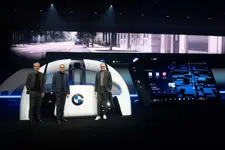
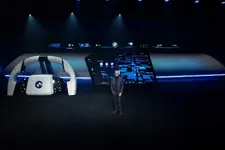
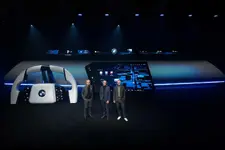
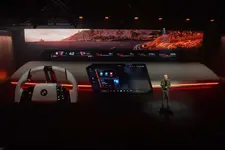
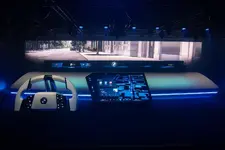
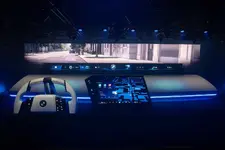
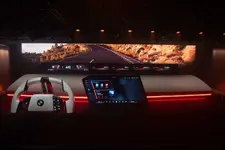
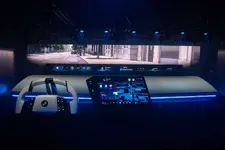
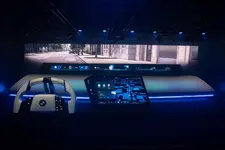
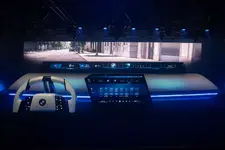
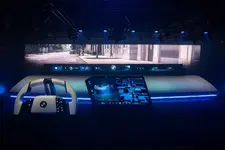
Munich/Las Vegas. The BMW Group presents the driving and user experience of the future at the Consumer Electronics Show (CES) 2025 in Las Vegas. BMW is providing the first opportunity to experience the close-to-production version of the new BMW iDrive – complete with its centrepiece, BMW Panoramic Vision – at the event. The software underpinning it all is the new BMW Operating System X, which acts as the intelligence hub behind the new display and operating concept. The holistic system, with its modern, style-shaping design, will be introduced in all new BMW models from the end of 2025.
“High tech meets highly intuitive operation – a quarter of a century of pioneering work and technological leadership in operating concepts has been channelled into the new BMW Panoramic iDrive,” says Frank Weber, member of the Board of Management of BMW AG, responsible for Development.
“The foundations are provided by the new BMW Operating System X. With this advance, we are giving one of the world’s best and most comprehensive infotainment systems even greater capability and once again setting the industry benchmark in multimodal interaction. Starting with the first series-produced Neue Klasse model at the end of this year, the new BMW Panoramic iDrive will form an integral part of all future BMW models.”
Four elements, one goal: consistent driver focus in characteristic BMW style.
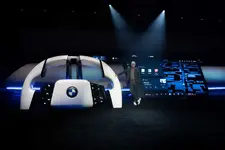
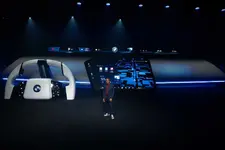
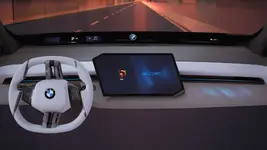
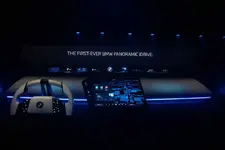
The new BMW iDrive merges four central elements into a unique display and operating concept.
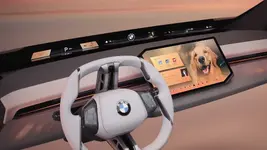
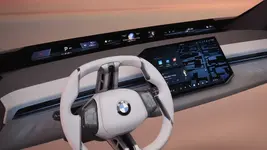
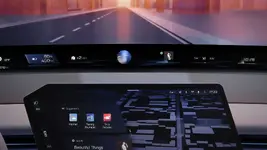
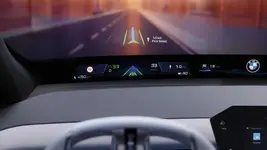
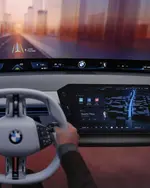
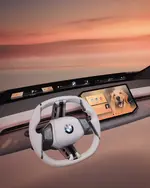
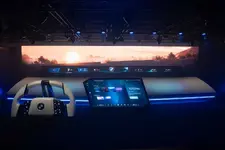
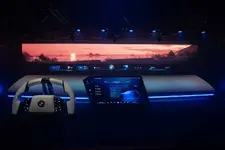
- BMW Panoramic Vision – a Head-Up Display concept newly developed by BMW for projecting content – reflects visible information from A-pillar to A-pillar onto a black printed surface in the lower section of the windscreen. This information is visible to all occupants.
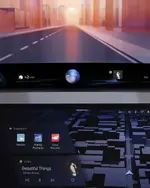
The most important driving information is projected directly into the driver's line of sight on the left-hand side of the BMW Panoramic Vision (in left-hand-drive cars), above the steering wheel. The driver can personalise the content in the central and right-hand areas of the BMW Panoramic Vision via the central display. The integration of the BMW Panoramic Vision creates a 3D effect for the driver and passengers. - The new and optional BMW 3D Head-Up Display above the BMW Panoramic Vision now shows integrated navigation and automated driving information directly in the driver’s field of vision. The content in the BMW Panoramic Vision and BMW 3D Head-Up Display is presented in a neatly coordinated way.
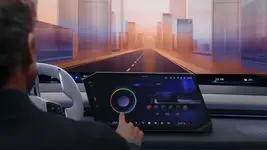
The level of innovation achieved by the two Head-Up display technologies is underlined by several patent applications from the BMW Group resulting from the development of these projection technologies. - On the central display with matrix backlight technology, the familiar, updated menu structure with QuickSelect ensures optimal operation of the functions and content by touch. Operation is very easy and convenient, as the free-cut-design display is located close to the steering wheel in an ergonomically ideal position. Selected content (widgets) can be carried over to the BMW Panoramic Vision with a swipe on the central display. As many as six widgets are possible and they can be arranged as desired in the BMW Panoramic Vision.
- The new multifunction steering wheel uses BMW’s shy-tech approach, whereby the relevant buttons are illuminated to highlight available functions. The steering wheel serves as the primary physical control, and its buttons provide active haptic feedback. The buttons have a well-judged, relief-like surface, which makes them extremely easy to locate and means the driver can press them without needing to divert their gaze away from the road.
The arrangement of the buttons follows the familiar principle of driver assistance functions being positioned on the left-hand side of the steering wheel and content-controlling functions on the right-hand side.
The combination of these four elements re-interprets BMW’s customary “hands on the wheel, eyes on the road” approach, with which BMW sets the benchmark for driver focus and presents a unique form of intuitive, use-friendly and ergonomically optimised operation. The BMW Panoramic iDrive always gives the driver the right information in the right place and at the right time. The system continues the approach of using an optimal combination of analogue and digital controls through the use of switches, buttons, touch and voice control. There are haptic switches for the windscreen wipers, turn signal indicators, exterior mirrors, volume control, gear selectors and window de-icers. Other functions are optimised for operation using touch/voice control or via the multifunction steering wheel, such as telephone functions, media control systems, navigation, assisted driving, personalisation of displays, selection of MyModes and much more besides.
Alongside data-driven learnings on the use of BMW Operating Systems across the global fleet of now more than 22 million connected BMW vehicles, the development phase of the new BMW Panoramic iDrive also included numerous studies conducted in the BMW Group’s usability labs, in which around 3,000 customers were involved. Every decision on the various aspects of the operating logic is therefore based on data and made in a structured manner. Here, the user experience’s extended scope for personalisation has also been aligned with customer preferences and requirements.
BMW Operating System X: intelligent, versatile, fit for the future.
The new BMW Operating System X represents an update of the latest operating system, as used in many BMW models, and is a wholly in-house development from BMW. Like BMW Operating System 9, it is based on an Android Open Source Project (AOSP) software stack. It offers even greater update and upgrade capability than the predecessor system, making it both fit for the future and backwards compatible. It is ready to accommodate additional functions and will keep vehicles equipped with the new BMW Panoramic iDrive at the cutting edge of technology over a long period of time.
“The overall concept of the new BMW Panoramic iDrive with Operating System X has been enabled by a large technological leap forward,” says Stephan Durach Senior Vice President Connected Company BMW Group. “It offers intuitive operation, emotionally engaging experiences and specific personalisation. The new BMW iDrive with Operating System X demonstrates the potential of a software-defined vehicle.”
The expanded intelligence of BMW Operating System X makes it possible to combine the BMW Panoramic Vision, optional BMW 3D Head-Up Display, central display and multifunction steering wheel with one another in such a way that physical and digital experiences merge. For example, an incoming call initially brings up a graphic on the BMW Panoramic Vision. At the same time, a symbol on the relevant steering wheel button that was not previously visible is illuminated in green, indicating the option of taking the call by pressing the button or rejecting it with a swipe on the right-hand side of the steering wheel.
When a navigation destination is entered by touch control or voice command, route guidance alerts are shown on the BMW 3D Head-Up Display and further information on roads and junctions on the BMW Panoramic Vision. A whole map overview can be shown on the central display at any time for broader-scale orientation.
The personalisation of content reaches a new level with BMW Operating System X. The displays in the Panoramic Vision can be adapted to personal preferences. In addition, drivers now also have the option of choosing their own settings for driving attributes such as response and steering characteristics in the My Mode “Personal”. Moreover, pictures chosen by the user can be uploaded as backgrounds for the Central Display and the colourway of the Ambient Lighting and user interface design adjusted to their particular preferences, creating an even more personalised driving experience.
The BMW Intelligent Personal Assistant responds in the accustomed way to the prompt “Hey BMW” or can be called up by pressing the respective button on the multifunction steering wheel. The capabilities of the BMW Intelligent Personal Assistant are being constantly enhanced and will be taken to a whole new level for the Neue Klasse through the integration of Large Language Models (LLM). The use of this technology is focused initially on navigation, allowing the customer to give more extensive spoken commands using natural language: for example: “Take me to a charging station which is close to a food store.” At technology partner Amazon’s booth at CES 2025, visitors can get an initial impression of these capabilities using a beta version of this build of the BMW Intelligent Personal Assistant in a BMW X3.
As with the current infotainment systems from BMW, the BMW Intelligent Personal Assistant can – if the driver desires – make suggestions proactively based on user behaviour. This intelligence expands further with BMW Operating System X. In relevant situations, the BMW Intelligent Personal Assistant highlights driver assistance systems, which are rarely used by the driver. As a kind of reminder, the system suggests activating Sport Mode on suitable routes if the driver has already activated Sport Mode independently beforehand. If the driver doesn’t respond to or ignores these proactive suggestions several times, the system learns and refrains from making suggestions from then on.
BMW Operating System X carries over the scope for integration of third-party apps from the previous infotainment generation. As things stand, the BMW ConnectedDrive Store offers more than 60 apps worldwide for BMW Operating System 9. The selection will continue to grow, e.g. with productivity apps such as video conferencing service Zoom.
Design and technology for a unique user and driving experience.
The new BMW Panoramic iDrive is scalable and will be integrated into all new BMW models – across all vehicle segments and with all drive system technologies – from the end of 2025.
The driving experience takes centre stage. The driver should feel at ease and have full control over the vehicle. This principle is reflected in the design of the new BMW Panoramic iDrive. Particular attention is paid to the details: the user interface has been designed as intuitively and adaptively as possible to ensure seamless interaction. The result is a holistic experience enhanced by a harmonious combination of sound, light and innovative design. Every journey becomes a special moment of connection between human and vehicle.
“Technology and customer preferences are changing more quickly than ever. The design of digital experiences and sound is playing an ever more important role,” says Adrian van Hooydonk, Senior Vice President BMW Group Design. “The new BMW Panoramic iDrive not only makes our vehicles smarter and more user-friendly, it also enables much more extensive personalisation, which turns every new BMW into a car that is very much the user’s own.”
Another element in the holistic experience provided by the BMW Panoramic iDrive is the new HypersonX sound experience in the Neue Klasse models. Developed by the BMW Group Sound Design Studio, it comprises 43 sound signals and special driving sounds for Personal Mode and Sport Mode. The multi-dimensional spectrum adapts the sounds precisely to the driving situation at hand and, in so doing, creates an emotional interaction between the driver and their BMW.
BMW Group PressClub Global