#mercedesbenz #mercedes #formula1 #dtm #merxcedesclassic #classicmotorsport #motorsport #mercedesbenzclassic
Mercedes-Benz, the oldest luxury car manufacturer in the world, has been active in motorsport for 130 years. The activities range from Formula One to rallies. This chapter of the companyʼs history is correspondingly diverse. Here is a brief summary of some of the important anniversaries and milestones. The Mercedes-Benz Group archives contain much more data, stories and photos in the expanded and restructured “Motorsport” section of the multimedia archive and research system M@RS. Link:
mb4.me/mars
- 1899: Emil Jellinek wins the Semmering Hill Climb with a Daimler “Phoenix” (125 years ago)
- 1994: Klaus Ludwigʼs second DTM (German Touring Car Championship) title with Mercedes-Benz (30 years ago)
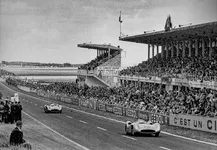
- 1954: Juan Manuel Fangio becomes Formula One World Champion with a Mercedes-Benz W 196 R (70 years ago)
- 1999: Mika Häkkinen defends his Formula One World Championship title with McLaren-Mercedes (25 years ago)
- 1964: Böhringer/Kaiser win the Grand Prix of Argentina road race (60 years ago)
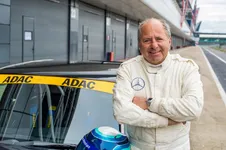
- Birthday: Klaus Ludwig (75 years ago)
27 August 1899 – 125 years ago
Convincing victory with Daimler “Phoenix” racing car at the Semmering Hill Climb
- First motorsport event in Austria
- The series of successes of the early Mercedes racing cars continues in the following years
Founded in 1898, the Austrian Automobile Club organises the first hill climb in Austria in 1899. The spa town of Semmering in Lower Austria gives its name to the ten-kilometre hill climb circuit. Emil Jellinek wins the first hill climb in a Daimler 16 hp “Phoenix” racing car, with an average speed of 23.6 km/h. Mercedes goes on to record further successes on this circuit: On 17 September 1904, 120 years ago, Hermann Braun wins the race with a Mercedes 90 hp racing car at an average speed of 73.6 km/h. On 19 September 1909, 115 years ago, Otto Salzer sets a course record of 84.3 km/h in a Mercedes 150 hp racing car. 100 years ago, Targa Florio winner Christian Werner wins the Semmering race in a Mercedes 2-litre four-cylinder racing car with a supercharged engine.
9 October 1994 – 30 years ago
Klaus Ludwig beats the competition with the AMG Mercedes C-Class DTM
- The new racing touring car from Mercedes-Benz wins in its first year
- It is the successor to the successful W 201 DTM car
Klaus Ludwig celebrates his second title for Mercedes-Benz in the DTM at the seasonʼs final race in Hockenheim on 9 October 1994. “King Ludwig” was already successful in 1992, with the forerunner 190 E 2.5-16 EVO II. In 1993, the Mercedes-Benz developed by AMG has to concede defeat to Nicola Larini in the all-wheel-drive Alfa Romeo 155 V6 TI. So Ludwig demands an all-wheel drive for the new C-Class with a V6 engine. However, motorsport manager Norbert Haug prefers to remain close to the production model. In the rain, and with rear-wheel drive against competitors with four-wheel drive, Ludwig wins the very first race at Nürburgring. By the end of the season, he notches up three victories and wins the championship title ahead of his brand colleague Jörg van Ommen.
24 October 1954 – 70 years ago
Juan Manuel Fangio becomes the Formula One World Champion with Mercedes-Benz
- A racing car full of innovations: the Mercedes-Benz W 196
- Return to the premier class of motorsport
From the third race of the season on 4 July 1954 in Reims, Mercedes-Benz re-enters Formula One 70 years ago. Juan Manuel Fangio wins four of the remaining six Grand Prix races. He wins the first two races of the season with Maserati and becomes world champion by a wide margin – as he does the following year in 1955. The Mercedes-Benz W 196 R Silver Arrow impresses with numerous technical innovations: It has the first Formula One engine with petrol injection, installed at a 60-degree angle for better aerodynamics, with the transmission behind the rear axle for better axle load distribution and larger, inwardly positioned brake drums. There are two versions: with streamlined bodywork and with exposed wheels. Since 2010, Mercedes-Benz again competes in Formula One with its own works team. From 2014 on, the Silver Arrows of the current Mercedes-AMG PETRONAS Formula One Team win eight constructorsʼ and seven driversʼ titles in the world championship.
31 October 1999 – 25 years ago
Mika Häkkinen is once again Formula One World Champion with McLaren-Mercedes
- The second Formula One driversʼ title in succession
- These World Championship titles help Mercedes-Benz to be perceived as a sporty brand
In an electrifying duel, Silver Arrow driver Mika Häkkinen wins the 1998 title just ahead of Michael Schumacher in a Ferrari, and McLaren-Mercedes also wins the constructorsʼ championship. In 1999 Häkkinen wins the second title for the German-British alliance, which lasts from 1995 to 2009, with the MP4-14. Mercedes-Benz provides the engines and bears part of the McLaren development budget. These successes greatly contribute to the image of Mercedes-Benz as a sporty, race-oriented brand. Lewis Hamilton wins the third driversʼ title of the McLaren and Mercedes partnership in 2008. Hamilton achieves 105 victories in Formula One up until then – all in racing cars with Mercedes-Benz engines. From 26 August to 30 September, Mercedes-Benz Heritage GmbH presents the McLaren-Mercedes MP4-14 World Championship car at Larusmiani in the Automotive Gallery in Milan.
7 November 1964 – 60 years ago
Eugen Böhringer and Klaus Kaiser win the Grand Prix of Argentina road race
- Fourth victory in succession for Mercedes-Benz in this prestigious endurance race
- In the Mercedes-Benz 300 SE (W 112), over 4,800 kilometres with many full-speed stretches
In the early 1960s, the Grand Prix of Argentina is one of the most demanding endurance races in the world. In 1964 the route covers around 4,800 kilometres, mainly on asphalt roads with many long, full-speed straights: that’s where reliability really counts. Mercedes-Benz brings four 300 SE (W 112) cars to Buenos Aires, the starting and finishing point. Their engine output is around 162 kW (220 hp), allowing speeds of more than 200 km/h. Following their success in the previous year, Eugen Böhringer/Klaus Kaiser are the winners ahead of their team colleagues Dieter Glemser/Martin Braungart and Ewy von Korff-Rosqvist/Eva-Maria Falk. This is the fourth consecutive Mercedes-Benz victory in this prestigious race since 1961.
Birthday
- 75 years ago – Klaus Ludwig is born in Bonn on 5 October 1949. His major successes include three championship titles in the German Touring Car Championship (1988, 1992 and 1994). In 1998, he and Ricardo Zonta win the FIA GT Championship in the Mercedes-Benz CLK-LM built and fielded by AMG. In 2000, at the age of 51, Ludwig finishes third in his last year in the DTM with the AMG-Mercedes CLK DTM.
Continue reading...