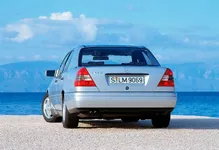
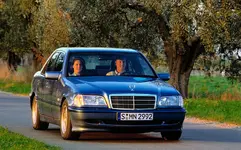
Compact, safe and sought after – the 202-series Mercedes-Benz C-Class was a resounding success: from 1993 to 2001, almost 1.9 million Saloon and Estate vehicles left the production lines.

The C-Class impressed with its timeless design and more interior space
The design of the 202 series was timeless and elegant: “The design of the first C-Class was intended to appeal to a broad public with a sleek, aesthetic and timeless form,” says Prof. Peter Pfeiffer, Head of Design from 1999 to 2008, explaining the specifications at the time. “It fitted naturally into the design idiom of the brand. Its success showed that this consolidation, which was planned from the beginning, was the right way to go. The 202 series became a runaway success.”
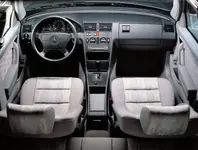
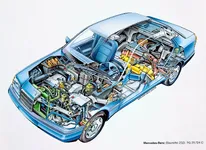
Compared to its predecessor, the C-Class offered significantly more interior space: “We responded to the fact that the central European population was growing year by year,” says Prof. Hermann Gaus, head of overall vehicle development at the time. More interior space with scarcely larger external dimensions was achieved on the one hand by the arrangement of components such as the engine, axles and transmission. In the C-Class, relocating the fuel tank also brought considerable advantages. In the 190, it was still installed behind the rear bench seat. A plastic fuel tank was used for the first time in the new compact saloon. It was light, freely formable and was located under the rear bench seat ahead of the rear axle. Therefore, in the C-Class, it was possible to move the rear bench seat back slightly for increased space. The boot capacity also increased compared to the W 201. With a length increase of around 40 millimetres compared to its predecessor, the new model series was still a compact saloon.
Safety and conservation of resources
In addition to improved safety in frontal and rear-end collisions, the engineers gave high priority to side impact protection. The package of measures was extensive. It included a one-piece side wall. This offered a very high level of strength. In addition, a tubular structure reinforced the doors. The triple-skinned B-pillar had a wide, robust base at the transition to the side sill. Massive cross-members under the front seats transferred forces to the centre tunnel and the unimpacted side of the vehicle. Bulkheads in the side skirts prevented them from buckling and crumpling. The seats were also designed for rigidity, so as to transfer forces without collapsing. In addition, the developers kept resource conservation in mind during the design of the 202 series. The aim was to ensure that 85 per cent of the end-of-life vehicle could be recycled.
New engines for more power and lower emissions
At its market launch, the C-Class was available in four petrol and three diesel models. The C 180 had an output of 90 kW (122 hp). The C 200 developed 100 kW (136 hp). The C 220 delivered 110 kW (150 hp). The C 280 generated 142 kW (193 hp) from its in-line six-cylinder engine. Among the compression-ignition models, the C 200 Diesel with 55 kW (75 hp) was the entry-level model, followed by the C 220 Diesel with 70 kW (95 hp) and the C 250 Diesel with 83 kW (113 hp).
The new petrol engines had more torque and a higher rated output than in the W 201, and the exhaust gas quality was significantly improved. The engineers achieved this with innovations such as four-valve technology, camshaft adjustment in the larger engines, further developed engine management and reduced friction in the valve gear. Mercedes-Benz was the world’s first manufacturer to introduce four-valve technology for diesel engines. In conjunction with further technical improvements such as new electronic injection systems, the progress achieved also resulted in a higher rated output and higher torque. Exhaust gas recirculation as standard and a diesel catalytic converter significantly reduced particulate emissions.
A suspension built for comfort
Modern axle designs contributed to the significant improvement in ride comfort and driving safety compared to the preceding model. The two wishbones of the front axle – hence the designation double wishbone axle – optimised wheel guidance. The independent multi-link rear suspension familiar from the “Baby Benz” was modified and fitted with an elastic rear-axle transmission mounting. The new spring and damper set-up, as well as a longer wheelbase and wider track width, also contributed to comfort and handling safety.
The right choice for everyone. The four equipment lines
Standard equipment included a driver airbag, integral side impact protection, ABS anti-lock braking system, power steering, five-speed transmission and central locking system. In addition to the so-called classic version – later referred to as Classic – Mercedes-Benz offered the C-Class in equipment lines named Esprit, Elegance and Sport. The brand described them as “youthfully cheeky” (Esprit), “formally elegant” (Elegance) and “dynamically technical” (Sport). Esprit featured a 25-millimetre lower suspension and a colourful, fresh interior. Elegance stood out with exterior rubbing strips in colours matching the paintwork and chrome inserts in the rubbing strips and door handles. Wood trim set the ambience in the interior. Sport also had a 25-millimetre lower suspension, and a more taut suspension set-up. The equipment included wider tyres and light-alloy wheels in a five-hole design. “We succeeded in appealing to an even broader public with these lines,” explains Prof. Peter Pfeiffer. “With Esprit and Sport, we were able to convince buyers who found the design of the W 202 too staid.” The Classic and Elegance lines each accounted for one third of vehicles delivered. Esprit and Sport made up the remaining third.
Launch of an Estate model
Early on in the design phase of the Saloon, which began in 1986, the Board of Management of the then Daimler-Benz AG also decided to develop an Estate model with the in-house designation S 202. This was launched in 1996 and was the first Estate in the compact class. This space miracle shone with a number of practical advantages – among them its design. “Cars have to fascinate,” says Prof. Peter Pfeiffer. “Cars based on pure reason fail in the market.”
Powerful AMG models
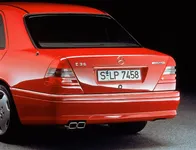
The peak performer in the 202 series was initially the C 36 AMG presented in autumn 1993. It was the first vehicle jointly developed by Mercedes-Benz and AMG. It was based on a C 280 in the “Sport” equipment line. AMG increased the bore and stroke of the 2.8-litre V6 engine for a 3.6-litre displacement. Special pistons, a modified crankshaft and a higher compression ratio resulted in an output of 206 kW (280 hp). Compared to the Sport variant, the suspension was lowered by a further ten millimetres. A modified front and rear apron, side skirts and larger wheels visually distinguished the AMG variant.
The stylists in Sindelfingen were involved in the development work. “The C 36 AMG naturally fits in with the overall design idiom of the series,” says Prof. Peter Pfeiffer. It was to become a great success: between autumn 1993 and June 1997, a remarkable 5,221 units of the C 36 AMG were produced. In September 1997, an eight-cylinder engine made its debut in the C-Class. The C 43 AMG developed 225 kW (306 hp). In the C 55 AMG launched in 1998, the figure increased to 255 kW (347 hp).
The C-Class wins the DTM at the first attempt
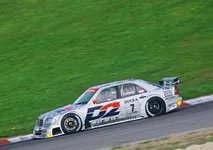
In the DTM, a very popular race series throughout Europe, the C-Class continued the great success of the racing touring car based on the 190 E 2.5-16 from 1994 onwards. In 1994 Klaus Ludwig won the title with an AMG Mercedes C-Class DTM, whose V6 engine produced 294 kW (400 hp). With the revised version and 324 kW (440 hp), Bernd Schneider secured the championship titles in the DTM and the International Touring Car Championship ITC in 1995. The winning car is on display in Legend Room 7: “Races and Records” at the Mercedes-Benz Museum.
New V6 and CDI engines with the model update
During the production period from 1993 to 2000 (Saloon) and 1996 to 2001 (Estate), numerous technical and visual improvements were incorporated into production. In 1995, for example, the C 230 Kompressor once again featured a Roots blower. This resulted in significantly higher torque over a wide rpm range, and a more responsive power delivery. “Because of the absence of turbo lag, we decided in favour of the compressor and against the turbocharger at that time,” explains vehicle developer Prof. Hermann Gaus. From the 1997 model update on, the C 240 and C 280 were offered with new V6 engines. The Electronic Stability Program ESP® was initially available just for these models, but the others followed. As part of the update, the standard equipment included sidebags in the front doors, high-performance belt tensioners with belt force limiters in the front seats and Brake Assist.
Mercedes-Benz also presented a turbocharged diesel engine. The C 250 Turbodiesel was the first turbodiesel passenger car with four-valve technology and intercooling. It developed an output of 110 kW (150 hp). in 1997, the common-rail principle made its way into the C-Class. The four-cylinder diesel in the C 220 CDI developed 92 kW (125 hp). This engine not only boasted the highest torque in its displacement class, but also set standards in fuel consumption and pollutant emissions. In 1998 it was joined by the C 200 CDI with 75 kW (102 hp).
From 1993 to 2000, 1.626,383 Saloon models of the 202 series were produced. From 1996 to 2001, 243,871 Estate models were added to this figure.
Additional information, entire press article(s), directly from its original source: Daimler AG
- In May 1993, Mercedes-Benz presented the successor to the 201 series
- In autumn 1993, the C 36 AMG sent a strong signal of sportiness and driving dynamics
- The Estate model (S 202) followed in 1996
- Classic, Elegance, Esprit and Sport – four lines were aimed at a broad target group
The C-Class impressed with its timeless design and more interior space
The design of the 202 series was timeless and elegant: “The design of the first C-Class was intended to appeal to a broad public with a sleek, aesthetic and timeless form,” says Prof. Peter Pfeiffer, Head of Design from 1999 to 2008, explaining the specifications at the time. “It fitted naturally into the design idiom of the brand. Its success showed that this consolidation, which was planned from the beginning, was the right way to go. The 202 series became a runaway success.”
Compared to its predecessor, the C-Class offered significantly more interior space: “We responded to the fact that the central European population was growing year by year,” says Prof. Hermann Gaus, head of overall vehicle development at the time. More interior space with scarcely larger external dimensions was achieved on the one hand by the arrangement of components such as the engine, axles and transmission. In the C-Class, relocating the fuel tank also brought considerable advantages. In the 190, it was still installed behind the rear bench seat. A plastic fuel tank was used for the first time in the new compact saloon. It was light, freely formable and was located under the rear bench seat ahead of the rear axle. Therefore, in the C-Class, it was possible to move the rear bench seat back slightly for increased space. The boot capacity also increased compared to the W 201. With a length increase of around 40 millimetres compared to its predecessor, the new model series was still a compact saloon.
Safety and conservation of resources
In addition to improved safety in frontal and rear-end collisions, the engineers gave high priority to side impact protection. The package of measures was extensive. It included a one-piece side wall. This offered a very high level of strength. In addition, a tubular structure reinforced the doors. The triple-skinned B-pillar had a wide, robust base at the transition to the side sill. Massive cross-members under the front seats transferred forces to the centre tunnel and the unimpacted side of the vehicle. Bulkheads in the side skirts prevented them from buckling and crumpling. The seats were also designed for rigidity, so as to transfer forces without collapsing. In addition, the developers kept resource conservation in mind during the design of the 202 series. The aim was to ensure that 85 per cent of the end-of-life vehicle could be recycled.
New engines for more power and lower emissions
At its market launch, the C-Class was available in four petrol and three diesel models. The C 180 had an output of 90 kW (122 hp). The C 200 developed 100 kW (136 hp). The C 220 delivered 110 kW (150 hp). The C 280 generated 142 kW (193 hp) from its in-line six-cylinder engine. Among the compression-ignition models, the C 200 Diesel with 55 kW (75 hp) was the entry-level model, followed by the C 220 Diesel with 70 kW (95 hp) and the C 250 Diesel with 83 kW (113 hp).
The new petrol engines had more torque and a higher rated output than in the W 201, and the exhaust gas quality was significantly improved. The engineers achieved this with innovations such as four-valve technology, camshaft adjustment in the larger engines, further developed engine management and reduced friction in the valve gear. Mercedes-Benz was the world’s first manufacturer to introduce four-valve technology for diesel engines. In conjunction with further technical improvements such as new electronic injection systems, the progress achieved also resulted in a higher rated output and higher torque. Exhaust gas recirculation as standard and a diesel catalytic converter significantly reduced particulate emissions.
A suspension built for comfort
Modern axle designs contributed to the significant improvement in ride comfort and driving safety compared to the preceding model. The two wishbones of the front axle – hence the designation double wishbone axle – optimised wheel guidance. The independent multi-link rear suspension familiar from the “Baby Benz” was modified and fitted with an elastic rear-axle transmission mounting. The new spring and damper set-up, as well as a longer wheelbase and wider track width, also contributed to comfort and handling safety.
The right choice for everyone. The four equipment lines
Standard equipment included a driver airbag, integral side impact protection, ABS anti-lock braking system, power steering, five-speed transmission and central locking system. In addition to the so-called classic version – later referred to as Classic – Mercedes-Benz offered the C-Class in equipment lines named Esprit, Elegance and Sport. The brand described them as “youthfully cheeky” (Esprit), “formally elegant” (Elegance) and “dynamically technical” (Sport). Esprit featured a 25-millimetre lower suspension and a colourful, fresh interior. Elegance stood out with exterior rubbing strips in colours matching the paintwork and chrome inserts in the rubbing strips and door handles. Wood trim set the ambience in the interior. Sport also had a 25-millimetre lower suspension, and a more taut suspension set-up. The equipment included wider tyres and light-alloy wheels in a five-hole design. “We succeeded in appealing to an even broader public with these lines,” explains Prof. Peter Pfeiffer. “With Esprit and Sport, we were able to convince buyers who found the design of the W 202 too staid.” The Classic and Elegance lines each accounted for one third of vehicles delivered. Esprit and Sport made up the remaining third.
Launch of an Estate model
Early on in the design phase of the Saloon, which began in 1986, the Board of Management of the then Daimler-Benz AG also decided to develop an Estate model with the in-house designation S 202. This was launched in 1996 and was the first Estate in the compact class. This space miracle shone with a number of practical advantages – among them its design. “Cars have to fascinate,” says Prof. Peter Pfeiffer. “Cars based on pure reason fail in the market.”
Powerful AMG models
The peak performer in the 202 series was initially the C 36 AMG presented in autumn 1993. It was the first vehicle jointly developed by Mercedes-Benz and AMG. It was based on a C 280 in the “Sport” equipment line. AMG increased the bore and stroke of the 2.8-litre V6 engine for a 3.6-litre displacement. Special pistons, a modified crankshaft and a higher compression ratio resulted in an output of 206 kW (280 hp). Compared to the Sport variant, the suspension was lowered by a further ten millimetres. A modified front and rear apron, side skirts and larger wheels visually distinguished the AMG variant.
The stylists in Sindelfingen were involved in the development work. “The C 36 AMG naturally fits in with the overall design idiom of the series,” says Prof. Peter Pfeiffer. It was to become a great success: between autumn 1993 and June 1997, a remarkable 5,221 units of the C 36 AMG were produced. In September 1997, an eight-cylinder engine made its debut in the C-Class. The C 43 AMG developed 225 kW (306 hp). In the C 55 AMG launched in 1998, the figure increased to 255 kW (347 hp).
The C-Class wins the DTM at the first attempt
In the DTM, a very popular race series throughout Europe, the C-Class continued the great success of the racing touring car based on the 190 E 2.5-16 from 1994 onwards. In 1994 Klaus Ludwig won the title with an AMG Mercedes C-Class DTM, whose V6 engine produced 294 kW (400 hp). With the revised version and 324 kW (440 hp), Bernd Schneider secured the championship titles in the DTM and the International Touring Car Championship ITC in 1995. The winning car is on display in Legend Room 7: “Races and Records” at the Mercedes-Benz Museum.
New V6 and CDI engines with the model update
During the production period from 1993 to 2000 (Saloon) and 1996 to 2001 (Estate), numerous technical and visual improvements were incorporated into production. In 1995, for example, the C 230 Kompressor once again featured a Roots blower. This resulted in significantly higher torque over a wide rpm range, and a more responsive power delivery. “Because of the absence of turbo lag, we decided in favour of the compressor and against the turbocharger at that time,” explains vehicle developer Prof. Hermann Gaus. From the 1997 model update on, the C 240 and C 280 were offered with new V6 engines. The Electronic Stability Program ESP® was initially available just for these models, but the others followed. As part of the update, the standard equipment included sidebags in the front doors, high-performance belt tensioners with belt force limiters in the front seats and Brake Assist.
Mercedes-Benz also presented a turbocharged diesel engine. The C 250 Turbodiesel was the first turbodiesel passenger car with four-valve technology and intercooling. It developed an output of 110 kW (150 hp). in 1997, the common-rail principle made its way into the C-Class. The four-cylinder diesel in the C 220 CDI developed 92 kW (125 hp). This engine not only boasted the highest torque in its displacement class, but also set standards in fuel consumption and pollutant emissions. In 1998 it was joined by the C 200 CDI with 75 kW (102 hp).
From 1993 to 2000, 1.626,383 Saloon models of the 202 series were produced. From 1996 to 2001, 243,871 Estate models were added to this figure.
Additional information, entire press article(s), directly from its original source: Daimler AG