#mercedesbenz #mercedes #gclass #mercedesbenz230g #230g #mercedesbenzg #gmodel #classiccars #mercedesclassic
- The G model is from early on an emergency vehicle of choice for aid organisations
- Its off-road capabilities get it to the scene of water-related emergencies
- The robust all-wheel-drive vehicle has been in service with lifesavers for almost 40 years
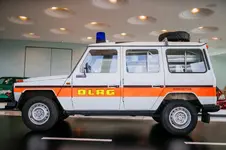
No. 6/2024: The DLRG’s Mercedes-Benz 230 G emergency vehicle
For emergencies: 45 years ago, in 1979, the Mercedes-Benz G model of the 460 model series made its debut. The excellent off-road characteristics of the vehicle immediately impressed aid organisations such as the DLRG (German Life Saving Association), which specialises in water rescue. A G model allows helpers to reach practically impassable locations such as beaches or flooded areas in an emergency. Today this tradition is continued by the Mercedes-Benz G-Class of the 464 model series for rescue and special operations. More information: ggb.mercedes-benz.com/en/
Almost 40 years by the river Main: The station wagon built by Ziegler as a water rescue equipment vehicle in 1982, and now on display in the Mercedes-Benz Museum, reliably performed its duties for almost forty years – no problem for a G. The vehicle with the operational identification number 2/58/2 did not enter its well-deserved retirement until 2021. It can be seen in the Collection Room 5: Gallery of everyday heroes. Other classic cars of similar age have long since carried an H licence plate. However, the DLRG’s 230 G retains its licence plate with the authority identification consisting of the letter “F” for Frankfurt am Main and the number combination 373.
All-wheel-drive all-rounder: From as early as 1949, the Mercedes-Benz Unimog impressed aid and rescue organisations, especially fire brigades, with its wide range of capabilities. The G model followed this tradition with great success since 1979. The DLRG’s emergency vehicle is a prime example: It combines the outstanding off-road characteristics of the G model with extensive special equipment tailored to the DLRG’s operations – from the two-way radio (the DLRG vehicles in Frankfurt am Main bear the call sign “Pelikan”) to the special signalling system with blue beacon, front flasher and horn to the powerful front cable winch.
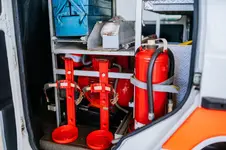
Diving operations: The vehicle with the optional 75 kW (102 hp) 2.3-litre four-cylinder engine performed its first missions in the 1980s, carrying the Frankfurt DLRG diver team. The crews sat in the front, on black and white chequered fabric seat covers, with their extensive equipment stowed in the centre and rear of the vehicle. The drawer system fitted behind the rare two-part tailgate is optimally accessible. The original equipment list reveals what the 230 G had on board at the time: it includes e.g. three diving suits, three pairs of fins, depth gauges, snorkels and many other items of diving equipment. Brackets with transport locks hold the compressed air cylinders, behind them a compressor. Tools for rescue operations, including flame-cutting equipment, illustrate the range of applications.
Towing operations: The 230 G also featured further capabilities in and around Frankfurt. Thanks to its fording capability, it was successfully used for disaster relief during floods. The DLRG boat group greatly appreciated the pulling power of the off-road vehicle for their trailer. The G model also proved its worth in seasonal rescue and technical assistance operations. These especially included relief work following heavy rainfall, flooding and high water. To this end, its equipment included a chainsaw, helmet with splinter visor and protective clothing, as well as hoses.
Retirement in the Museum: Start the engine, switch on the blue beacon and sound the electric horn – the vehicle seems ready to set off on its next mission. So it’s good that we can take a leisurely look at it first in the Mercedes-Benz Museum.
Continue reading...