#germancarforum #germancars #mercedesbenz #marcopolo #camper
- Mercedes-Benz compact camper has created family holidays and adventures for four decades and counting
- Since 1984, the Marco Polo has set standards in its segment, initially based on the "Bremer Transporter", and since 2015 as the V‑Class Marco Polo
- In doing so, it has given entire generations of travellers great travel memories
Marco Polo based on the "Bremer Transporter": pioneer of campers bearing the star
In the 1980s, the first Marco Polo was one of the compact campers that defined the segment. Its characteristic features: the stubby bonnet, the bahama beige paintwork and the beige-brown interior, which was considered a "must-have" for discerning campers at the time. As the T1 base vehicle was initially produced in Bremen, it was nicknamed the "Bremer Transporter". With a height of 2.97 metres, the first Marco Polo was an imposing sight. A facelift followed in 1988.
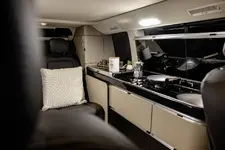
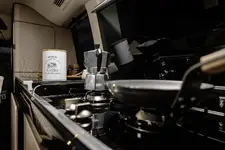
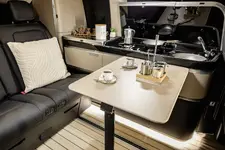
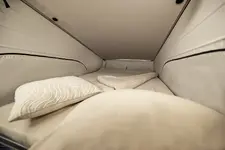
The basic living concept of the Marco Polo has remained unchanged since the first generation. It still includes a roof bed, a bench seat/bunk combination in the rear, swivelling driver and front passenger seats, a kitchenette with sink, cooker and refrigerator box as well as cupboard and drawer modules.
Marco Polo based on the Vito: even more compact, even more suitable for everyday use
In 1996 a reduction in height to less than two metres and the introduction of a pop-up roof made the second Marco Polo generation – based on the Vito van – much more garage-friendly. At the same time, the interior became considerably more functional: The seat/bunk combination in the rear was mounted on a rail system and could be moved. The cupboards were fitted with practical roller shutters. The table could be stowed in the panelling of the sliding door, and there was clear access to the rear thanks to a foot-operated parking brake. A facelift followed in 1999.
Marco Polo based on the Viano: even more functional, even more sophisticated
In 2003 the third generation of the Marco Polo, based on the Viano, made further progress in terms of functionality and again set new standards in the camper segment. An electrically operated pop-up roof, a comfortable roof bed with point-elastic spring elements – awarded the "Aktion Gesunder Rücken" seal of approval for back-friendly design – and a bench seat with electrically folding backrests as well as air cushions in the seat bolsters for better lateral support were just some of the numerous improvements. A facelift followed in 2010.
Marco Polo based on the V-Class: even more stylish, even more comfortable
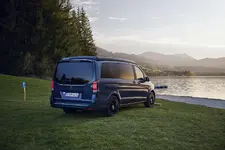
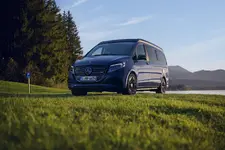
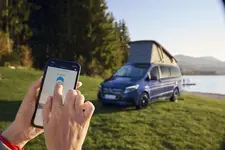
Since 2015, the Marco Polo has been presented in its current form based on the V-Class. The fourth generation of the Marco Polo, based on the V-Class MPV, set new standards in terms of aesthetics and comfort. The interior was transformed into an exclusive lounge, from the cockpit to the living area. The highlights also included and still include yacht-look flooring, atmospheric LED interior lighting – including optional ambient lighting – and a wide selection of high-quality decorative trim elements and upholstery. Since the facelift in 2019 and the subsequent updates, the Marco Polo has also offered even more technology, including the innovative MBUX (Mercedes-Benz User Experience) multimedia system and the advanced MBAC (Mercedes-Benz Advanced Control) camper control unit, which transforms the vehicle into a smart home for travellers and digital nomads.
The new V-Class Marco Polo, which was presented in summer 2023 and will celebrate its market launch this year, continues this development. Among other things, it impresses with an even higher-quality look and feel in the exterior and cockpit as well as an enhanced MBUX and MBAC, which now offer new functions such as smart control of the AIRMATIC level control in camper mode. The new model therefore allows for an unrivalled glamping experience.
The Marco Polo Module: from everyday vehicle to micro-camper in the blink of an eye
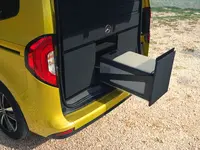
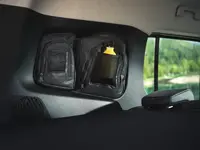
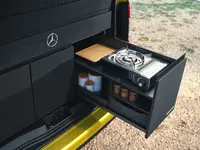
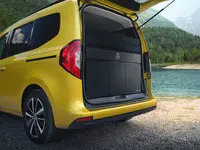
Since last year (2023), the so-called Marco Polo Module has rounded off the Marco Polo family at the lower end. It transforms the small vans with the star, including the T-Class, into micro campers in no time at all. The module is located in the vehicle's boot and secured using lashing eyes. The module consists of a standard bed unit for two people and an optional kitchen unit with sink and bottled gas cooker. If desired, a refrigerator box can also be added and is accommodated in the kitchen unit. Other optional features include an auxiliary battery, the Sleeping Package with blackout elements and ventilation grilles with insect screens for the glass panes, and window pockets that can be fitted between the C and D-pillars; also a table and camping chairs. The table comes with two different feet. This means that it can be set up outdoors or secured in the rear.
The future of camping with the star is called VAN.EA
One of the focus topics for the future of the Marco Polo is electromobility. Mercedes-Benz Vans has firmly anchored its claim to leadership in electromobility in its strategy. The central step into the electric future is the new, modular and scalable "electric-only" architecture VAN.EA, which will be introduced from 2026. Based on VAN.EA, the RV portfolio will also be electrified and expanded. On the basis of VAN.EA, Mercedes-Benz will offer both medium-sized and large all-electric RVs ex works in the future. Together with its international RV partners, the brand with the star plans to develop the new industry standard for electric RVs.
Continue reading...